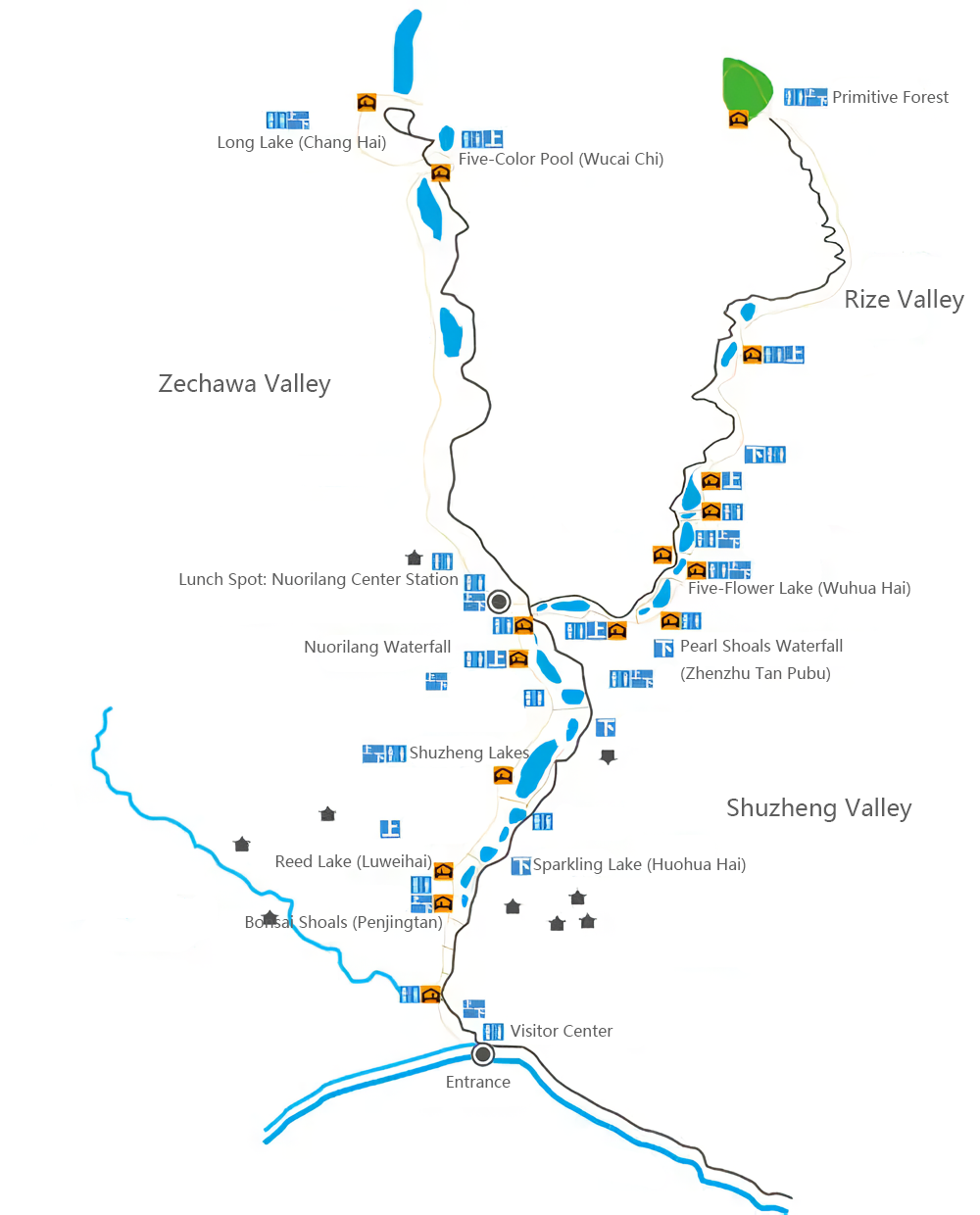
Jiuzhaigou, one of the most famous destinations in Aba Prefecture, derives its name from the nine Tibetan villages in the area. The entire scenic area is shaped like a "Y."
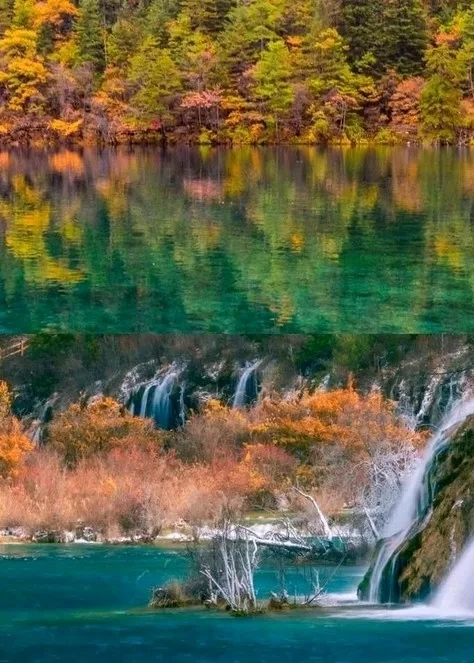
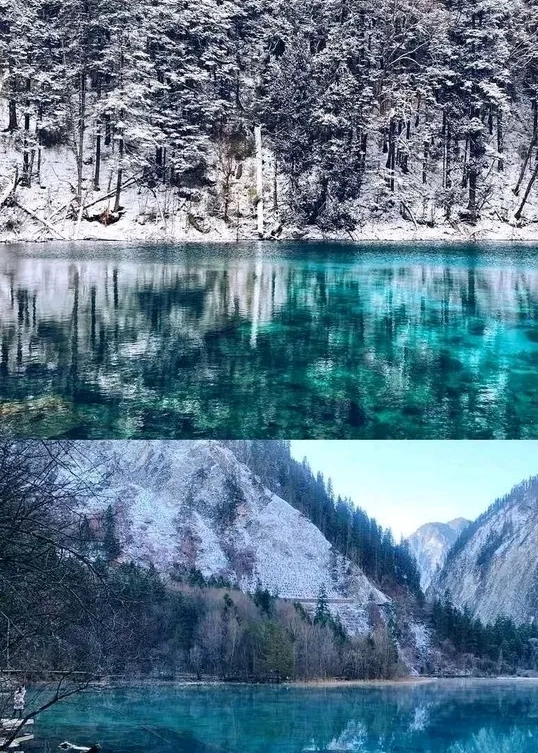
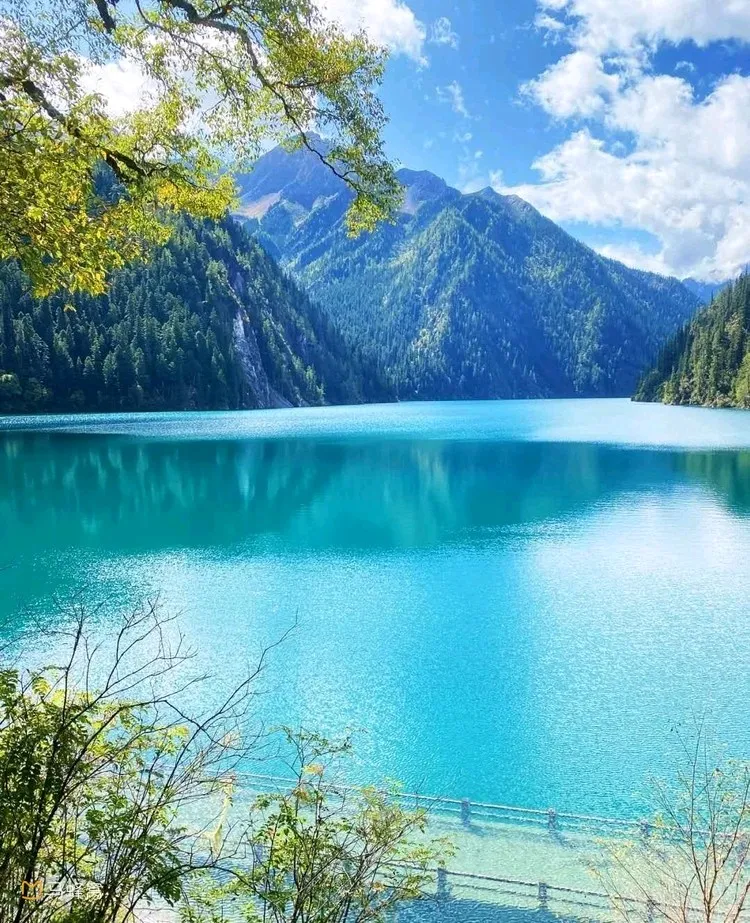
Main Scenic Spots in Jiuzhaigou
Most of Jiuzhaigou’s attractions are spread across three valleys:
- The base of the "Y" is Shuzheng Valley, which is the entrance to the Jiuzhaigou Scenic Area and home to over 40 lakes.
- The right arm of the "Y" is Rize Valley, where the most iconic and picturesque attractions are located.
- The left arm of the "Y" is Zechawa Valley, featuring Long Lake, Five-Color Pool, and seasonal lakes. Note that seasonal lakes do not have dedicated stops, and they’re quite far for walking.
The park operates with limited access areas, covering about 90% of its original attractions. Although not fully open, it includes the most essential highlights.
Read Next: After reading this scenic overview, dig deeper with our Jiuzhaigou Itinerary Guide for day-by-day route planning, or explore Top Jiuzhaigou Activities for cultural experiences beyond the lakes.
Entrance: Shuzheng Valley
The park operates with limited access areas, covering about 90% of its original attractions. Although not fully open, it includes the most essential highlights.
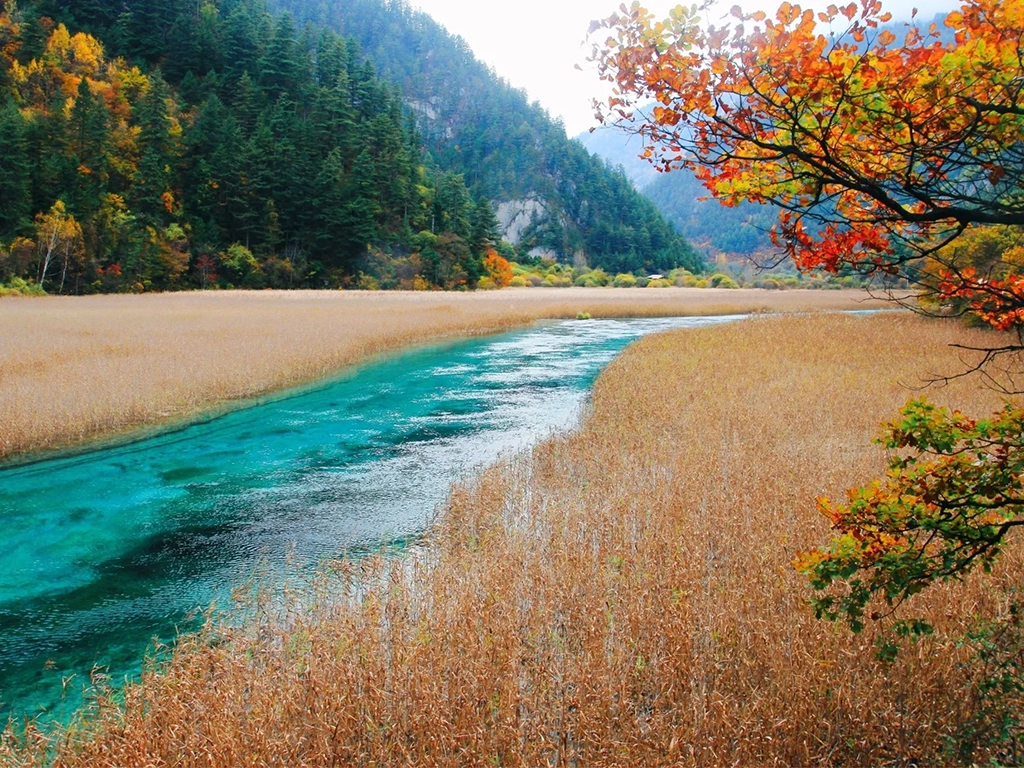
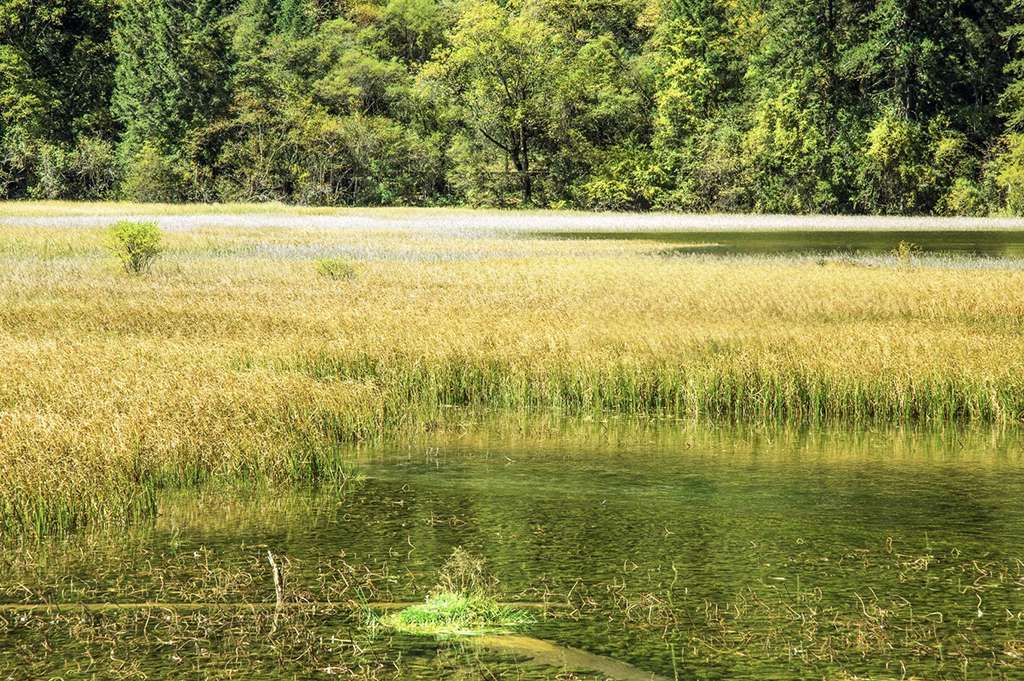
Reed Lake (Luweihai):
Reed Lake is a semi-marsh lake surrounded by a vast golden expanse of reeds and vibrant green water. It’s a sanctuary for waterfowl like egrets and wild ducks. In spring and summer, the lush greenery blends seamlessly with the clear water, while autumn and winter transform the reeds into a golden hue, creating a stunning contrast that seems almost surreal.
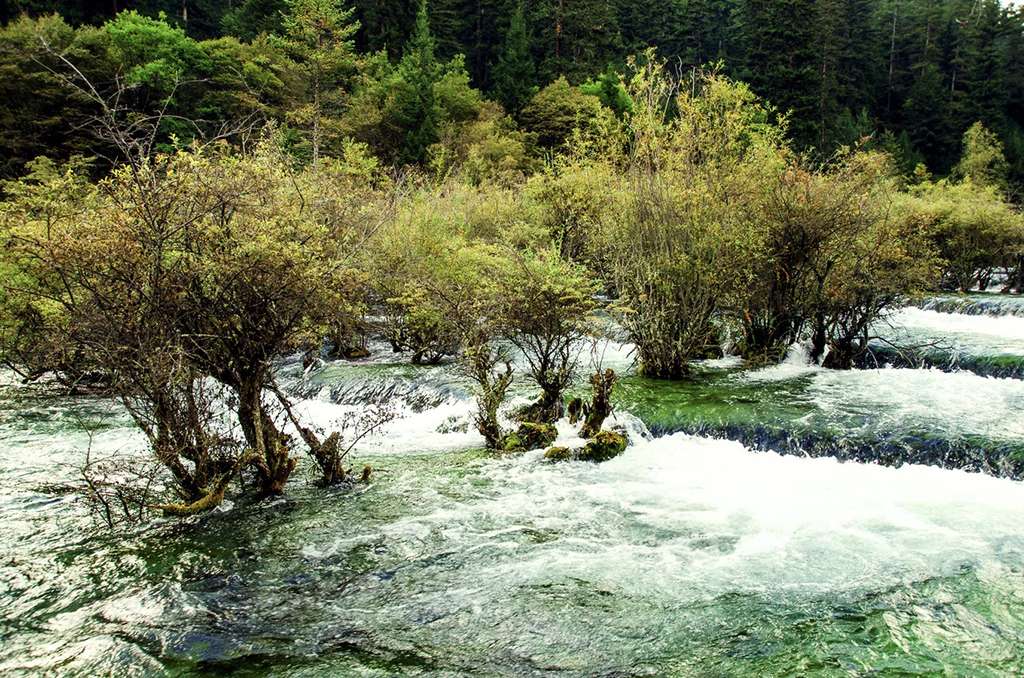
Bonsai Shoals (Penjingtan)
Bonsai Shoals is a shallow calcified beach dotted with water-loving plants such as rhododendrons, willows, and mountain pines. The fascinating part? Each tree grows atop a unique calcified mound, resembling natural bonsai.
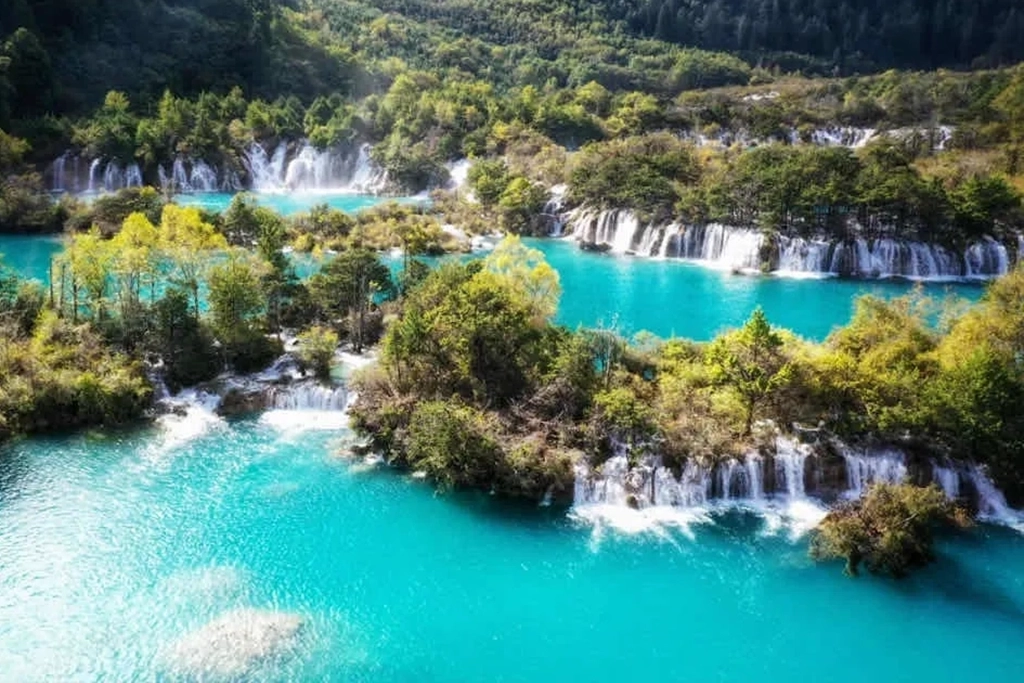
Shuzheng Lakes
The cascading Shuzheng Lakes feature water flowing over barriers, forming layers of waterfalls amid lush greenery. The interplay of blue and green hues creates a mesmerizing effect.
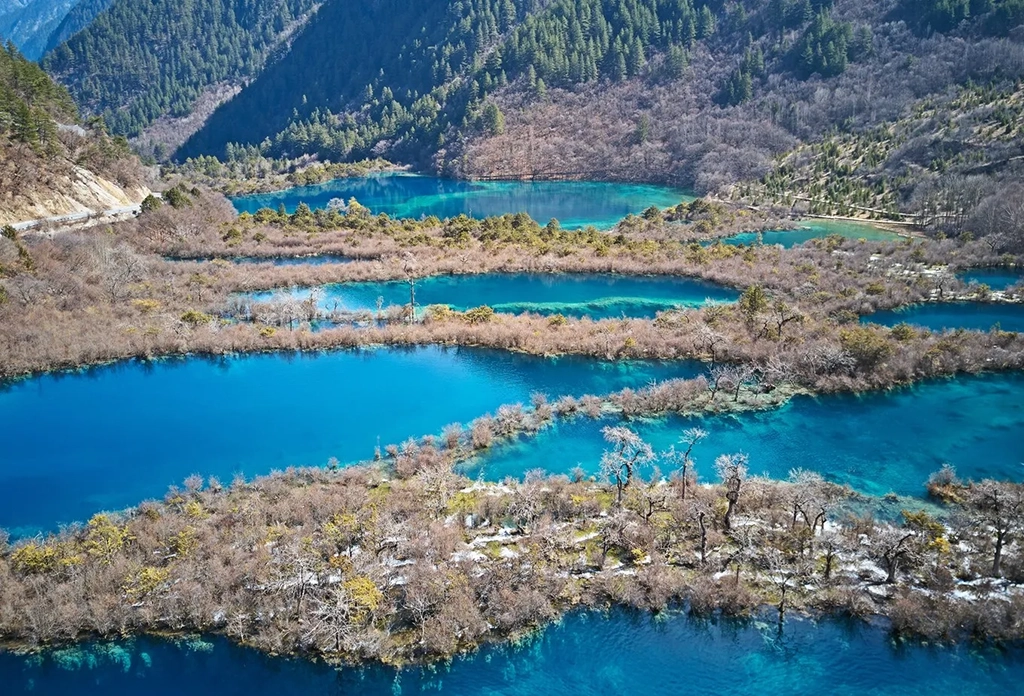
Sparkling Lake (Huohua Hai)
Nestled between Double Dragon Lake and Wolong Lake, Sparkling Lake boasts a vivid blue water surface, often mirroring the surrounding greenery like a flawless emerald. At sunrise, sunlight dances on the lake, creating glimmering sparks that look like flames.
Tip****s :
As the park’s entrance is located here, Shuzheng Valley often sees long lines for ticket purchases during peak season. Arrive early to avoid the crowds.
Right Arm: Rize Valley
Rize Valley stretches 16 kilometers between Nuorilang Waterfall and the Primeval Forest. It’s considered the heart of Jiuzhaigou’s natural beauty. Highlights include:
Five-Flower Lake (Wuhua Hai)
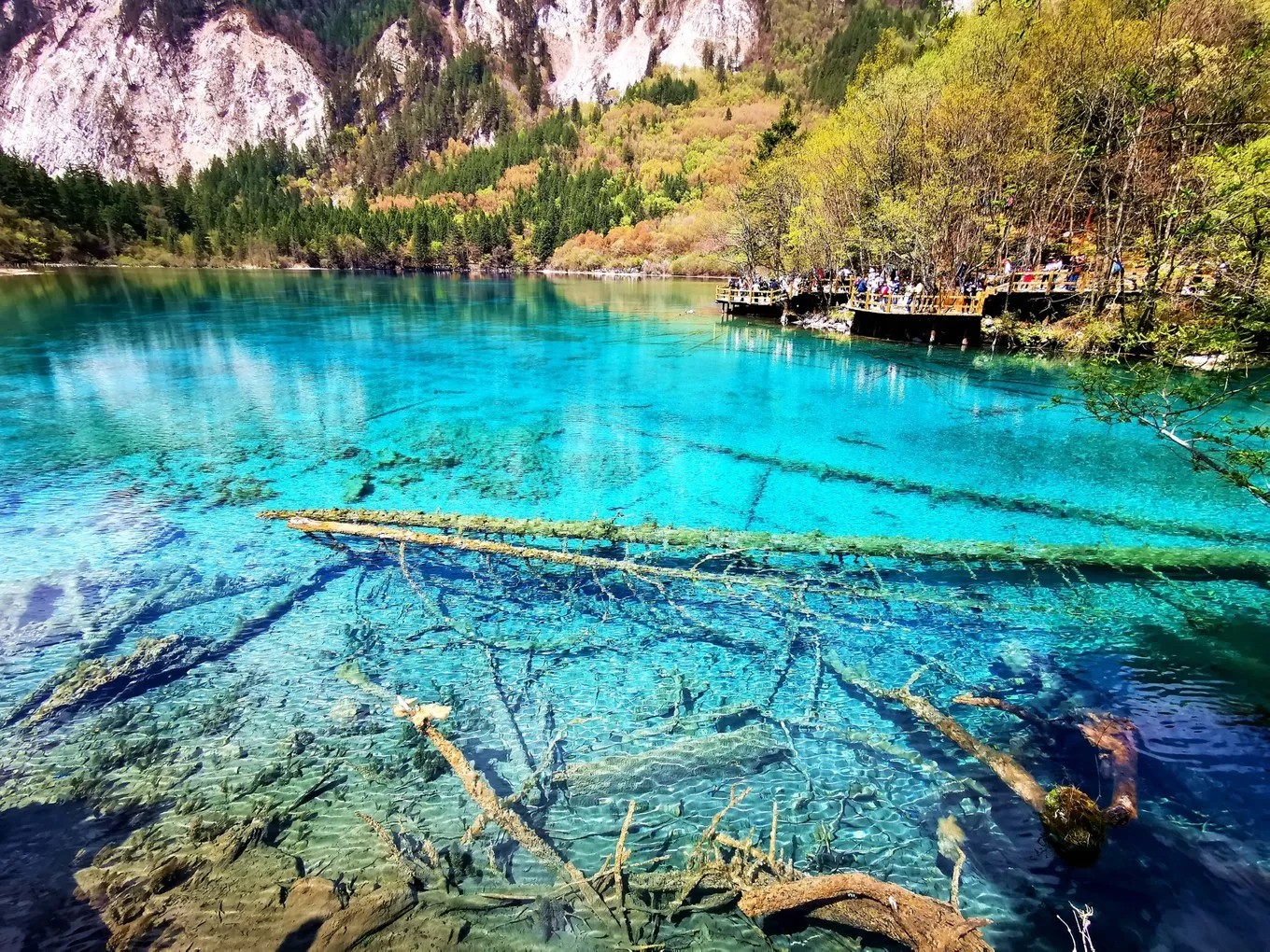
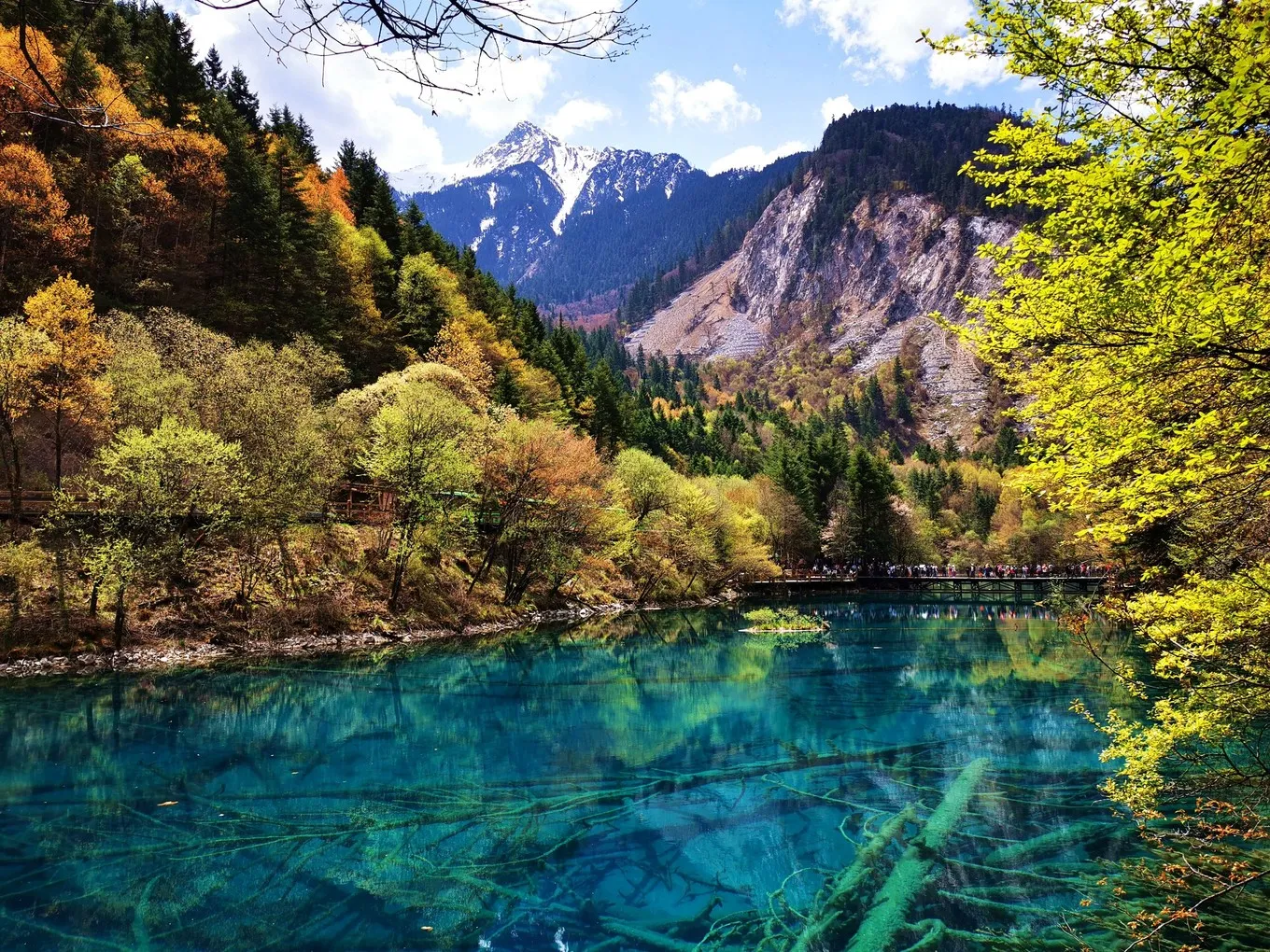
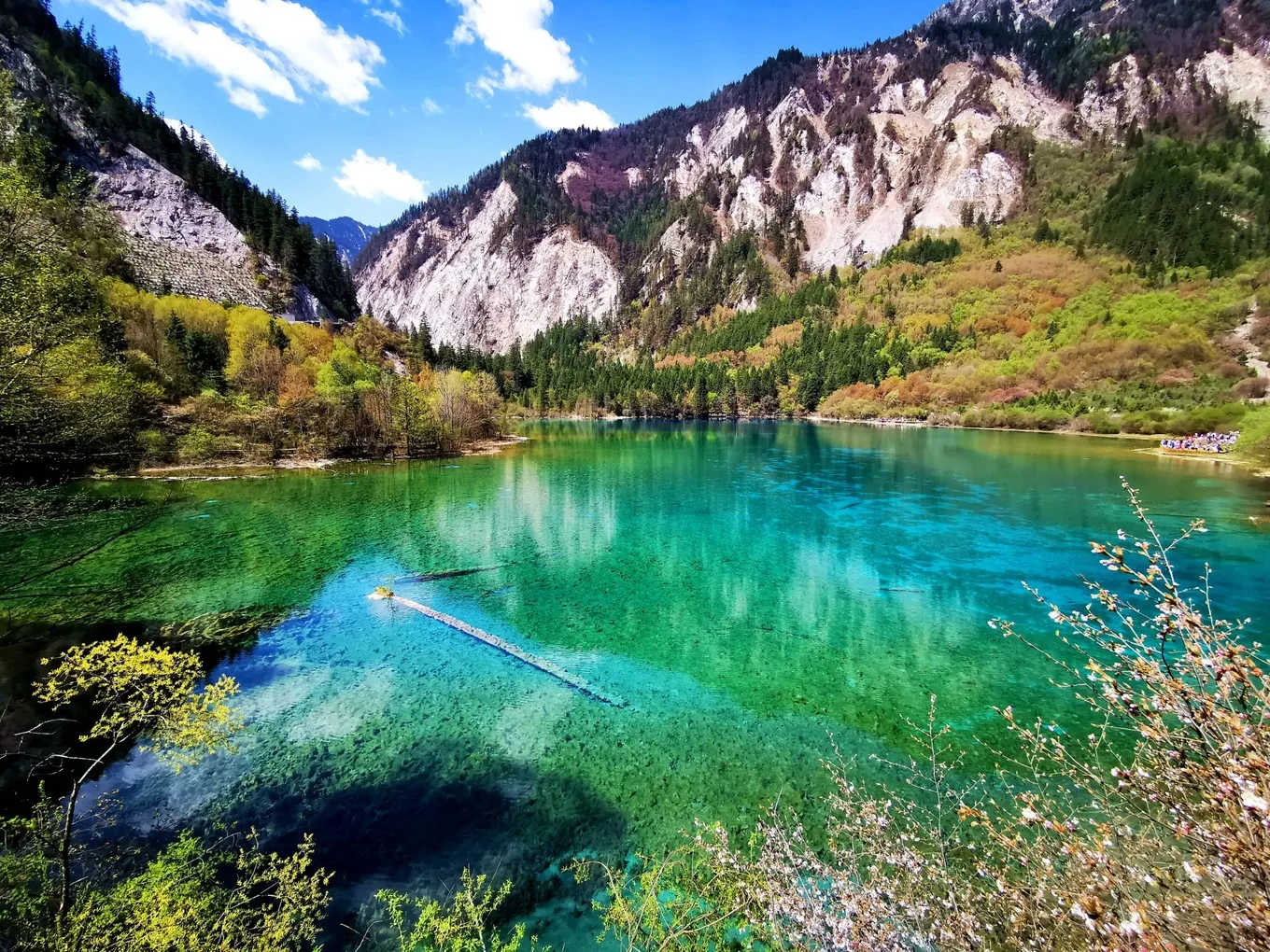
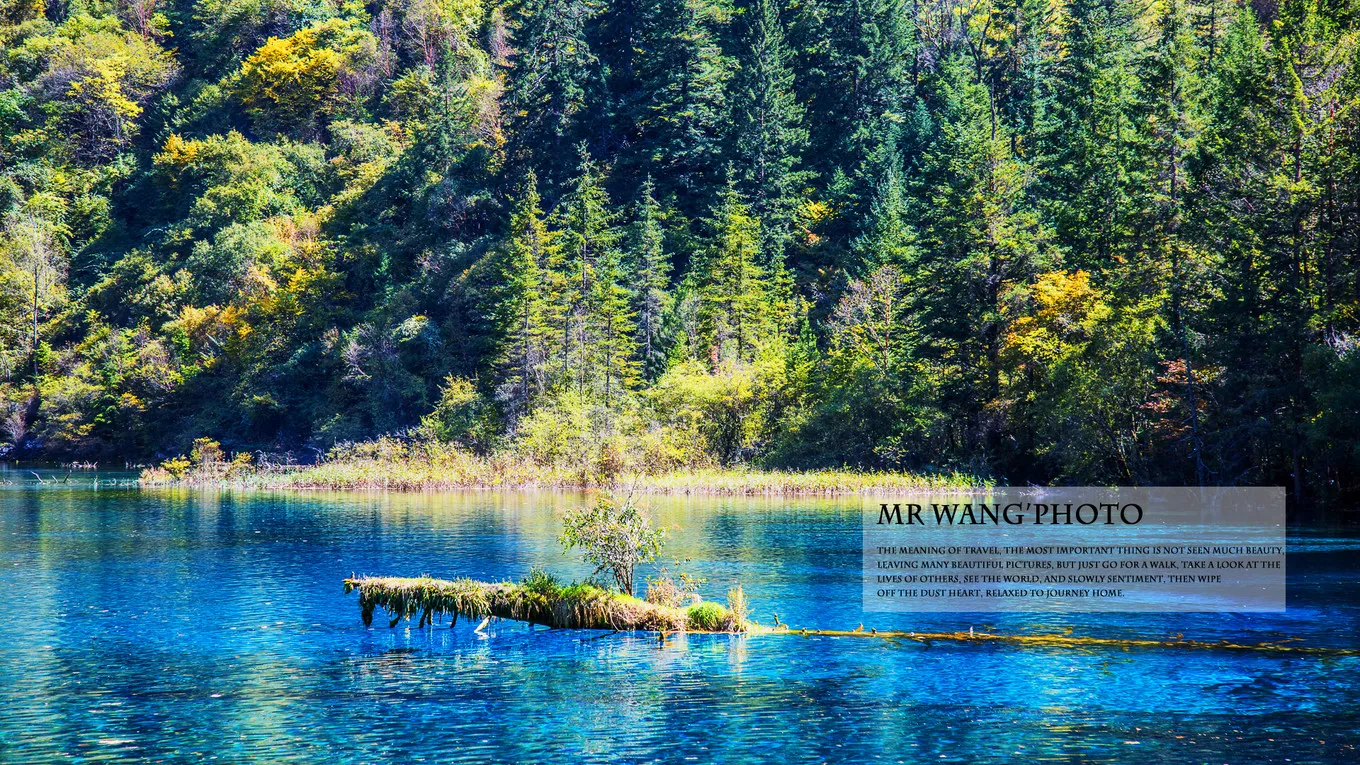
Known as the "Crown Jewel of Jiuzhaigou," Five-Flower Lake is a multicolored lake that owes its vibrant hues to sunlight, algae, and calcium deposits. The lake bottom features fossilized tree trunks that shimmer like coral under sunlight. It’s a breathtaking spot for panoramic views and photography.
Pearl Shoals Waterfall (Zhenzhu Tan Pubu)
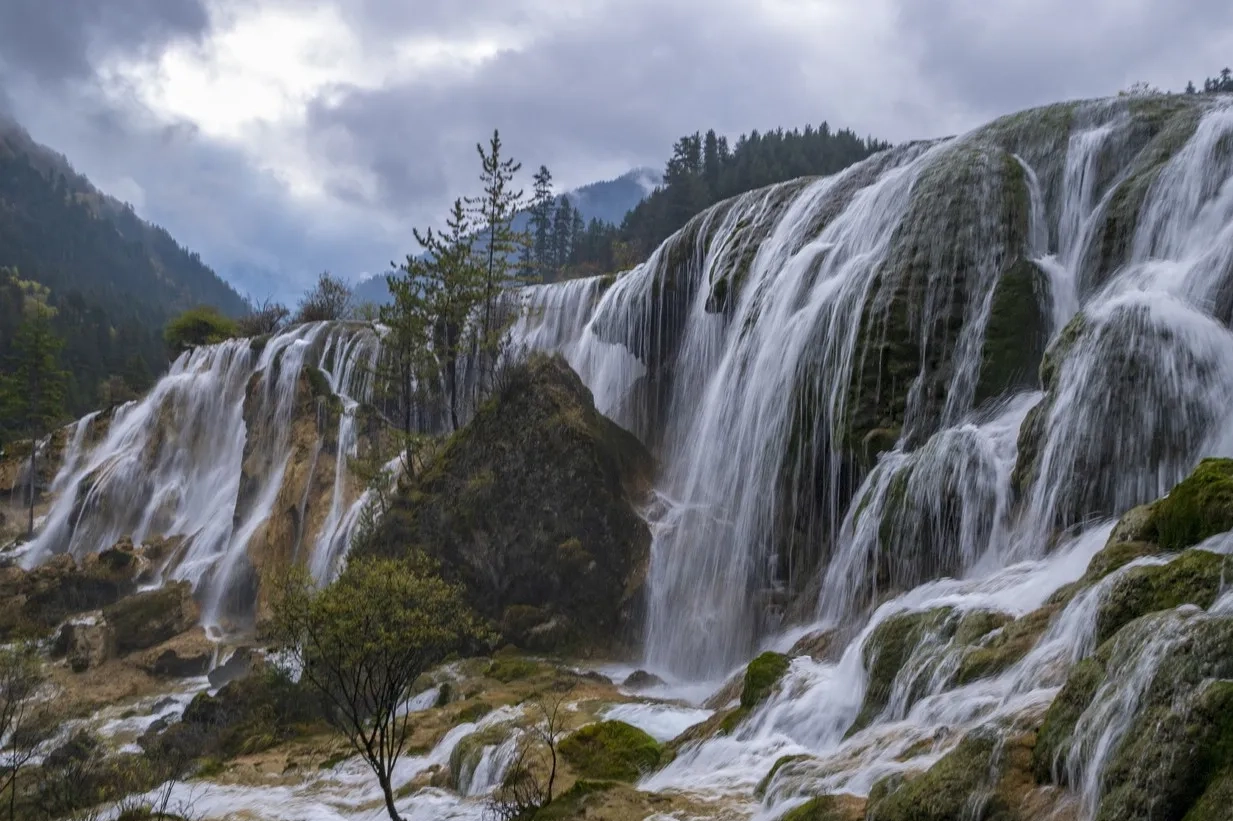
This waterfall earned its name because water droplets resemble pearls as they cascade down. It’s also a famous filming location for the closing scenes of the classic TV drama Journey to the West.
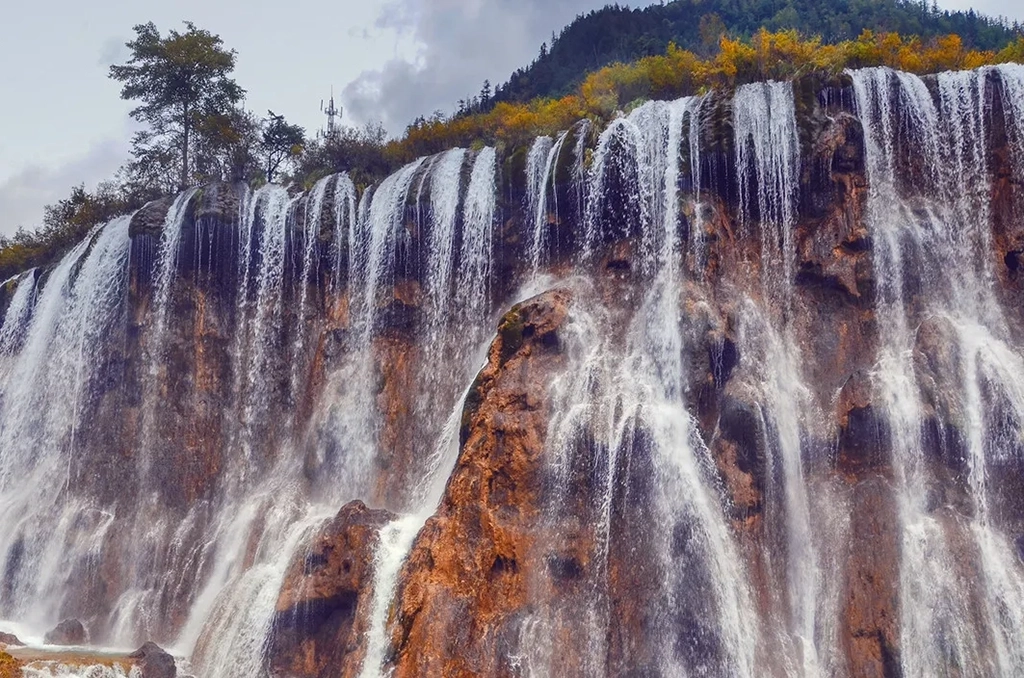
Nuorilang Waterfall
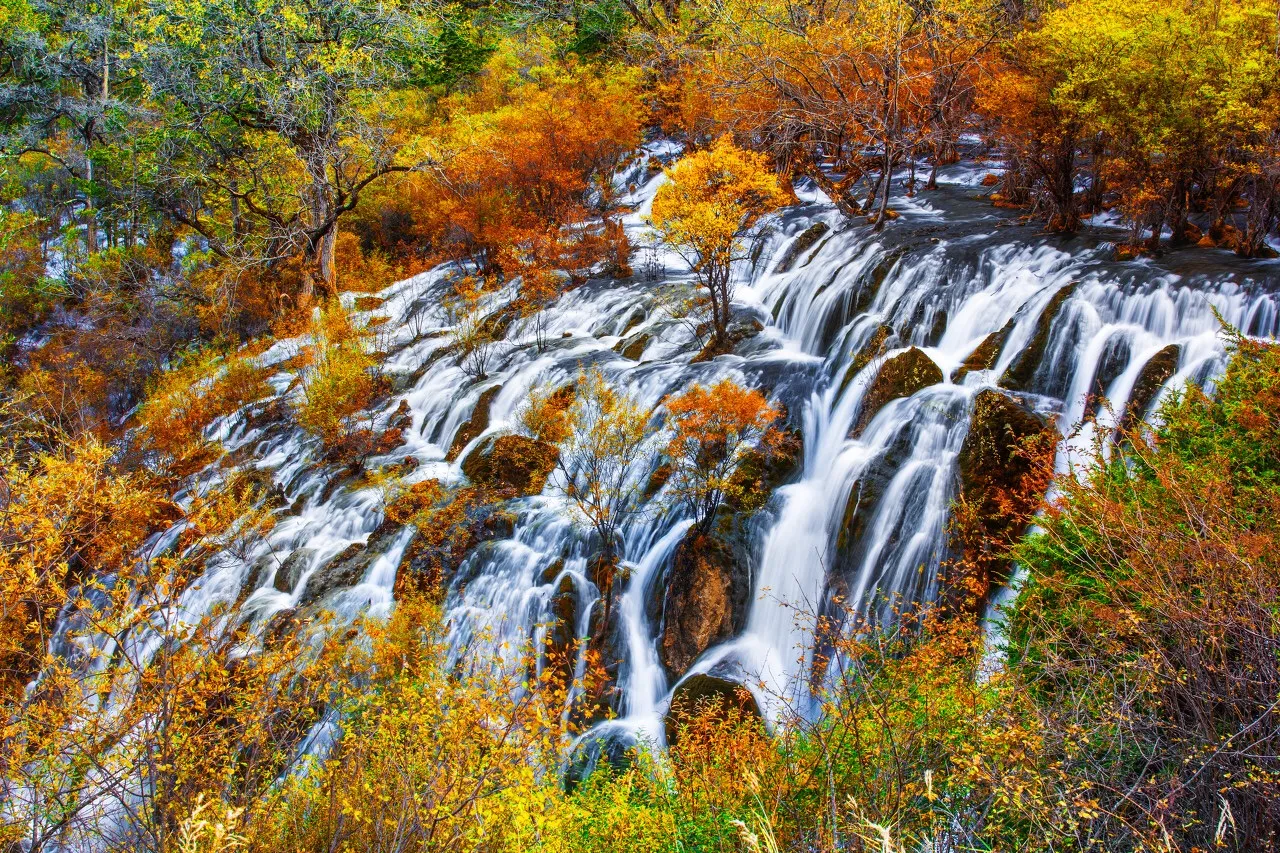
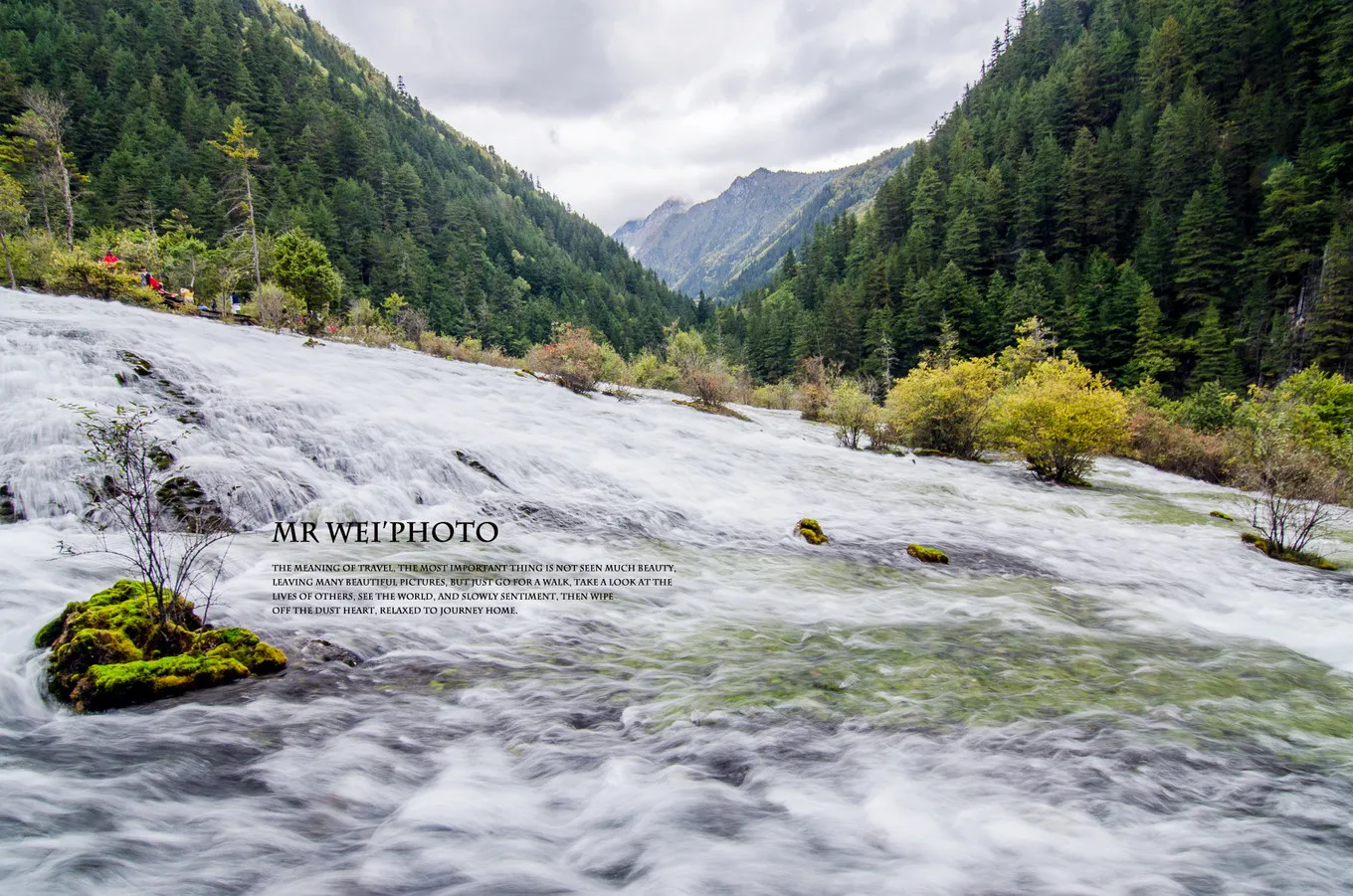
Nuorilang is one of the widest travertine waterfalls in China. The name "Nuorilang" means "majestic and grand" in Tibetan. In winter, the waterfall transforms into a stunning ice cascade, making it a unique sight.
Left Arm: Zechawa Valley
Zechawa Valley features the longest and highest-altitude routes in Jiuzhaigou. Notable attractions include:
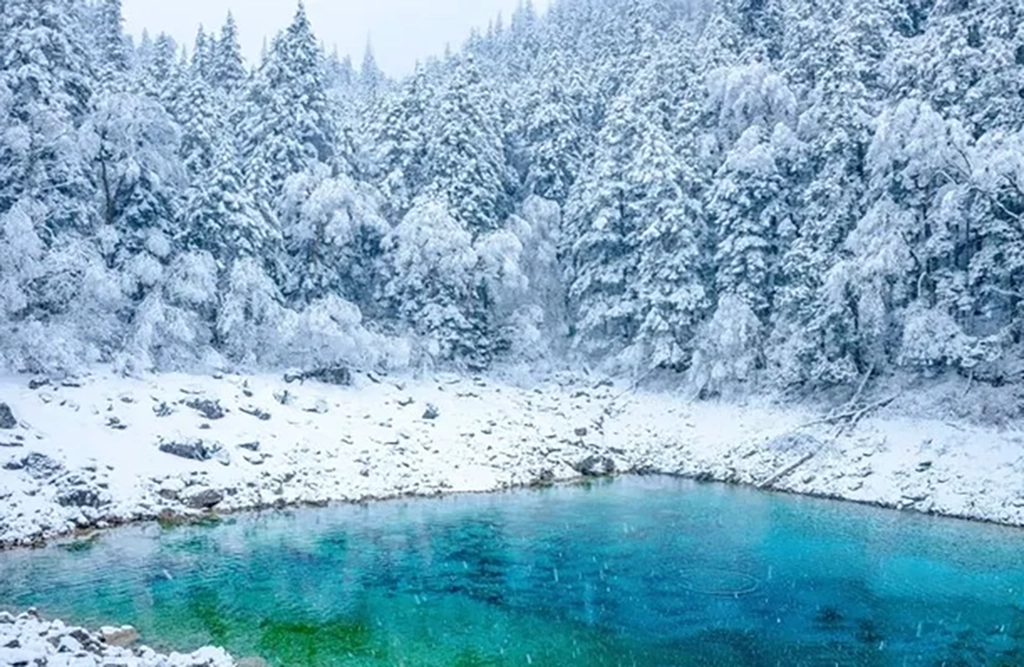
Five-Color Pool (Wucai Chi)
Despite being the smallest lake in Jiuzhaigou, Five-Color Pool is the most vibrant. Depending on the weather, it reflects hues of blue, green, and turquoise. The shimmering water looks like it’s hiding precious jewels. It’s a natural wonder that feels like a scene from a fantasy world.
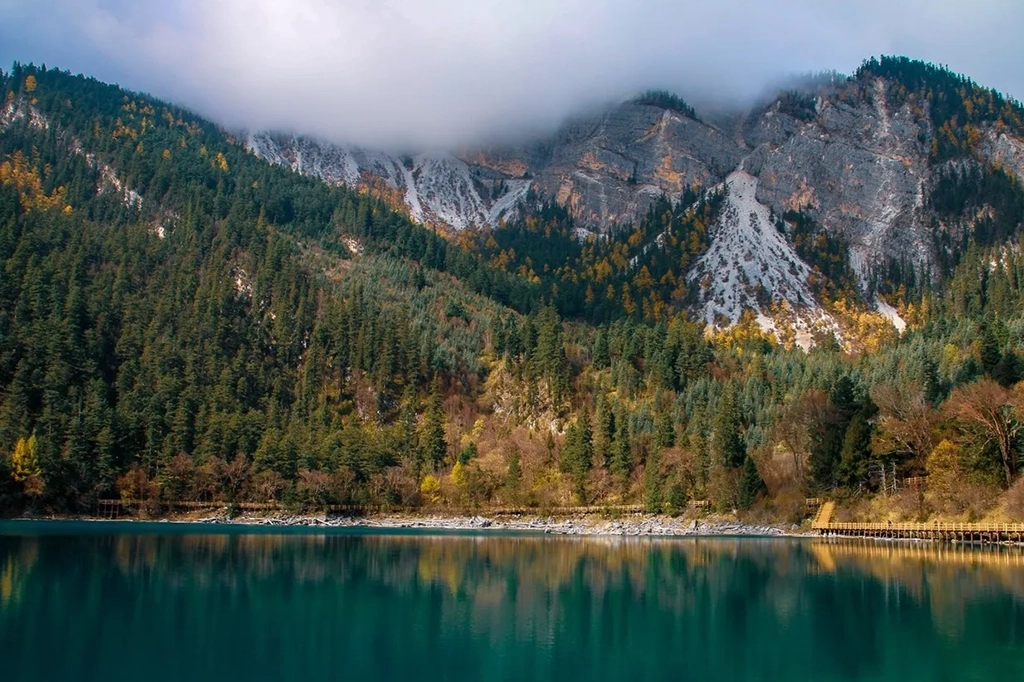
Long Lake (Chang Hai)
In contrast to Five-Color Pool, Long Lake is Jiuzhaigou’s largest and highest-altitude lake. Surrounded by snow-capped peaks, its vast, deep-blue waters are fed by melting glaciers, offering a breathtaking blend of alpine and aquatic scenery.
Jiuzhaigou Tickets & Opening Hours
Peak Season (April 1 - November 15):
- Tickets: 190 RMB/person
- Shuttle Bus: 90 RMB/person
- Hours: 8:00 AM - 5:00 PM (last entry at 2:00 PM)
Off-Peak Season (November 16 - March 31):
- Tickets: 80 RMB/person
- Shuttle Bus: 80 RMB/person
- Hours: 8:00 AM - 5:00 PM (last entry at 2:00 PM)
Note: Prices and hours may vary based on specific dates or conditions. For up-to-date information, refer to the official "Aba Tourism" or "Jiuzhaigou" WeChat accounts.
Recommended Routes
To explore Jiuzhaigou’s most iconic spots efficiently, allocate 1-2 days within the park and optionally include Huanglong Scenic Area for an extended trip. If you only have one full day, follow this route:
Morning:
1.Rize Valley: Take the shuttle to Five-Flower Lake and explore it first.Continue to Pearl Shoals Waterfall and Mirror Lake.Shuttle between stops for easy access.
2.Zechawa Valley: Take the shuttle to Long Lake and hike 20 minutes to Five-Color Pool.The Upper and Lower Seasonal Lakes do not have designated stops and can only be viewed from the bus. After visiting Five-Color Pond, take the sightseeing bus directly to the Nuorilang Service Center.
Afternoon:
Shuzheng Valley: Start at Nuorilang Waterfall and visit Tiger Lake, Rhinoceros Lake, and Shuzheng Lakes. If time allows, explore Reed Lake on foot.
Pro Tips:
- Sit on the left side of the shuttle bus when entering the park for the best views, as the lakes are mostly on this side. On your way back, switch to the right side.
- The sightseeing bus usually stops at Five-Flower Lake first. After exploring Five-Flower Lake, you can proceed to Mirror Lake. If you have enough energy, you can continue uphill to reach Pearl Shoal Waterfall.
- Arrive early to maximize your time and avoid crowds at popular spots.