Planning a trip to Hong Kong and looking for the best Hong Kong photo spots? From iconic streets and murals to hidden Instagram locations , Hong Kong is full of photogenic gems that will make your Instagram feed pop. Whether you love vibrant colors, nostalgic vibes, or unique Hong Kong sightseeing experiences, this guide highlights 11 of the city’s most Instagrammable spots. Pack your camera, charge your phone, and get ready to capture Rainbow Estate, the Mid-Levels Escalator, Mong Kok Goldfish Market, and more like a pro!
Classic “Instagrammable” Spots in Hong Kong
Tianren Heyi Pavilion – Nature Meets Architecture
__
__
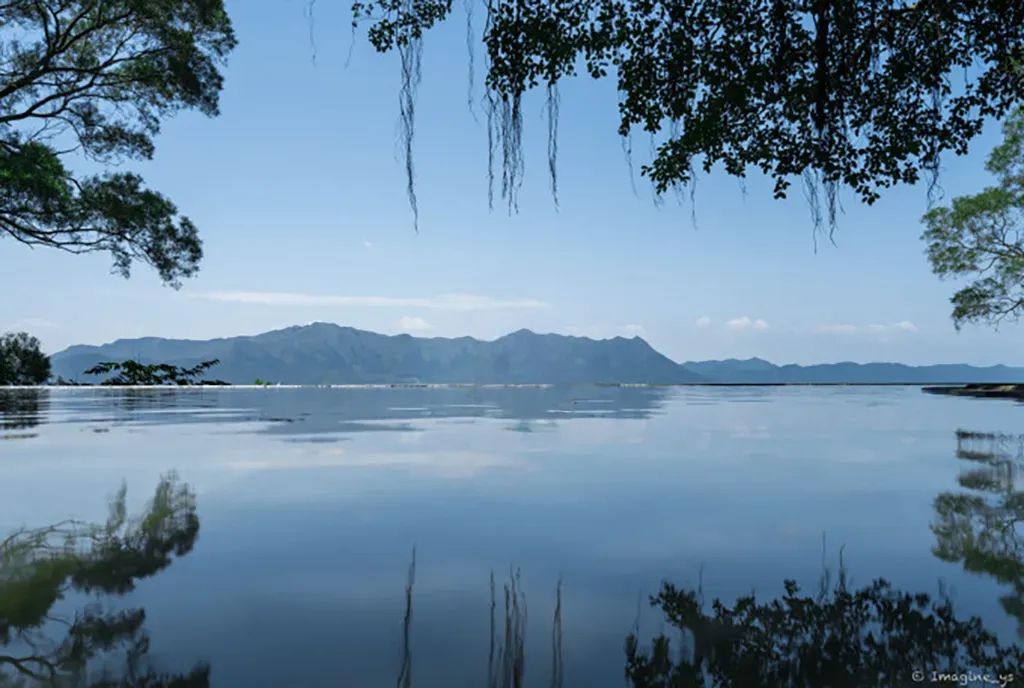
Tianren Heyi Pavilion is one of the earliest Hong Kong spots to go viral on social media. Located near the New Asia College of The Chinese University of Hong Kong, it cleverly uses a small reflective water bay to create stunning mirror-like photos. Surrounded by tranquil waters, lush greenery, and rolling hills in the background, the pavilion offers a picture-perfect scene for photographers.
How to get there: Take the MTR East Rail Line to University Station, Exit A or C, then hop on campus shuttle bus 2 or 3 to the final stop. Since it’s a bit far from downtown, most visitors pass by when entering or leaving Hong Kong from Shenzhen—making it a perfect stop along the way.
Sai Wan Swimming Shed – Vintage Coastal Charm
__
__
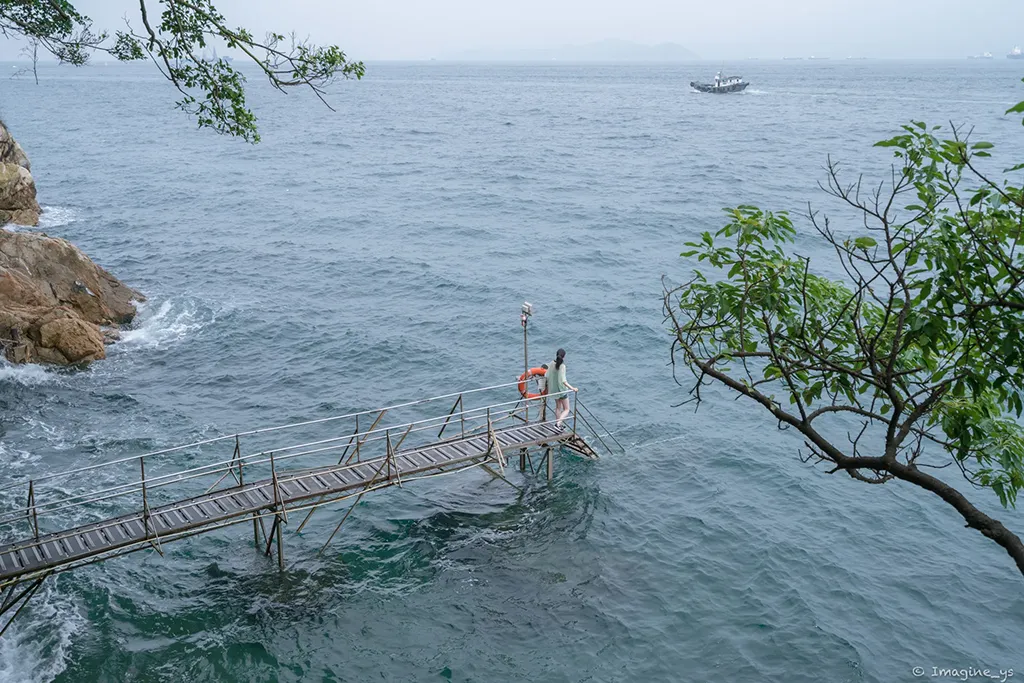
Built in the 1960s–70s, the Sai Wan Swimming Shed is one of the few remaining sheds of its kind in Hong Kong. Originally constructed for local swimmers, it’s still a popular spot for residents today. A winding wooden bridge stretches out over the sea, complemented by blue waters and waves gently crashing along the shore. The result is a tranquil, almost otherworldly setting that looks incredible on camera.
TIPS: The bridge is narrow and can get slippery from the waves—photographers and models, watch your step! Safety first.
How to get there:
- By foot: About 20 minutes from Kennedy Town Station Exit C. Follow Victoria Road uphill to the “Caritas Jockey Club Hostel” stop. Look for the Swimming Club signs on your right, then walk down the stairs to reach the shore.
- By bus/minibus: Citybus 43M to Hong Kong Island West Transfer Station, then a short walk to the Swimming Club signs. Minibus 58 also works—tell the driver to stop at Anold Home or Sai Wan Swimming Shed.
Extra tip: Sai Wan Swimming Shed is often paired with Sai Wan Pier for a full-day photo adventure. Featured in the film Love in a Puff , the pier offers wooden walkways, shipping containers, and post boxes—another Instagram favorite. Remember to wear sun protection as the two locations are a short walk apart.
Graham Street Murals – A Glimpse of Old Hong Kong
__
__
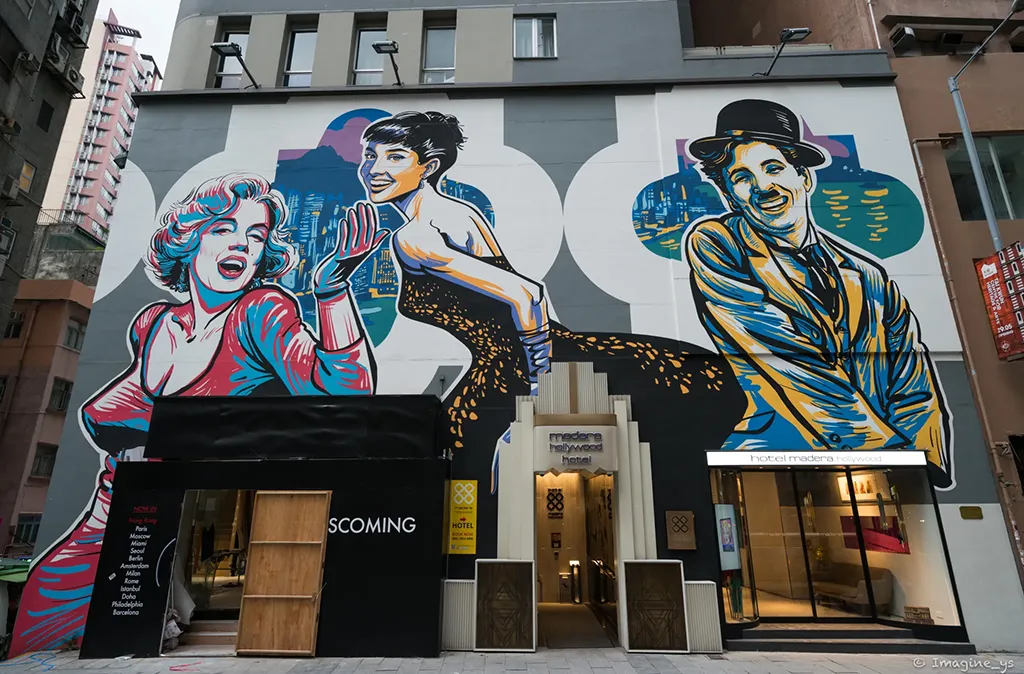
Graham Street is Hong Kong’s oldest traditional market, bustling with small vendors. Its highlight, however, is a series of vibrant murals depicting local street life against the backdrop of Kowloon Walled City. It’s a fantastic spot for colorful and culturally rich photos.
How to get there: From The Hong Kong Polytechnic University, walk to the Harbour Tunnel Station and take KMB or Citybus 101/104 to Central Market (intersection of Pak Fa Street and Graham Street).
Read Next: After shooting Hong Kong’s most photogenic spots, refuel with the city’s best street food — check out our Hong Kong Food Guide for Michelin-worthy eats that won’t break the bank.
Nostalgic Hong Kong-Style Photo Spots
Mong Kok Goldfish Market – A Classic Film Vibe
__
__
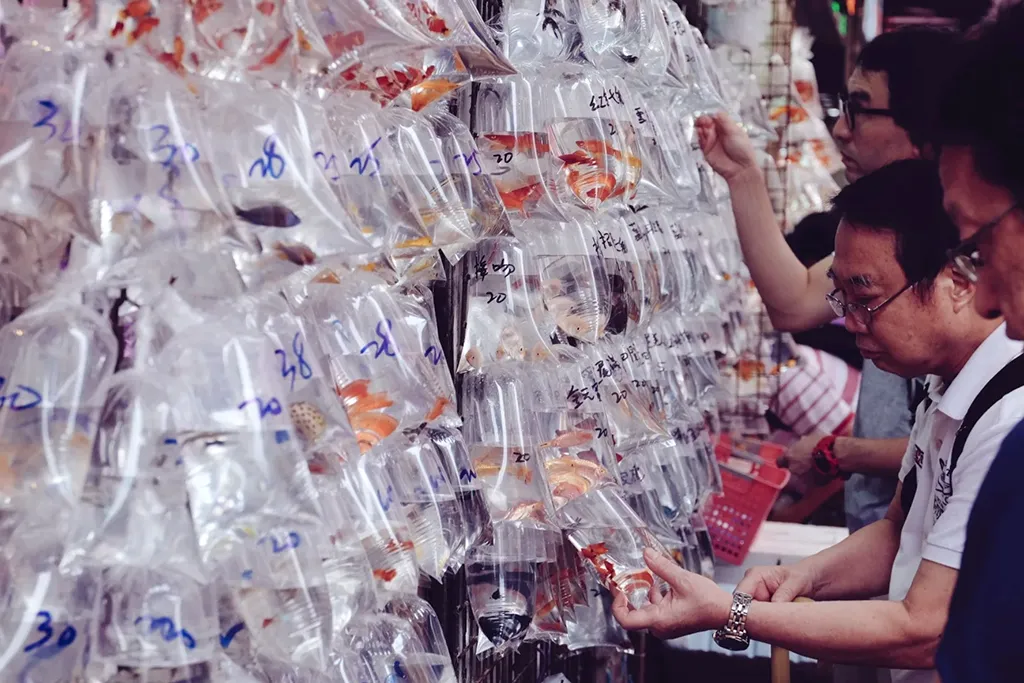
Mong Kok’s “Goldfish Market,” popularized by the film Chungking Express , is actually located on Tung Choi Street. As Hong Kong’s largest flower and bird market, it features a unique way of displaying fish—inside clear water bags hanging outside the shops, each with a price tag for easy selection. Under neon lights at night, the street exudes the nostalgic atmosphere of old Hong Kong movies.
Opening Hours: 10:30 AM – 10:00 PM
How to get there: MTR Mong Kok Station
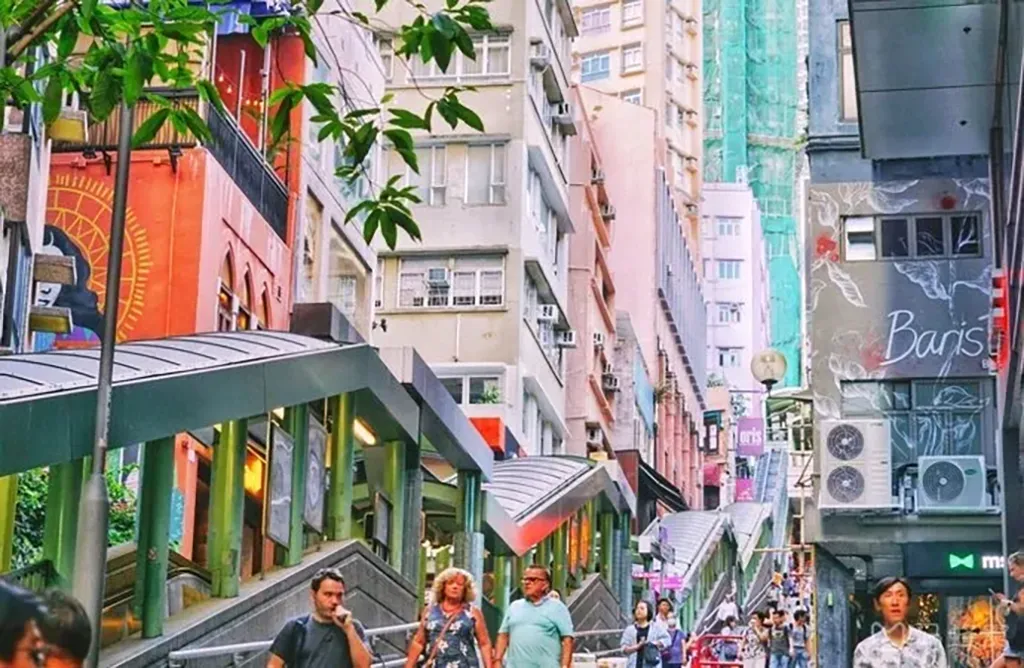
Mid-Levels Escalator – The World’s Longest Covered Outdoor Escalator
__
__
The Mid-Levels Escalator connects Central’s business district to the residential areas of Mid-Levels. Free to ride, it takes about 20 minutes from top to bottom, and you can hop on or off along the way. Fans of Wong Kar-wai’s Chungking Express will recognize the iconic scene of Faye leaning on the escalator watching Tony Leung.
How to get there: MTR Central Station, Exit C. Walk along Des Voeux Road Central, turn left at Wellington Street, and walk about 10 minutes. Open hours: Downward direction 6:00 AM – 10:00 AM, Upward 10:30 AM – midnight
Public Housing Estates – Hidden Architectural Gems
In Hong Kong’s high-density and expensive urban landscape, public housing estates were built from the 1960s to provide affordable housing. Many estates are award-winning designs and make for striking photography. Notable estates include Rainbow Estate, Lok Wah Estate, Monster Building (no photography), and Pak Foo Garden (no photography), along with many other culturally rich locations.
NOTICE: These are residential areas, not tourist attractions. Please be respectful, avoid disturbing residents, and comply with “no photography” signs. For certain angles, you may need to lean or climb safely—always prioritize safety.
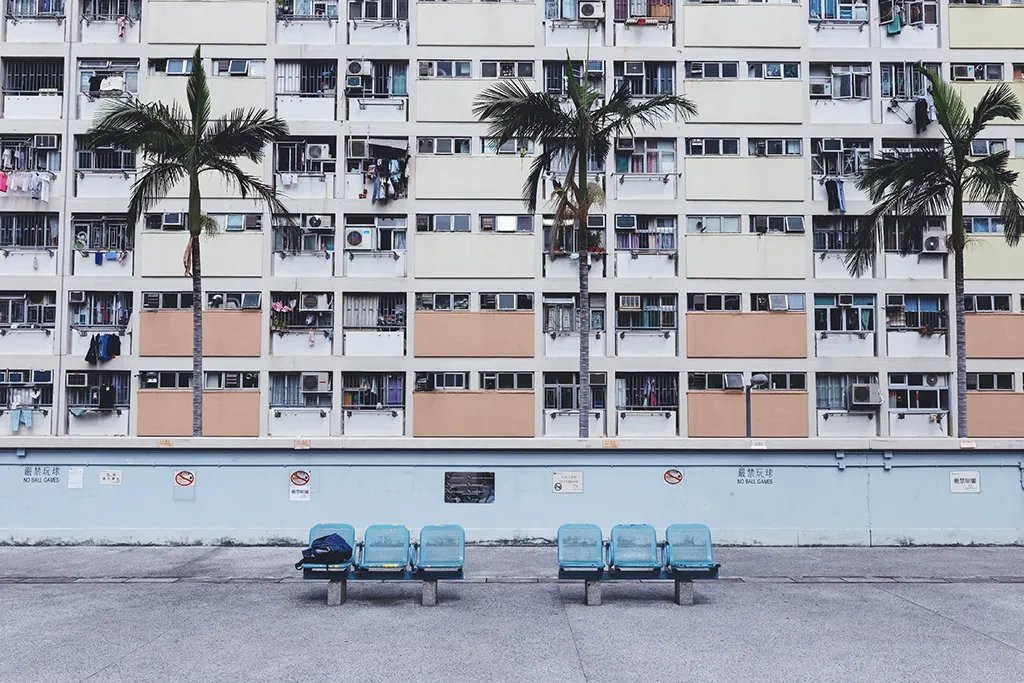
Rainbow Estate – The Iconic Seven-Color Landmark
__
__
Located in Ngau Chi Wan, Wong Tai Sin District, Rainbow Estate is one of Hong Kong’s earliest public housing projects and won a Silver Award from the Hong Kong Institute of Architects in the 1960s. Its vibrant, rainbow-colored exterior makes it one of the most Instagrammable spots in Hong Kong. Each of the nine buildings is named after a color.
How to get there: MTR Kwun Tong Line, Rainbow Station, Exit C4. A small entrance on the right leads to the rooftop basketball court.
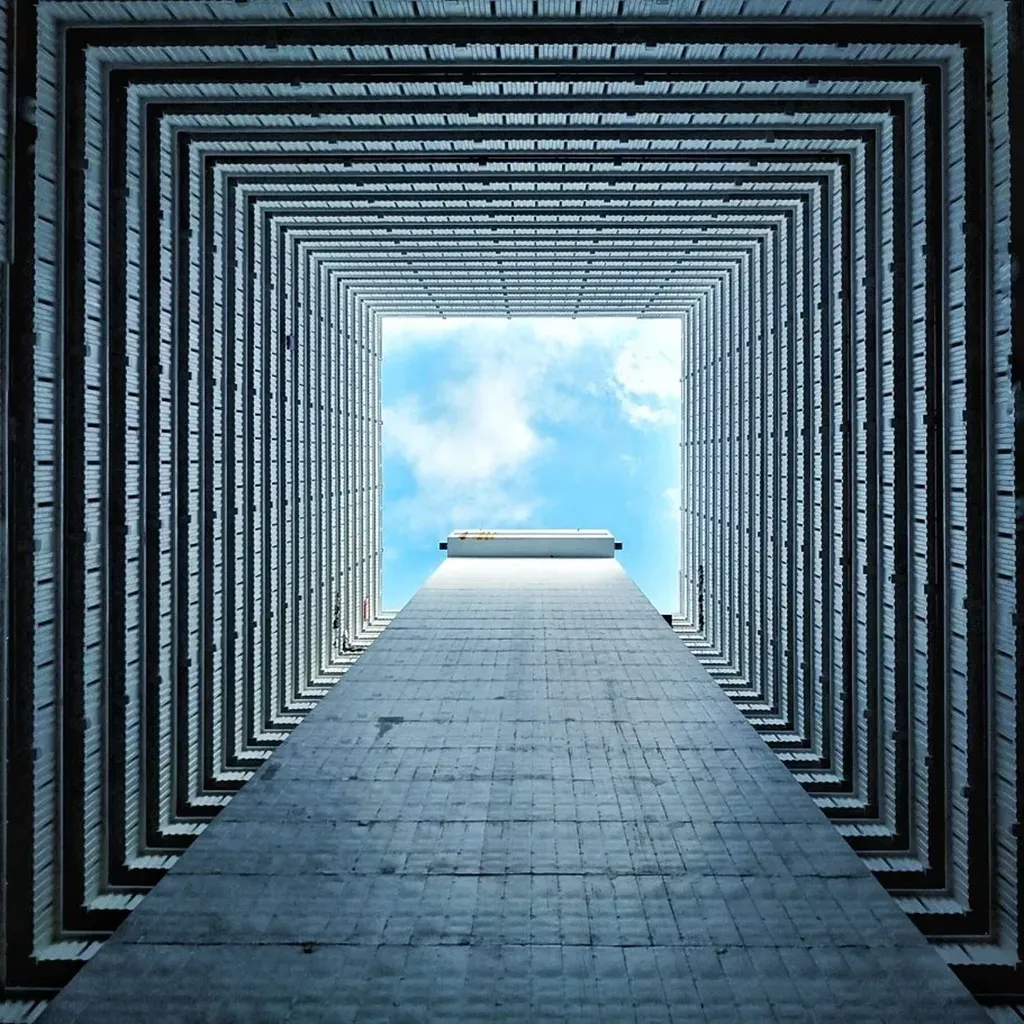
Ping Shek Estate – Symmetrical Beauty
__
__
Built in the 1970s near Rainbow Estate, Ping Shek Estate features square-shaped buildings. From a low-angle perspective, the contrast between dark inner courtyards and bright sky above creates a dramatic, almost cinematic effect.
How to get there: MTR Rainbow Station, Exit A2, directly opposite Rainbow Estate.
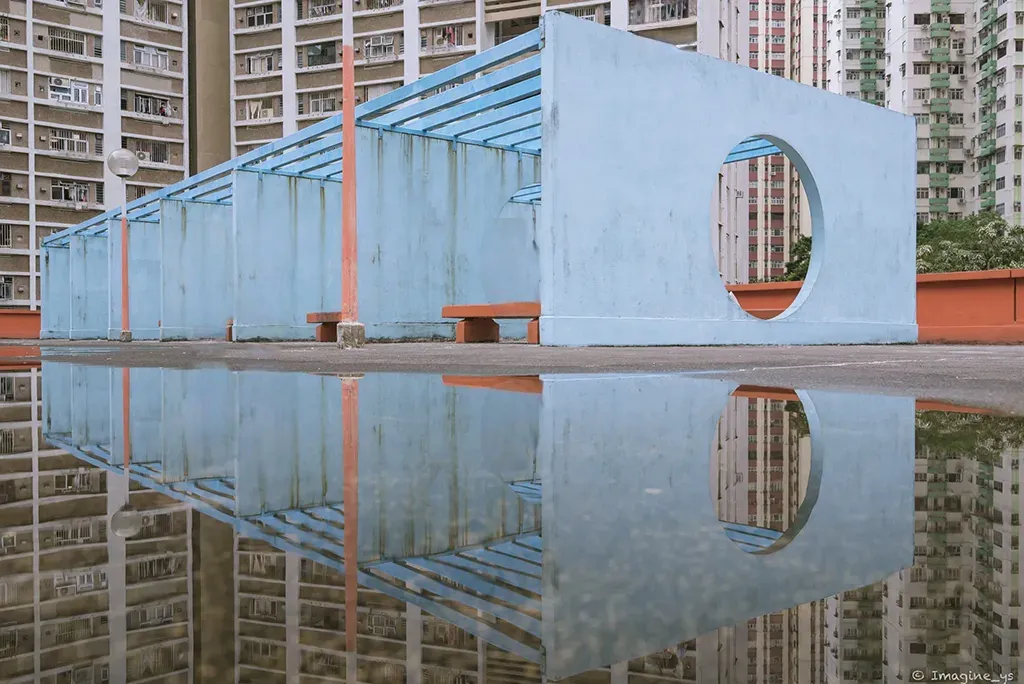
Lok Wah South Estate – Tiffany Blue Rooftop
__
__
Lok Wah South Estate in Kwun Tong is famous for its hidden rooftop parking area. Two rows of Tiffany Blue concrete walls create a tunnel-like effect, offering unique photo opportunities from multiple angles.
Lai Tak Estate – Hong Kong’s Unique Cylindrical Design
__
__
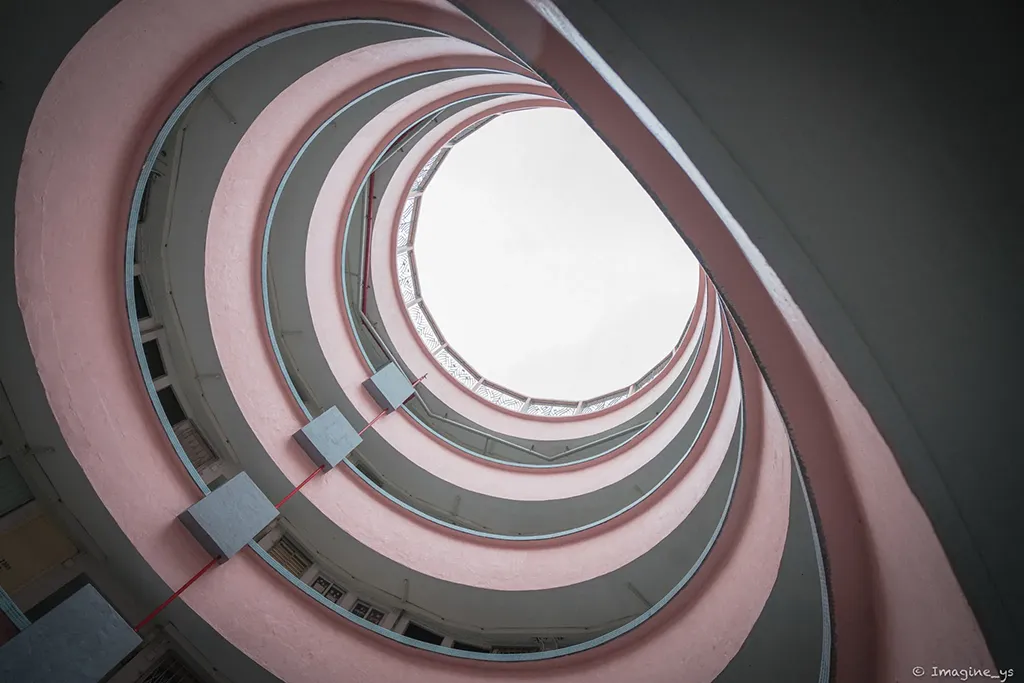
Lai Tak Estate, built in 1969, consists of eight buildings, four of which are uniquely cylindrical. From higher floors, the view resembles an endless whirlpool, with stair rails adapted to triangular shapes.
How to get there: Bus from Wah Fu Village to Lai Tak Estate (Citybus 1 transfer to New Bus 26). Often paired with nearby photo spots like the Monster Building and Pak Fuk Park, though the latter two now prohibit photography.
Nam Shan Estate – Retro Playground Charm
__
__
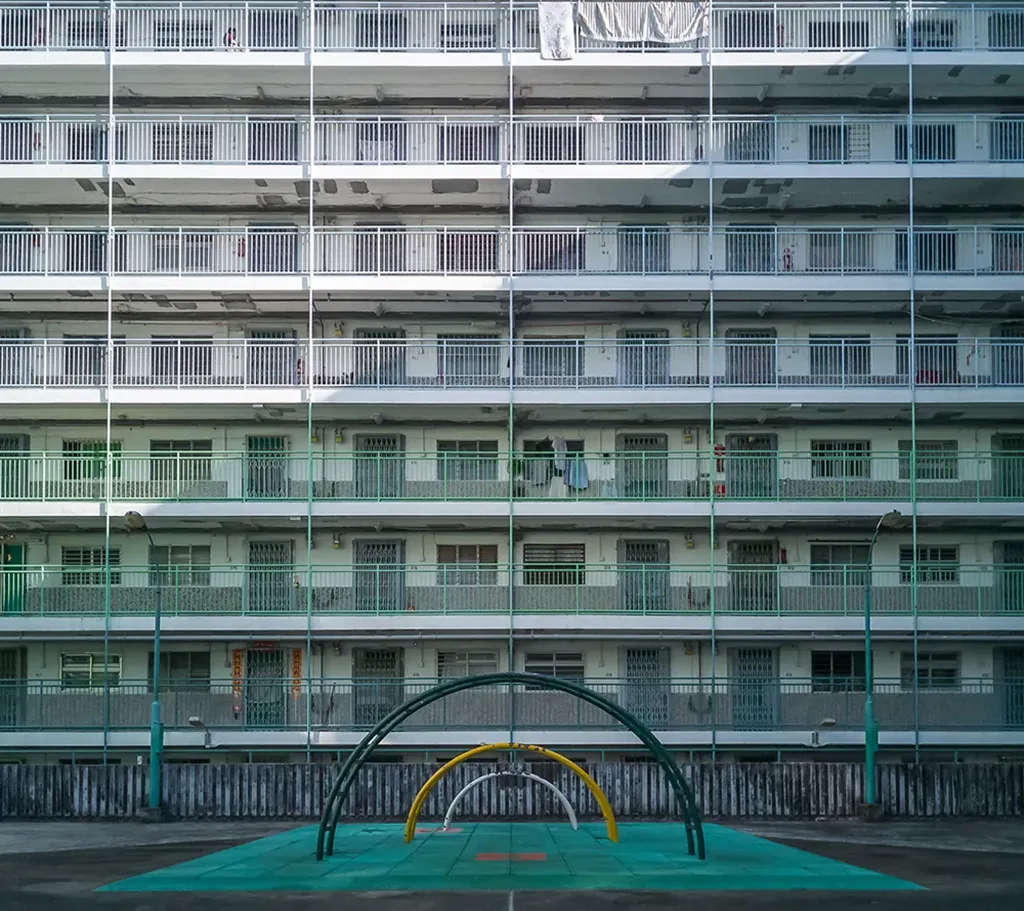
Built in 1975, Nam Shan Estate features eight buildings with shades of green. The highlight is its old-style playground, surrounded by buildings on three sides, creating a unique sense of space. After rain, the open area may even form a “sky mirror” effect. There’s also a giant flying chessboard and a 60-year-old tree worth checking out.
How to get there: MTR Shek Kip Mei Station, Exit B2. Walk toward Wo Che Street, enter the estate, and climb the stairs near the market to reach the open area.
Oi Man Estate – Symmetry in Design
__
__
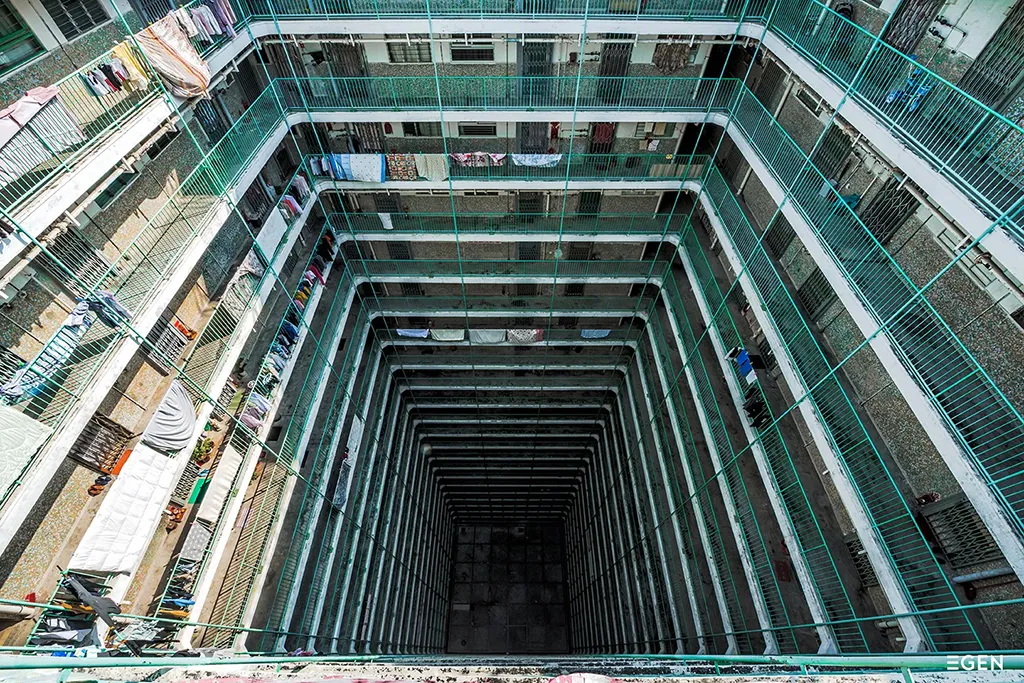
Built in the 1970s, Oi Man Estate comprises five buildings: Wai Man House, Tun Man House, Tak Man House, Sun Man House, and Shun Man House. It’s the largest traditional public housing estate in Kowloon, and its symmetrical architecture makes it a must-visit photography spot.
Conclusion
Now that you know the top 11 Hong Kong photo spots , it’s time to start exploring! Don’t forget to respect local residents, follow safety tips, and enjoy every moment behind the lens. Share your shots from Rainbow Estate , Sai Wan Swimming Shed , and other famous Hong Kong Instagram locations , and inspire your friends to visit these unique Hong Kong sightseeing spots too. Which location are you most excited to photograph first?