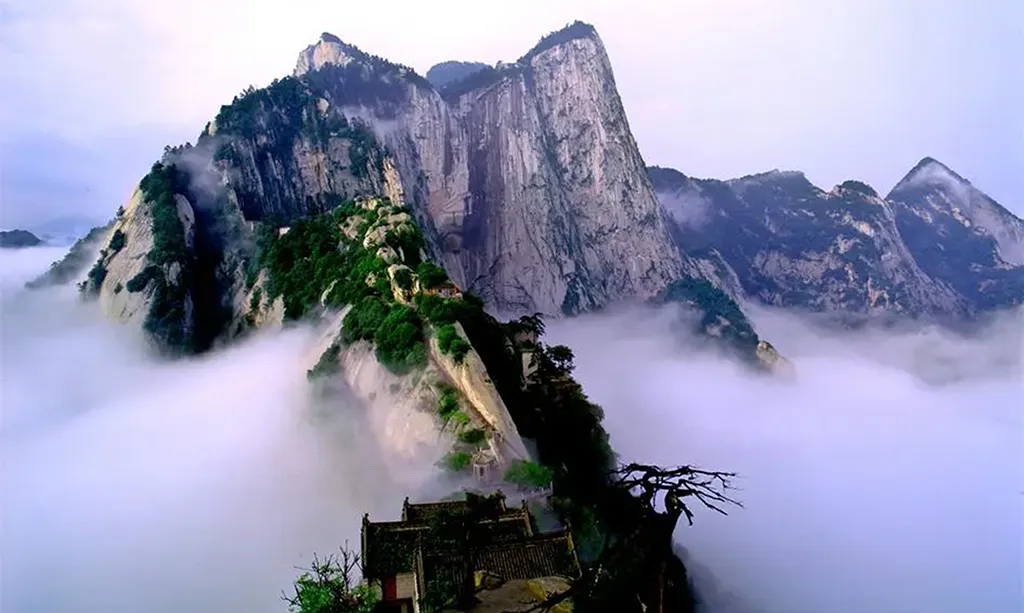
Discover the best outdoor adventures around Xi’an, from iconic mountains like Huashan , Taibai Mountain , and Zhongnan Mountain , to peaceful meadows, ranches, and camping spots.
Whether you enjoy challenging hikes, scenic cable car routes, or easy day-trip escapes, this guide covers the top places for views, nature, and fresh air.
Perfect for travelers looking to explore Xi’an beyond the city and enjoy the mountains, forests, and wide-open grasslands.
Let’s Go Hiking
Huashan(华山,Huàshān)
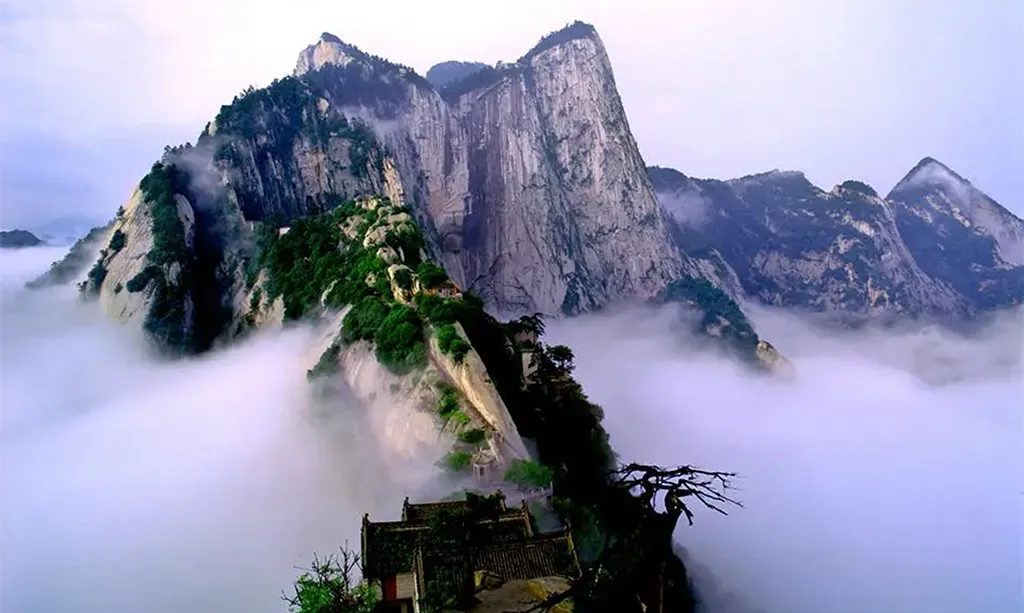
Huashan is famous for being “the most dangerous mountain in China,” and it’s also a sacred site of the Quanzhen School of Taoism. The mountain has five major peaks and more than 20 Taoist temples. Many travelers choose to hike at night, aiming to catch the sunrise at the East Peak. Don’t miss the iconic spots: Chang Kong Plank Road , Yaozi Fanshen , and the East Peak sunrise.
The East Peak is the best place to watch the first light break over the ridges. Every second feels different.
If you want to truly feel Huashan’s dramatic cliffs, try the Chang Kong Plank Road — a wooden plank walkway hanging off the cliff with only chains to hold. It’s known as the most dangerous path on the mountain.
Yaozi Fanshen is considered the “second most dangerous spot,” requiring courage and flexibility to pass through.
If you want to truly feel Huashan’s dramatic cliffs, try the Chang Kong Plank Road — a wooden plank walkway hanging off the cliff with only chains to hold. It’s known as the most dangerous path on the mountain.
Yaozi Fanshen is considered the “second most dangerous spot,” requiring courage and flexibility to pass through.
Travel tips: Before a night climb, check the weather forecast to make sure you can catch the sunrise. Bring warm clothes — mountain nights can be very cold.
Tickets & Hours
-
Entrance: 160 RMB/person
-
Transport: Visitor Center → North Peak cable car shuttle 20 RMB/person; North Peak cable car 80 RMB/one way
-
Visitor Center → West Peak cable car shuttle 40 RMB/person; West Peak cable car 140 RMB/one way
-
Operating hours: Cable car up: 7:30–16:00; cable car down: 7:30–20:00
How to Get There
Take the high-speed train from Xi’an North Station to Huashan North. The ride takes 28 minutes and costs 54.5 RMB. From the station, a shuttle bus to the Visitor Center costs 10 RMB, and a taxi is usually under 20 RMB.
During peak seasons, Xi’an city also operates direct tourist buses to Huashan from Shijiajie Metro Station Exit C1 at the Qinzhifeng departure area.
During peak seasons, Xi’an city also operates direct tourist buses to Huashan from Shijiajie Metro Station Exit C1 at the Qinzhifeng departure area.
Recommended Routes
-
Full Scenic Route:
Visitor Center → West Peak cable car → West Peak → South Peak → East Peak → Middle Peak → North Peak → North Peak cable car → Visitor Center -
Easy & Time-Saving Route:
Visitor Center → West Peak cable car → West Peak viewpoint → return the same way -
Hiking Route:
For hardcore hikers used to outdoor overnights, try the classic multi-hour trail “From Ancient Times, There’s Only One Path Up Huashan.”
Route: Yuquan Temple → Qianchi Zhuang → North Peak → Ca’er Cliff → Cangyun Ridge → Jinsuo Pass → East Peak → Yaozi Fanshen → West Peak → Wuyun Peak → return
Bonus Stop — Shaohuashan(少华山,Shǎohuáshān)

Still want more after Huashan? Head to Shaohuashan , considered Huashan’s twin. The two mountains share the same ridge system. In the classic novel Water Margin , many stories of “Nine-Dragoned Shi Jin” take place here. Old mountain gates and stone fort ruins from a hundred years ago are still visible today.
Shaohuashan has two main scenic areas: Qianlong Temple and Shimen Gorge. The only way to reach Qianlong Temple is by cable car — a line 1,858 meters long with a vertical drop of 837 meters, known as the “longest cableway in Northwest China and the steepest in Huaxia.”
Qianlong Temple is considered the earliest royal temple in China and is known as the “First Zen Forest Under Heaven.”
Qianlong Temple is considered the earliest royal temple in China and is known as the “First Zen Forest Under Heaven.”
Tickets
-
Entrance: 60 RMB/person
-
Shuttle bus (round trip): 30 RMB/person
-
Cable car (round trip): 100 RMB/person
Opening Hours
- Shuttle bus: 8:00–17:30
How to Get There
A direct bus leaves Xi’an Fangzhicheng Bus Station at 8:00 every morning and returns at 17:00.
Suggested Route
Visitor Center → Lower Cable Car Station → Upper Cable Car Station → Glass Walkway → Longshou Pavilion → Qianlong Temple → Downhill → Shimen Gorge → Jinchán Lake → Tianxian Waterfall → Lovers’ Valley → return
Zhongnan Mountain – Nanwutai Scenic Area(终南山·南五台,Zhōngnánshān · Nán Wǔtái)
Zhongnan Mountain, also known as Taiyi Mountain , is said to be where the Taoist immortal Taiyi Zhenren cultivated his spiritual path. For centuries, it has been a retreat for people seeking to escape the noise of city life.
You’ll find peaceful forests, ancient pavilions with precious stone inscriptions, and Yangtianchi , a pool said to be used by Laozi while forging his elixir furnace. These legends give the whole mountain an unmistakable “immortal energy.”
Side Trip — Cuihua Mountain(翠华山,Cuìhuáshān)

Cuihua Mountain sits close to Zhongnan Mountain and offers the same quiet, ancient atmosphere. The area has three major scenic zones: Bishan Lake , Heavenly Lake , and the Rockfall Stone Sea. Each one has impressive scenery and many easy viewpoints.
At the foot of Zhongnan Mountain lie five peaks — Qingliang , Wenshu , Sheshen , Lingying , and Guanyin — collectively known as Nanwutai. It’s one of the best spots near Xi’an to see a sea of clouds. Many photographers haul all their gear up the mountain just to capture this rare view.
Tickets
-
Entrance: 45 RMB
-
Shuttle bus (one way): 20 RMB/person
Opening Hours
- 9:00–17:00
How to Get There
From Weiqu South Station , take buses 335 , 338 , or the 730 Chang’an Tourist Line to Nanwutai, then walk to the scenic area.
Travel tip: The last shuttle bus leaves at 16:10. Miss it, and you’ll have to hike down, so plan your time carefully.
Tayun Mountain(塔云山,Tǎyúnshān)

The main peak of Tayun Mountain rises to 1,665.8 meters , shaped like a pagoda and piercing into the clouds. It’s known as “the golden peak touching the sky, floating above a sea of pines and mist.”
The Taoist temple complex here was built during the Ming Zhengde period. The most striking part is the Golden Peak Guanyin Hall — less than six square meters — standing on a razor-sharp summit with cliffs dropping on three sides. It’s called the “Pillar of Qin and Chu” , a temple perched at the world’s edge.
The Taoist temple complex here was built during the Ming Zhengde period. The most striking part is the Golden Peak Guanyin Hall — less than six square meters — standing on a razor-sharp summit with cliffs dropping on three sides. It’s called the “Pillar of Qin and Chu” , a temple perched at the world’s edge.
The trail up Tayun Mountain is relatively easy. Along the way, you’ll find a glass walkway , suspension bridge , small karst cave , and even a zipline — not huge attractions, but fun enough to add excitement.
Continue upward and you’ll reach the Golden Peak itself, where a 400-year-old Taoist sanctuary suddenly appears in front of you.
Continue upward and you’ll reach the Golden Peak itself, where a 400-year-old Taoist sanctuary suddenly appears in front of you.
Tickets
-
Entrance: 100 RMB/person
-
Shuttle bus (round trip): 20 RMB/person
Opening Hours
- 8:00–18:00
How to Get There
Dedicated tourist buses run several times a day from Zhen’an Bus Station directly to Tayun Mountain.
Taibai Mountain(太白山,Tàibáishān)

Taibai Mountain rises to 3,771.2 meters , making it the highest peak of the Qinling Mountains and the tallest summit east of the Qinghai–Tibet Plateau. Each season brings a different landscape, and snowfall in June is completely normal.
At the very top stands Baxiantai(拔仙台) , also 3,771.2 meters high — the highest point in Shaanxi Province. With snow lasting 8–9 months , the famous saying “Snow on Taibai even in June” describes its unique mountain climate.
At the very top stands Baxiantai(拔仙台) , also 3,771.2 meters high — the highest point in Shaanxi Province. With snow lasting 8–9 months , the famous saying “Snow on Taibai even in June” describes its unique mountain climate.
Travel tip: From March to June and September to December, temperatures can be very low. Bring a thick jacket to stay warm.
Read Next: After tackling Xi’an’s mountain trails, unwind with a different kind of city experience — explore our 5 Trendy & Instagrammable Food Spots in Xi’an (2026 Guide) for Xi’an’s most photogenic cafes and sweet treats.
Tickets
-
Entrance: 90 RMB/person
-
Shuttle bus (round trip): 60 RMB/person
-
Tianxia Cable Car: 120 RMB one way / 230 RMB round trip
Opening Hours
- 08:00–18:00
How to Get There
At the Xi’an Bus Station (across from Xi’an Railway Station), take the Taibai Mountain Tourist Line for 37.5 RMB/person.
Route Overview
Take the shuttle bus — the ride is about 42 km , stopping at Lianhuafeng Waterfall , Pomoshi , and Shiwai Taoyuan before reaching the Honghuaping transfer point.
You can explore Taibai Mountain via two main routes :
Route 1 — Scenic & Comfortable
Continue upward by shuttle bus and enjoy the views:
Qinü Peak → Ten-Thousand-Mu Rhododendron Garden → Stone Array → Xiabansi → Huixianping → Fuyunge Cable Car → Shangbansi → Baxiantai → Tianyuandifang → return
Qinü Peak → Ten-Thousand-Mu Rhododendron Garden → Stone Array → Xiabansi → Huixianping → Fuyunge Cable Car → Shangbansi → Baxiantai → Tianyuandifang → return
Route 2 — For Experienced Hikers
This route requires cold-weather gear and an overnight plan.
Take the Tianxia Cable Car → Tianyuan Difang to view quaternary glacial landforms → Xiaowengong Temple (the border between the scenic area and the protected zone; registration required beyond this point) → Dawengong Temple → Huitou Slope → Daye Lake → Baxiantai for sunrise → return
Take the Tianxia Cable Car → Tianyuan Difang to view quaternary glacial landforms → Xiaowengong Temple (the border between the scenic area and the protected zone; registration required beyond this point) → Dawengong Temple → Huitou Slope → Daye Lake → Baxiantai for sunrise → return
Important: Xiaowengong Temple marks the boundary of the undeveloped conservation area. Beyond this point, you must register, and safety is your own responsibility — proceed carefully.
Let’s Go Camping!
Shizigou Ranch in Hanzhong(汉中狮子沟牧场,Shīzigōu Mùchǎng)
Legend says Shizigou Ranch was once where Zhuge Liang raised warhorses. Today, its cliffs, ruins, and peaceful cattle and sheep form a striking contrast — creating a quiet, pastoral scene that feels frozen in time.
Since it’s quite far from Xi’an, it’s best to combine it with nearby attractions in Liuba County.
-
Zibaishan National Forest Park is about a 10-minute drive away.
-
Liuba Old Street is around 30 minutes by car.
In warm seasons, Shizigou becomes an excellent camping spot , offering plenty of open land and cool breezes.
Opening Hours: Open all day, free entry
Driving Time:
Driving Time:
-
~6h50m from Xi’an
-
~2h10m from Hanzhong
Zhaojin Ranch(照金牧场,Zhàojīn Mùchǎng)
If Shizigou feels too far, Zhaojin Ranch is the perfect same-day trip from Xi’an. Its climate and landscape are surprisingly similar to natural ranches in Central Europe.
Set against rolling Danxia peaks , the ranch changes with each season. You’ll find natural forests, small wetlands, a shooting range, mountain biking trails, camping areas, and barbecue zones.
Kids, adults, and even dogs can all run free and enjoy the open space.
Kids, adults, and even dogs can all run free and enjoy the open space.
Opening Hours: Open all day, free entry
Driving Time: ~1h20m from Xi’an
Driving Time: ~1h20m from Xi’an