Chengdu’s Giant Panda Breeding Base is arguably the largest panda paradise in China—and perhaps the world. Many domestic and international tourists travel thousands of miles just to catch a glimpse of these “national treasures.” Here, you can watch pandas play outdoors in their adorable, clumsy manner, and if you’re lucky, you might even see newborn panda cubs in the maternity ward.
How to Quickly Find the Pandas
Although the base provides a clear map, it’s surprisingly easy to get lost once inside. Surrounded by dense bamboo forests and large trees, it’s easy to lose your sense of direction. Here’s how to quickly locate the pandas.
Giant pandas naturally live in dense bamboo forests at altitudes of 2,600–3,500 meters, where temperatures remain below 20°C (68°F) year-round. They prefer cooler conditions and avoid heat. On mild days, pandas are active in the outdoor enclosures, but when the temperature rises above 26°C (79°F), they retreat indoors to stay cool.
During hot summer weather, if you don’t see pandas in the outdoor enclosures, you can visit indoor areas such as the Moon Maternity Ward, Panda Villa No.1, Panda Villa No.2, the Sun Maternity Ward, and the Juvenile Panda Villa. Alternatively, you can ask nearby staff for guidance.
Panda Villa No.1 & No.2
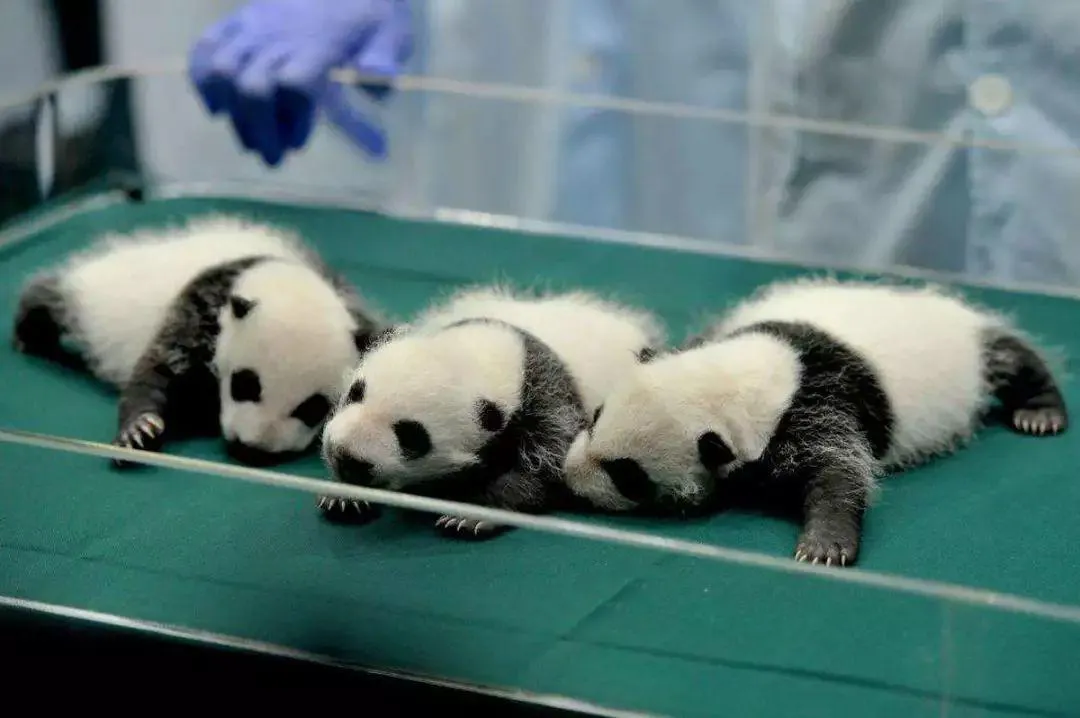
Villa No.1 and Villa No.2 are home to adult pandas. Here, you can watch them playing, eating, sleeping, and going about their daily routines.
Moon Maternity Ward & Sun Maternity Ward
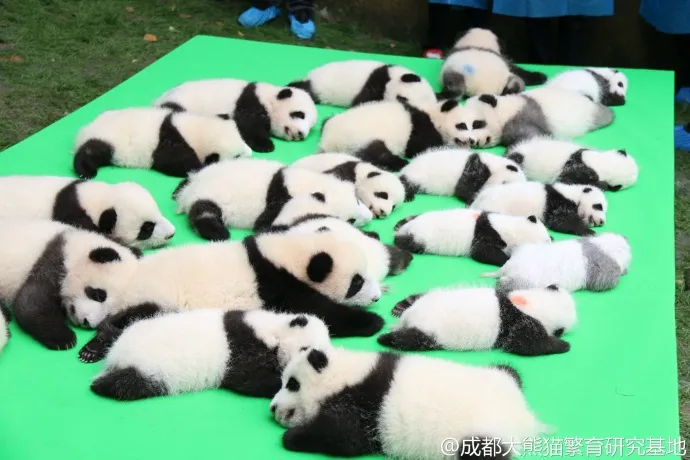
The Moon and Sun Maternity Wards are where pregnant pandas wait for birth, and where newborn and young pandas live. There is usually a “newborn panda meet-and-greet” every afternoon from 2:00–4:00 PM. Autumn is the panda birthing season, making it the best time to visit.
The young pandas in the Moon Maternity Ward are especially worth seeing. Most are around three to four months old—some scratching themselves, rolling over, or quietly napping. Their adorable antics often elicit cheers from visitors.
Read Next: To explore more of Chengdu, check out our Chengdu Must-Do Highlights or Chengdu Street Food Guide.
Recommended Visit Routes
Admission: 55 RMB per person; half-price tickets 27 RMB.
Route 1 (Approx. 1.5 hours)
Main Entrance → Swan Lake (Rose Garden) → Sub-adult Panda Villa → Adult Panda Villa → Juvenile Panda Villa → Sun Maternity Ward → Red Panda Activity Area No.2 → Red Panda Maternity Ward → Red Panda Activity Area No.1 → Panda Charm Theater → Panda Enclosure No.14 → Panda Science Discovery Center → Panda Museum → Main Entrance
Route 2 (Approx. 3 hours)
Main Entrance → Swan Lake (Rose Garden) → Adult Panda Villa → Juvenile Panda Villa → Sun Maternity Ward → Panda Villa No.2 → Moon Maternity Ward → Panda Villa No.1 → Panda Kitchen → Panda Hospital → Panda Science Discovery Center → Panda Museum → Main Entrance
Tickets & Shuttle Car Information
Tickets
-
Price: Morning ticket 50 RMB/person, Afternoon ticket 55 RMB/person; tickets can be booked online up to 7 days in advance.
-
Opening Hours:
-
Winter (Nov 1 – Feb 29): 8:00–17:30, last entry at 16:30 (Morning ticket: 8:00–12:00; Afternoon ticket: 12:00–16:30)
-
Summer (Mar 1 – Oct 31, 2024): 7:30–18:00, last entry at 17:00 (Morning ticket: 7:30–12:00; Afternoon ticket: 12:00–17:00)
-
Tourist Shuttle Car
The Chengdu Panda Base covers about 1,000 acres. Walking around takes roughly 3 hours, so most visitors take the electric shuttle car to save about half the time. If visiting in a small group, it’s recommended to take the shuttle.
-
Price: 30 RMB/person
-
Route: Ticket Office → Swan Lake → Panda Charm Theater → Red Panda Activity Area → Sun Maternity Ward → Panda Villa No.2 → Moon Maternity Ward → Panda Villa No.1 → Moon Maternity Ward → Panda Villa No.2 → Sun Maternity Ward → Red Panda Activity Area → Panda Charm Theater → Panda Enclosure No.14 → Ticket Office
-
Operating Hours:
-
Peak Season (Apr–Oct): 7:30–18:00
-
Off Season (Nov–Mar): 8:00–17:30
-
Shopping & Dining
Within the Chengdu Panda Base, there are several souvenir shops: at the main entrance, in the museum lobby, at the Panda Bookstore, and at the Sun Maternity Ward souvenir shop.
For dining, there are four restaurants on-site: Zhuyun Restaurant , Rose Garden Western Restaurant , Panda Time Café , and Pange Restaurant & Bar. They offer a variety of food and beverages, including coffee, cakes, and fast food.
How to Get to the Chengdu Research Base of Giant Panda Breeding
1. From Chengdu Shuangliu Airport
Public Transport: Take Metro Line 10 from Terminal 1 to Taipingyuan Station , transfer to Metro Line 3 to Panda Avenue Station. Exit at A and take bus D025 / 198 / 198A to Panda Base. Total travel time: ~1 hour 20 minutes.
By Car / Taxi: The distance is about 37 km and takes around 40 minutes.
By Car / Taxi: The distance is about 37 km and takes around 40 minutes.
2. From Chengdu North Railway Station
Public Transport: Take Metro Line 7 to Simaqiao Station , transfer to Metro Line 3 to Panda Avenue Station. Exit at A and take bus D025 / 198 / 198A to Panda Base. Total travel time: ~48 minutes.
By Car / Taxi: Approximately 11 km, taking around 25 minutes.
By Car / Taxi: Approximately 11 km, taking around 25 minutes.
3. From Downtown Chengdu
Public Transport: Take a bus to Chengdu Zoo Bus Stop , then transfer to bus 198 / 198A to Panda Base. Total travel time: ~1 hour 30 minutes.
By Car / Taxi: About 40 minutes from the city center.
By Car / Taxi: About 40 minutes from the city center.
4. Direct Shuttle Bus to Panda Base
Search the WeChat official account “Chengdu Scenic Shuttle” to access the official booking system. You can book tickets for the shuttle bus, entrance tickets, and other services directly to the Chengdu Panda Base.
Visitor Guidelines at the Chengdu Research Base of Giant Panda Breeding
-
Keep Quiet: Do not make loud noises or sudden sharp sounds that might startle the animals. Giant pandas and other wildlife naturally prefer quiet environments and are sensitive to noise. Please respect their habits to ensure a pleasant visit.
-
Photography: Do not use flash photography, especially for baby pandas. Their eyes are extremely sensitive to light, and flashes can cause harm.
-
Do Not Feed Animals: Visitors’ food is not suitable for pandas. Do not pick bamboo or feed the pandas yourself. Pandas are provided with a controlled diet by their keepers.
-
Do Not Throw Objects: Avoid throwing anything into enclosures, as this can disrupt feeding routines or transmit diseases. Ingesting foreign objects can cause serious health issues.
-
Keep Distance from Free-Roaming Animals: Do not tease animals such as peacocks or red pandas. Maintain a distance of at least 3 meters to prevent injuries.
-
Protect the Environment: Do not vandalize rocks, trees, or buildings. Stay on designated paths to avoid damaging plants.
-
No Smoking or Fireworks: The base is a smoke-free area. Firearms and fireworks are strictly prohibited to prevent forest fires.
-
Do Not Harm Plants or Small Animals: Avoid picking flowers or harming any wildlife, including butterflies, caterpillars, and insects.
-
Stay Safe: Do not sit or stand on railings or climb over barriers. Use the benches provided for rest instead. Unsafe behavior can endanger yourself and others.
-
Dispose of Trash Properly: Do not litter, including cigarette butts, candy wrappers, or food scraps. Sort trash into the correct bins or take it with you. Other free-roaming animals may ingest litter, causing serious harm.
-
No Pets Allowed: Do not bring pets into the base to avoid disturbing other visitors.
-
Help Maintain the Environment: If you see visitors not following the rules, kindly remind them. A safe and clean environment requires everyone’s cooperation.