How to Explore Longji Rice Terraces Like a Pro
Famous for their stunning scenery, the Longji Rice Terraces attract countless visitors year-round. Each season brings a different kind of beauty, making it a destination worth exploring in depth. Here’s your complete guide to experiencing Longji in all its glory.
What Do the Longji Terraces Look Like Throughout the Year?
Best time to visit: June to October
-
March : Fields of blooming rapeseed flowers turn the mountainsides golden.
-
Mid-April to late June : The terraces are irrigated and planted—perfect for capturing ever-changing reflections and light.
-
July to early September : Lush green rice covers the terraces, creating a vibrant, living landscape.
-
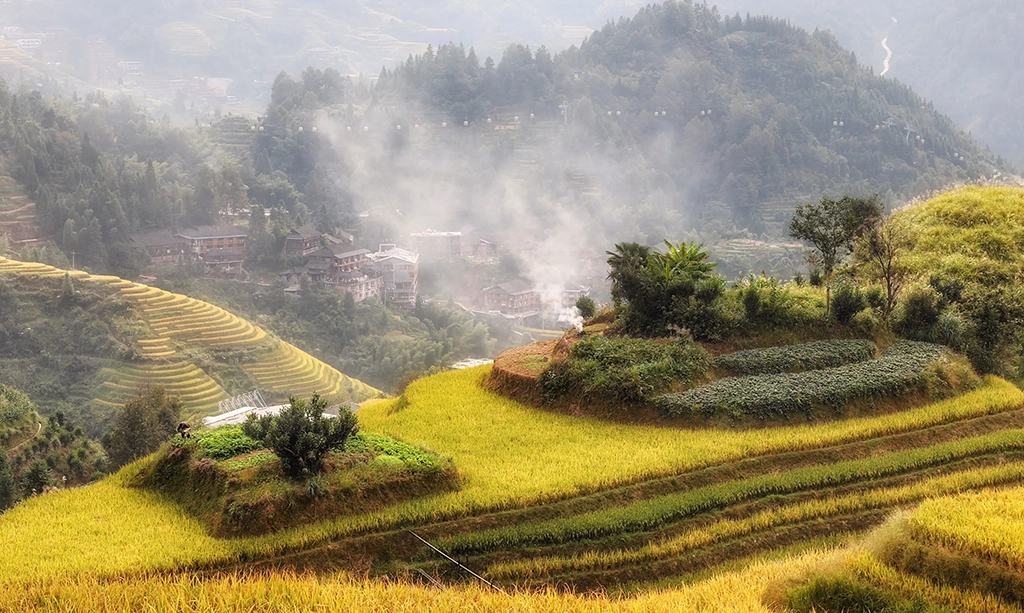
Mid-September to mid-October : It's harvest season, and the golden rice fields form a breathtaking "golden dragon" pattern.
-
Late December to early February : If you're lucky, snow transforms the terraces into a winter wonderland (best viewed from the Jinkeng area).
Read Next: Planning more of Guangxi? Our Best Guilin Day Trips covers top nearby attractions, and the Guilin and Yangshuo Itinerary helps you plan your route.
Main Terrace Areas in Longji
Jinkeng (Dazhai) Yao Village Scenic Area
Located in Dazhai Village, Jinkeng ("gold pit") got its name from its gold-rich soil. Most iconic photos and videos of Longji Rice Terraces are taken here.
This area includes three main Yao villages: Dazhai , Zhuangjie , and Tiantouzhai. You can take a cable car up to Golden Buddha Peak (Jinfo Ding) for panoramic views and stunning sunrise/sunset shots.
Dazhai (Yao Ethnic Group)
This area has three major viewpoints:
-
West Hill Music (Xishan Shaoyue)
-
Thousand Layers to Heaven (Dajie Qianceng Tianti)
-
Golden Buddha Peak (Jinfo Ding)
From Golden Buddha Peak, you can see formations like the "Soaring Eagle Spreads Its Wings" and the "Golden Thread Hanging Gourd," as well as spectacular sunsets.
Tiantouzhai (Yao Ethnic Group)
A small village perched on the mountainside, surrounded by terraced fields and peaks. It's the highest village in the area and offers a full view of the terraces. It's also a cultural hub for Yao traditions and local activities.
Ping’an Zhuang Village Scenic Area
Ping’an was the first terrace area to gain fame and features two renowned viewpoints:
-
Nine Dragons and Five Tigers (Jiulong Wuhu)
-
Seven Stars with the Moon (Qixing Banyue)
Ping’an Village (Zhuang Ethnic Group)
Home to about 170 households and over 700 residents—all surnamed Liao—Ping’an maintains strong Zhuang traditions, known for traditional dress, long hair customs, and folk singing. The main viewpoint showcases the dramatic "Nine Dragons and Five Tigers" and "Two Dragons Chasing a Pearl" formations.
Ancient Zhuang Village (Guzhuang Zhai)
The first Zhuang settlement in Longji, this village is relatively undeveloped and retains its original charm. Getting there requires a 30-minute walk from Ping’an. It houses the best-preserved and largest collection of traditional Zhuang stilted wooden houses in Guangxi—and possibly all of China. Five of the wooden homes are over 100 years old, with one dating back 250 years.
Things to Keep in Mind While Exploring the Terraces
-
When hiking between villages or viewpoints, always stick to the stone-paved paths—there are many forks.
-
If you plan to watch local performances, ask ahead if there’s a fee.
-
Local villagers often offer to carry bags or guide you—feel free to accept, but agree on a price in advance (usually around 10–20 RMB for a 2-hour hike).
-
Best photography spots: Seven Stars with the Moon (Ping’an) and West Hill Music (Dazhai).
-
Longji has two main terrace viewpoints:
-
Viewpoint 1 is on the east side and farther from the village.
-
Viewpoint 2 is a bit closer and easier to reach.
-
Travel Tips and Suggested Itinerary
Exploring both Ping’an and Jinkeng in one day is tiring and can feel repetitive. The views are similar, and you might experience visual fatigue.
We recommend focusing your energy on Jinkeng Dazhai , which offers the most spectacular scenery. Spend your time at Golden Buddha Peak , where you'll get to enjoy the best panoramic views of the layered terraces and immerse yourself in local Yao culture.
Costs and Entrance Fees
-
Entrance ticket : 80 RMB/person
-
Shuttle bus : 40 RMB/person
-
Yao Village Song & Dance Show: 80 RMB/person
-
Jinkeng cable car : 100 RMB (round-trip) / 55 RMB (one-way)
How to Get to Longji Rice Terraces
1. Join a One-Day Tour from Guilin
Recommended route :
Guilin → Jinkeng Dazhai → Hike to Golden Buddha Peak for terrace views → Return to Guilin
Estimated cost : 170 RMB/person
Guilin → Jinkeng Dazhai → Hike to Golden Buddha Peak for terrace views → Return to Guilin
Estimated cost : 170 RMB/person
2. Take the Longji Tourist Shuttle
From Guilin, there are dedicated tourist shuttles to Longji Rice Terraces:
-
From Guilin North or West Station : 65 RMB
-
From Guilin South Station : 50 RMB
The shuttle takes you to the Longji Visitor Center, where you’ll transfer to a connecting bus (included in the fare). Let the driver know your target village in advance, or they’ll drop you at the cable car entrance by default.