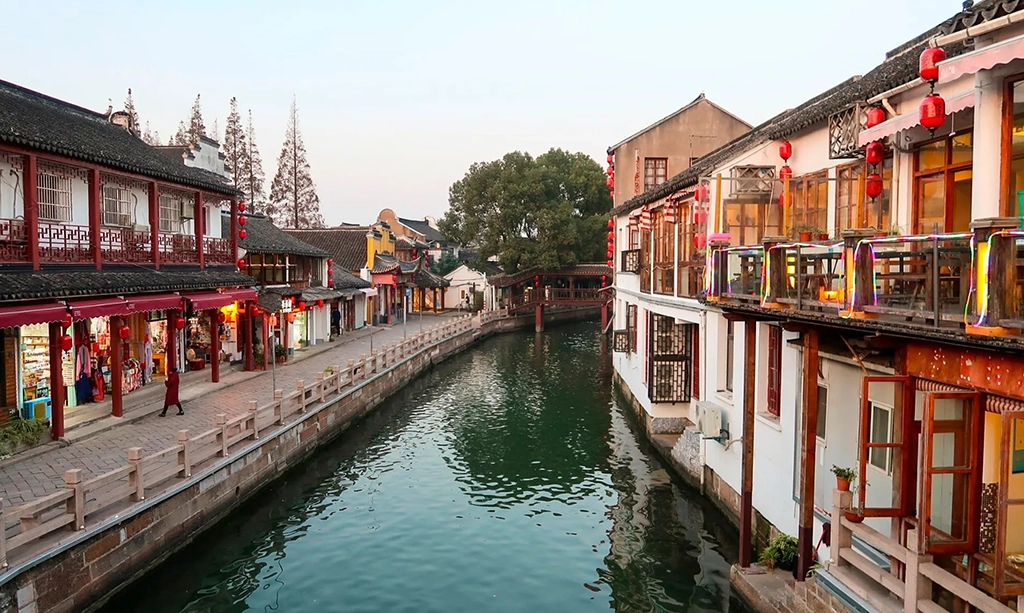
Discover Ancient Water Towns Near Shanghai: A Perfect Day Trip Escape
Shanghai isn’t just a sleek modern metropolis—it’s also a gateway to the charm of old Jiangnan. If you're craving stone bridges, flowing canals, and a slower pace of life but don’t have time to venture far, you’re in luck. Just outside the city center, six ancient water towns offer a peaceful retreat that can be explored in half a day or a full day. Step out of the concrete jungle and into a postcard-worthy world of traditional riverside living, all within easy reach.
Three Ancient Towns in Western Shanghai: Zhujiajiao, Jinze & Liantang
Looking westward from the city, three ancient towns—Zhujiajiao, Liantang, and Jinze—are all located in Qingpu District, near the Qingxi Countryside Park. These towns are just 10 kilometers apart, making them ideal for a one-day trip paired with the park. Among them, Zhujiajiao is the most famous and popular, while Jinze and Liantang remain relatively untouched by commercialization.
Zhujiajiao: Where Tradition Meets Trend
Zhujiajiao blends classical charm with a modern twist, often called the "youngest and trendiest" of Shanghai’s ancient towns. In the cultural zone of Shangdu Li, you'll find graffiti art by global artists and artsy cafés tucked into narrow alleys. Chain coffee shops and trendy snack stands share space with timeworn bridges and canals. The contrast between old and new breathes fresh energy into this historic spot.
Highlights:
If you’ve been to places like Zhouzhuang or Wuzhen, Zhujiajiao may feel more lived-in and authentic. While it might not be as polished or manicured, the local chatter and everyday pace give it a genuine charm. It’s the most well-preserved Jiangnan water town within Shanghai and a favorite "backyard getaway" for locals.
Recommended Experiences:
-
Watch the sunset or night view from Fangsheng Bridge—the best viewing time is 4–5 PM, though it can be crowded.
-
Visit the Great Qing Post Office to get a sense of history.
-
Explore Kezhi Garden, a classical Jiangnan-style garden.
-
Sip morning tea and grab local breakfast in the early hours.
-
Take photos at Shangdu’s colorful street art spots.
Getting There:
-
Highway: Take Yan’an Elevated Road to G50, exit at Zhujiajiao.
-
National Road: Follow National Highway 318 to Zhuxi Road, turn onto Kezhi Road.
-
Driving Route: City Center → Yan’an Elevated Road → A9 → Zhongchun Road → National Hwy 318.
Parking is available at the north entrance—300+ cars and 35 buses. -
Metro: Line 17 to Zhujiajiao Station, Exit 2, then a 15-minute walk.
Tickets:
-
Entry to the town is free; some attractions and boat rides require tickets.
-
Combo Tickets:
-
Folk Culture Tour : ¥30 (includes 3 attractions: Ancient Culture Museum, Qing Post Office, Kezhi Garden)
-
Historic Water Town Tour : ¥60 (includes 9 attractions such as Chenghuang Temple and Handicraft Museum)
-
-
Boat Ride : ¥20
-
Reservation: Required via the official WeChat account “朱家角旅游”
Jinze: A Quiet Town of Historic Bridges
Unlike more commercialized spots, Jinze Ancient Town is serene and low-key. Here, time feels frozen—the old barbershop still operates, and locals gather at the incense-filled Yihua Temple. The calm waterways, arched bridges, and soft-spoken boatwomen recall the slow life of Jiangnan. A north-south canal runs through the town, with scattered ponds and crisscrossing canals that complete the idyllic scene.
According to historical records, Jinze once had "Six Temples, One Pagoda, Thirteen Wards, and Forty-Two Bridges," with the saying, “every temple has a bridge, and every bridge a temple.” Though most temples are gone, many of the bridges remain. Notably, seven ancient bridges from the Song, Yuan, Ming, and Qing dynasties still stand, including the Puji Bridge, built in 1267—the oldest stone arch bridge in Shanghai.
Highlights:
With well-preserved bridges and a peaceful vibe, Jinze is perfect for strolling, chatting with friends, and taking photos. It offers a rare sense of calm rarely found in other touristy water towns.
Recommended Experiences:
-
Wander over ancient bridges and through narrow alleys, soaking in the slow rhythm of local life.
-
Visit Yihua Temple to light incense.
-
Try the famous shao mai (steamed dumplings) at Zhu Jin Dim Sum Shop.
Getting There:
Take the Hushang Express Bus Line and get off at Jinze Bus Station.
Tickets:
Free admission.
Liantang: A Water Town with Revolutionary Roots
Also located in Qingpu District, Liantang isn’t known for its tourist crowds but for its history—it’s the hometown of Chen Yun, one of the founding leaders of China’s economic reform. The ancient street stretches just three li (about 1.5 km), split by a river called “Sanli Tang,” with two stone roads flanking either side: Shangtang Street and Xiatang Street.
Shangtang Street on the north bank features two-story storefronts with riverside backyards, while Xiatang Street to the south is more residential, with classic white walls, black tiles, and circular gables. Over ten stone bridges built in the Yuan, Ming, and Qing dynasties cross the river, and small wooden boats still glide past weeping willows—a true painting of Jiangnan tranquility. The town is also known for its seasonal delicacy—wild rice stems (jiaobai) in summer.
Getting There:
Best reached by car. Alternatively, take Metro Line 17 to Zhujiajiao Station, then transfer to the Qingxiao Bus Line to Liantang Bus Station.
Tickets:
Free. Entry to the Chen Yun Memorial Residence requires ID registration for free admission.
Qibao Ancient Town: The Nearest Water Town to Downtown Shanghai
Qibao Ancient Town (七宝古镇, Qībǎo Gǔzhèn) is probably the closest water town to central Shanghai. Many locals escape the city's towering skyscrapers to come here and reconnect with the slower pace of life—wandering the old streets, snapping night photos, and sampling delicious street food. Though Qibao isn’t large, it’s very walkable, with just two main streets—one focused on snacks and the other on trinkets and souvenirs. Due to its proximity to the city, Qibao's water-town charm isn’t quite as rustic or untouched, but the vibrant street food scene is reason enough to visit.
Highlights
Like many other ancient towns, most of Qibao’s alleys are commercialized, but the architecture retains its traditional charm. The shops here generally fall into two categories: souvenirs and local eats. Some souvenir shops are quite unique, making it a fun place to pick up memorable gifts for friends and family.
Must-Try Local Snacks
Qibao is a haven for food lovers. Favorites include glutinous rice balls (汤团, tāngtuán), sliced cold lamb, crabapple cakes (海棠糕, hǎitáng gāo), braised pork knuckles, crispy vegetarian duck (脆皮素鸭, cuìpí sù yā), beggar’s chicken, Qibao-style rice cakes (七宝方糕), salted quail eggs, and of course, stinky tofu.
One must-visit spot is the famous tangyuan shop where these glutinous rice balls are sold individually. They're huge, flavorful, and come in a wide variety of fillings like peanut, red bean, shepherd’s purse, purple sweet potato, pork, and sesame—the classic black sesame filling being the most popular. Don’t miss the handmade seasonal rice dumplings, especially the mugwort green dumplings (艾草青团, àicǎo qīngtuán) during Qingming Festival and shepherd’s purse dumplings (荠菜团子, jìcài tuánzi) in spring.
Tasty Tips
-
Crabapple Cake (海棠糕): ¥5 each
Shaped like a crabapple blossom with a caramelized golden crust topped with sesame seeds, this treat is crispy on the outside and filled with sweet red bean paste inside. -
Crispy Vegetarian Duck (素鸭): ¥10 per portion
Despite its name, it's not real duck—it's stir-fried vegetables wrapped in soybean skin, then steamed and pan-fried. Topped with sesame, crushed peanuts, cilantro, and savory sauce, it’s flavorful without being greasy, with a sweet-savory balance.
Getting There
-
By Metro : Line 9 to Qibao Station, Exit 2
-
By Car : Self-driving is also convenient
-
Admission : Free
Eastern Shanghai's Hidden Gems: Xinchang & Zhaojialou Ancient Towns
If you’re heading toward Shanghai Disneyland, you’ll find two charming ancient towns nearby: Xinchang Ancient Town (新场古镇, Xīnchǎng Gǔzhèn) and Zhaojialou Ancient Town (召稼楼古镇, Zhàojiàlóu Gǔzhèn). They make for a great side trip—perfect for a half-day getaway before or after your theme park visit.
Xinchang Ancient Town: A Quiet Water Town Near the Sea
Once known as Shisunli (石笋里) , Xinchang Ancient Town originated as a salt field where locals once harvested sea salt. Over time, silt turned the coastline into solid land, and the salt field became a settlement and trading hub. It was once the largest town in the Pudong plains, earning it the nickname “Little Xinchang Beats Suzhou” (小小新场赛苏州) for its picturesque tea houses, temples, and traditional long streets along the canal.
Today, a calm river still winds through the town, lined with riverside homes, high stone embankments, and quaint saddle-shaped bridges. Xinchang retains over 100 Ming and Qing-style courtyard houses , complete with white walls, dark-tiled roofs, and ornate wooden carvings. The most iconic buildings include the Xi Family Hall (奚家厅) and the East-meets-West Zhang Family Residence (张厅).
Xinchang’s charm has drawn in film crews for popular movies and shows like Lust, Caution , See You Tomorrow , Ip Man , and Nothing But Thirty. Despite the fame, it remains a relatively authentic, residential water town with modest commercialization, allowing visitors to soak in its tranquil and unpolished vibe.
-
Getting There : Metro Line 16 to Xinchang Station , or drive
-
Admission : Free
Travel Tip : There aren’t many indoor spots to cool off in Xinchang, so it’s best to visit in the late afternoon and stay through the evening. A half-day visit is ideal, especially in summer when midday heat can be intense. For quieter streets, skip the main roads and walk toward Nanshan Temple (南山古寺) —you’ll find fewer tourists there. You can also combine it with a trip to Shanghai Wild Animal Park for a full day out of the city.
Zhaojialou Ancient Town: A Historic Farming Town Turned Foodie Favorite
“Zhaojia” means “to summon farmers,” and legend has it that during the Southern Song Dynasty, Zhaojialou began as a small pavilion built to gather people for cultivating the land. It was rebuilt in the Ming Dynasty with a large bell that rang to signal farmers to begin or end their workday. As agriculture flourished, the area evolved from a rural outpost into a key settlement on the Pudong Plain.
Zhaojialou charms visitors with its winding alleys, weathered stone paths, and beautiful Guanyin-style walls and horse-back walls —distinct architectural features from southern China. With whitewashed walls, arched bridges, and peaceful canals, it exudes classic Jiangnan water town elegance. Historic mansions like Meiyuan , Ligitang , and Ningjiantang add to its dignified and timeless atmosphere.
Though it was developed later than other towns like Qibao, Zhaojialou is quickly becoming a foodie hotspot , packed with local snacks and fewer crowds.
Local Delicacies :
-
Zhaolou Sanbao : Three signature items—Zhaolou Liquor , Zhaolou Lamb , and Zhaolou Braised Pork Knuckle
-
Seasonal favorites : Spring bamboo shoot shumai, especially the “Xia Sha Shumai (下沙烧麦),” a regional Intangible Cultural Heritage treat available before Qingming Festival
-
Classic street food : Stinky tofu, seaweed buns (草头饼), crabapple cakes, and crispy pork lard pancakes
-
New Year specialties : Cured chicken and duck, perfect as festive gifts
-
Getting There : Metro Line 8 to Shendu Highway Station , then transfer to Minhang Bus 10 or Bus 175
-
Admission : Free
Highlight : Compared to touristy spots like Zhujiajiao or Qibao, Zhaojialou is quieter and frequented mainly by locals. One must-try is the Zhaolou Lamb , known for its tender, flavorful meat that’s not at all gamey. It’s often served atop noodles in small local eateries. Another crowd favorite is Zhaolou Braised Pork Knuckle —glossy red, sweet but not greasy, meltingly tender and incredibly fragrant.