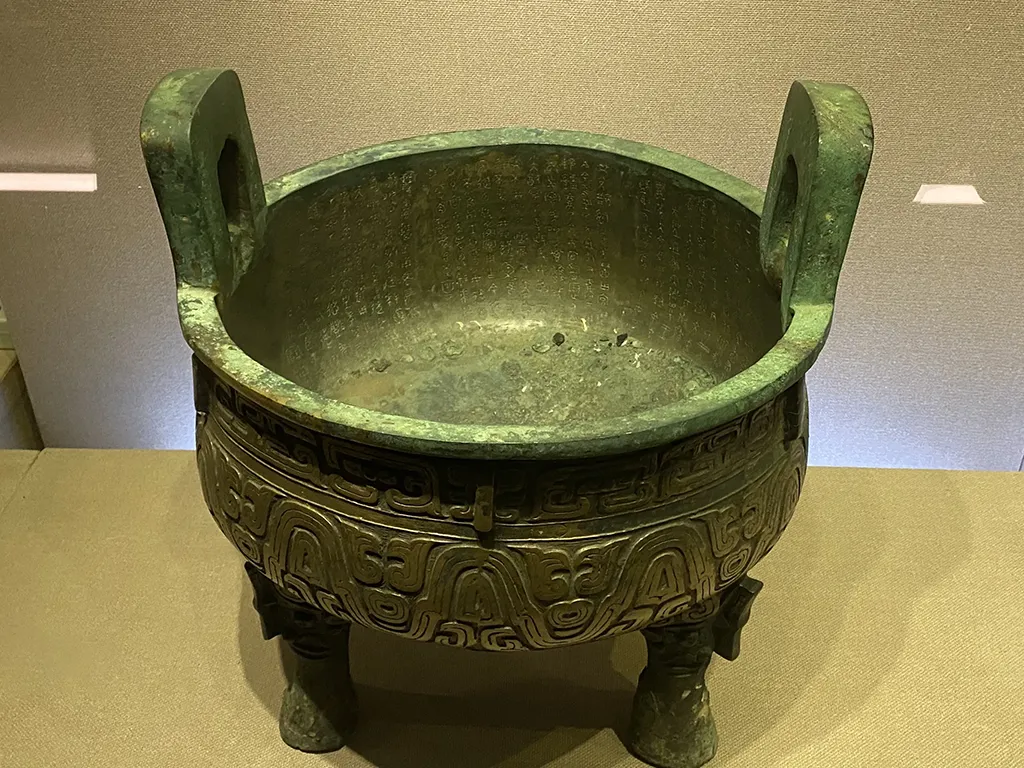
Most travelers rush to Xi'an for the Terracotta Warriors and then leave. But if you are a history buff, you are missing a massive piece of the puzzle.
Just west of Xi'an lies Baoji , a city known as the "Hometown of Bronzeware." Here, the Baoji Bronze Ware Museum sits like a fortress on a hill, housing over 12,000 artifacts. It is the largest museum of its kind in China.
If the Terracotta Warriors are about "People," this museum is about "Power." It tells the story of the Zhou and Qin Dynasties through their heavy metal industry.
⚡ Essential Info: Plan Your Visit
📍 Location:
Baoji City, Shaanxi Province (approx. 1.5 - 2 hours from Xi'an by High-Speed Train or Car).
🎫 The Logistics:
- Ticket Price: FREE (Passport required).
- Opening Hours: 09:00 – 17:00 (Closed on Mondays).
- Booking: Can be reserved via WeChat [宝鸡青铜器博物馆], or usually available at the gate for foreigners with passports on non-holidays.
The Heavy Metal Tour: Top 5 Must-See Treasures
The collection is vast, but these five items are the absolute "Rock Stars" of the museum.
1. He Zun: The Origin of "China"
(The Ritual Wine Vessel)
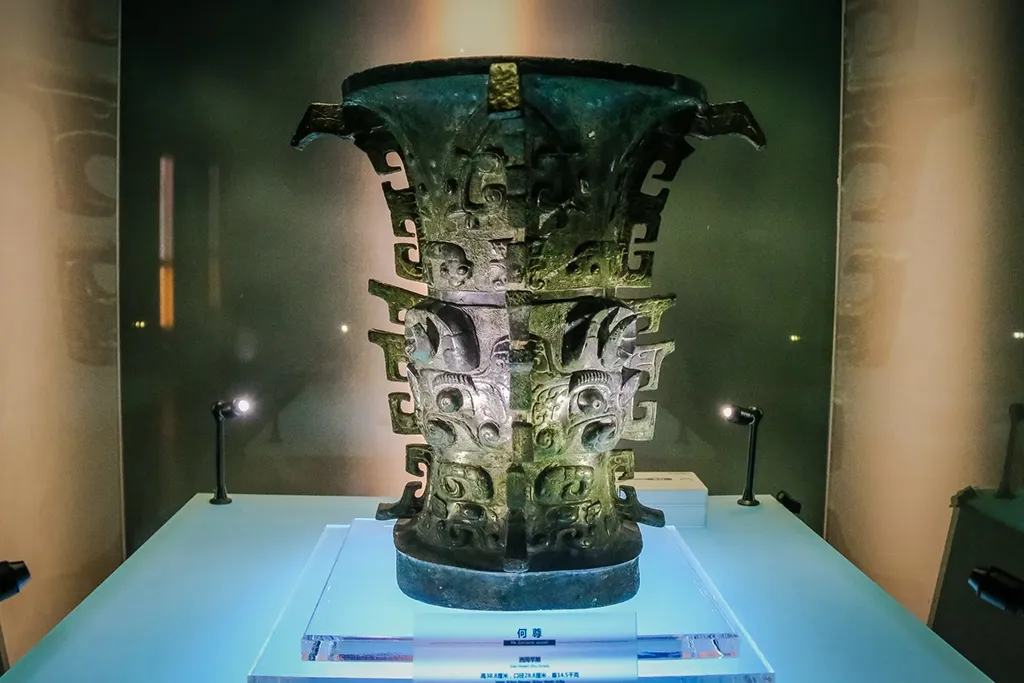
If you only see one thing, make it this. It looks like a typical bronze vessel, but look inside. There is an inscription of 122 characters on the bottom.
Among them are four characters: " Zhai Zi Zhong Guo" (宅兹中国). This is the first time in history that the word "China" (Zhongguo) ever appeared.
💡 Jim’s Insight: The Holy Grail
In the West, we have the Magna Carta or the Declaration of Independence. For China, the He Zun is that level of document—except it's cast in bronze. It proves that the concept of "The Middle Kingdom" (China) existed over 3,000 years ago. Standing in front of it is literally standing in front of the birth certificate of the nation.
2. The Lai Ding: Seeing the True Color
(The "Golden" Tripods)
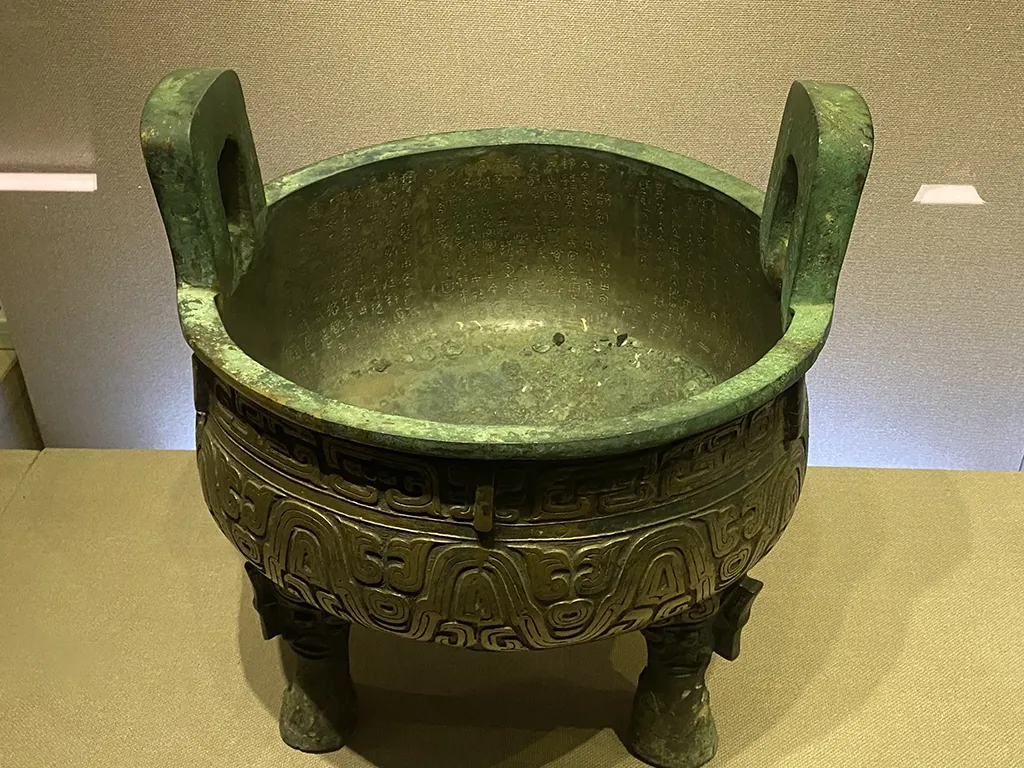
When we see bronze in museums today, it is usually green or black due to oxidation (rust). But the Lai Ding (a set of cauldrons used for cooking and ritual) is different.
Because of unique preservation conditions, some of these pieces still retain their original "Lucky Gold" color. This gives you a rare glimpse into what the ancient temples actually looked like: they weren't dark and gloomy; they were shining with gold.
3. The Zhe Gong: The Monster Bottle
(The Animal-Shaped Wine Mixer)
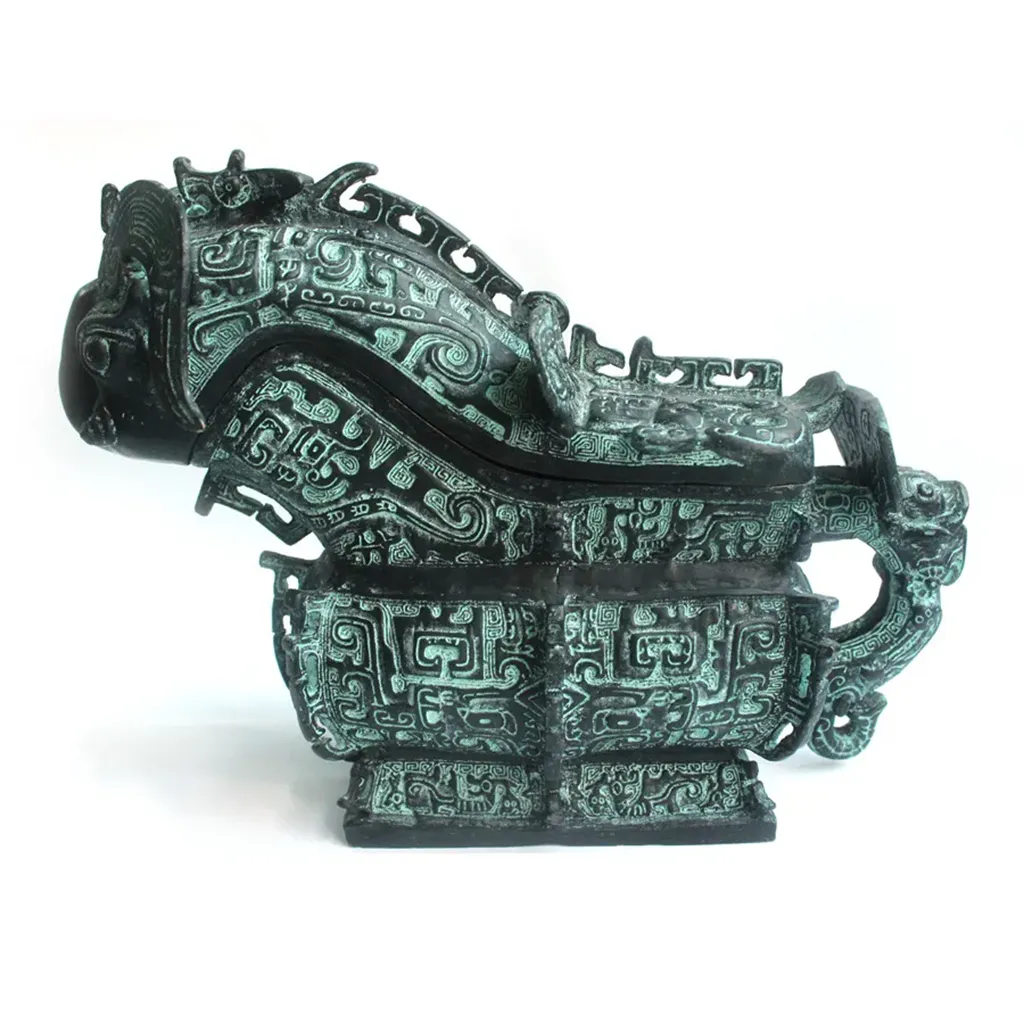
This is ancient cubism. The lid looks like a sheep, the nose looks like an elephant, and the body features a "Taotie" (a mythical gluttonous beast). It was used to mix alcohol.
It is widely considered a masterpiece of casting technology—complex, scary, and beautiful all at once.
4. The Lai Pan: The History Book
(The Water Basin)
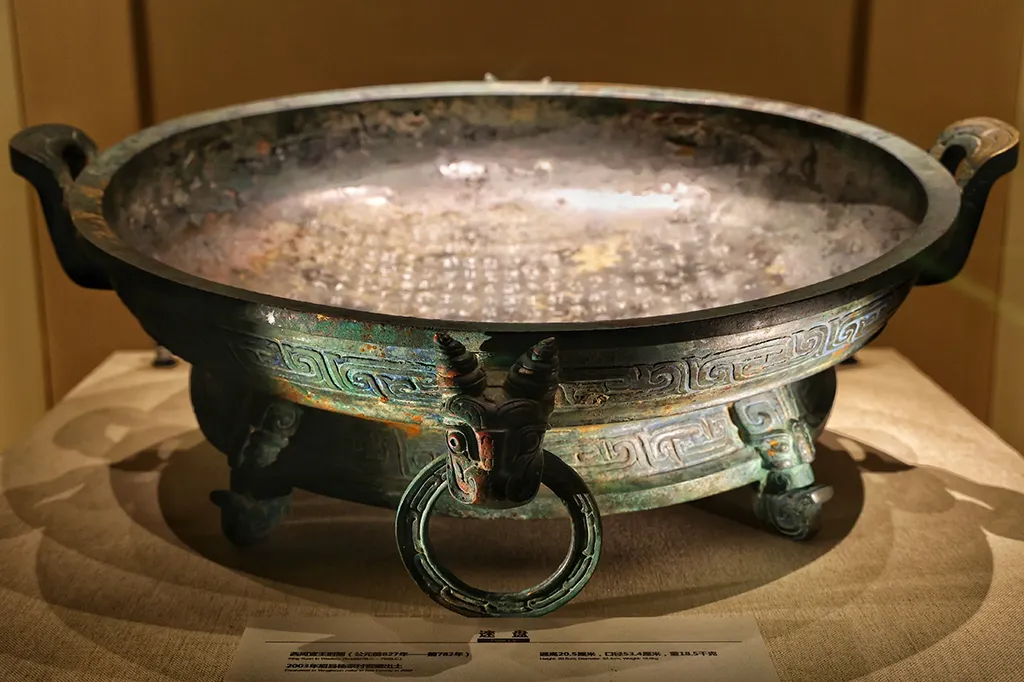
This large water basin is famous not for its look, but for its text. The 300+ characters inscribed inside perfectly match the records in the Records of the Grand Historian (Shiji) written 1,000 years later. It proved that the ancient history books were accurate, not just myths.
5. The Qin Gong Bo: The Giant Bell
(The Musical Instrument)
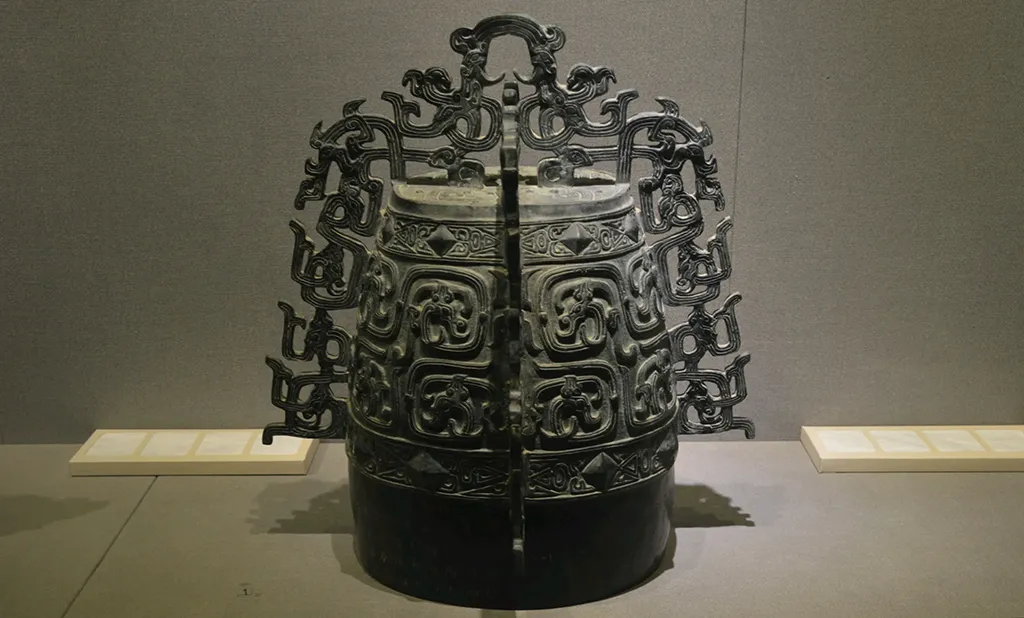
The Qin Gong Bo: The Giant Bell
Before the Qin emperor united China, his ancestors in Baoji were already making massive instruments. This giant bell features four flying dragons and intricate patterns. It wasn't just for music; it was a display of sheer technological dominance.
🗺️ Practical Guide: Getting to Baoji
Baoji is not in Xi'an, but it makes for a perfect day trip.
- By High-Speed Train: 1 hour from Xi'an North Station to Baoji South Station. Then a 20-minute taxi to the museum.
- By Private Car: About 2 hours drive. This allows you to stop at the nearby Famen Temple on the same day (highly recommended route!).
🍜 Jim’s Foodie Tip: Qishan Noodles
Baoji has a famous nickname: "The Hometown of Noodles." While you are here, you MUST try Qishan Saozi Noodles (Qishan Saozi Mian). It’s a sour and spicy noodle soup with diced meat and vegetables. It is not just food; it’s a 3,000-year-old recipe from the Zhou Dynasty.