Every autumn, the Xi’an Ancient Ginkgo Tree (Li Shimin Ginkgo, 李世民银杏树) at Guanyin Zen Temple (Gǔ Guānyīn Chán Sì, 古观音禅寺) becomes a must-visit spot for both locals and travelers. Said to have been planted by Emperor Tang Taizong (Táng Tàizōng, 唐太宗) Li Shimin , this thousand-year-old ginkgo dazzles with golden leaves from late October to early December. Nestled at the foot of Mount Zhongnan (Zhōngnán Shān, 终南山) , the temple offers mystical legends, ancient springs, Zen halls, and meditation experiences. With practical visitor tips, reservation guidance, and scenic surroundings, it’s the perfect autumn escape for culture lovers, photographers, and anyone seeking a peaceful retreat in Xi’an.
The Li Shimin Ginkgo Tree
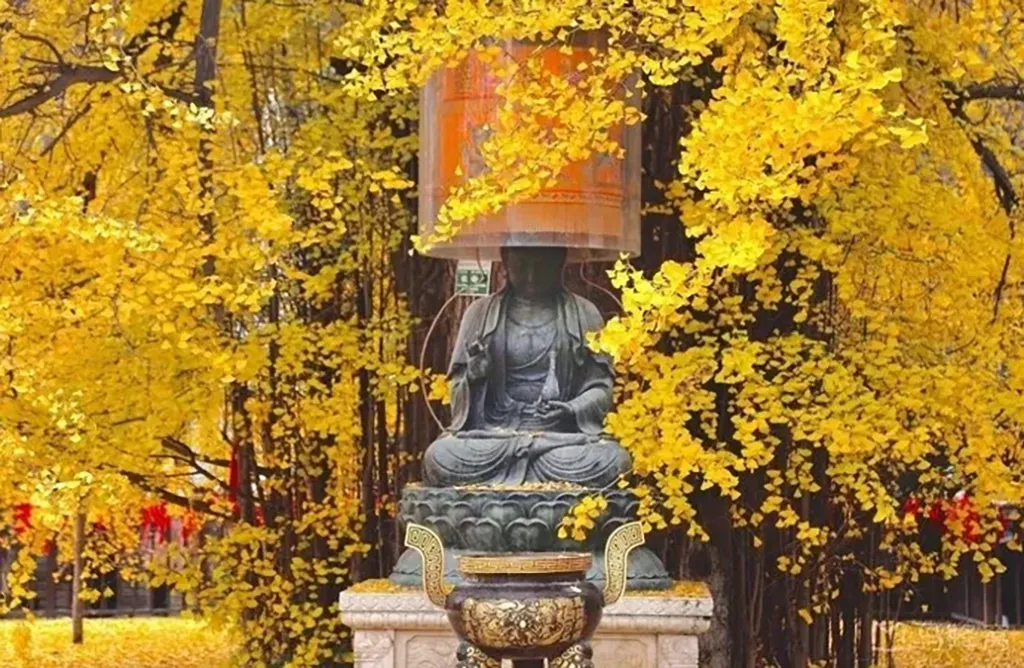
Every autumn, a giant ancient ginkgo tree in Xi’an sparks waves of shares and admiration online. This famous tree is located at Guanyin Zen Temple (Gǔ Guānyīn Chán Sì, 古观音禅寺) and is said to have been personally planted by Emperor Tang Taizong (Táng Tàizōng, 唐太宗) Li Shimin , one of China’s legendary emperors.
A Mysterious Temple at the Foot of Mount Zhongnan
Mount Zhongnan (Zhōngnán Shān, 终南山) frequently appears in martial arts novels, but in reality, it’s also a renowned center for Zen practice in China. Nestled here is Guanyin Zen Temple , which carries a legendary story: the official Wei Zheng supposedly dreamed of beheading the Azure Dragon King while drunk, inspiring the temple’s founding—a tale that adds to its mystical allure.
The temple offers several highlights for visitors:
- Guanyin Ancient Spring (Guānyīn Gǔ Quán, 观音古泉)
- The Thousand-Year Ginkgo (Qiān Nián Yínxìng, 千年银杏)
- Zen Hall (Chántáng, 禅堂)
- Great Charity Courtyard (Dà Shànyuàn, 大善院)
In addition, the temple regularly recruits volunteers and occasionally organizes Zen meditation experiences. If you’re interested, follow the temple’s official WeChat account for the latest announcements.
Best Viewing Period: Late October to Early December
Reservation Requirements
It’s important to note that Guanyin Zen Temple (Gǔ Guānyīn Chán Sì, 古观音禅寺) operates on a reservation-only policy. Visitors without prior booking cannot enter , especially during the peak ginkgo viewing season when crowds are at their largest.
After booking through the official channel, you can cancel up to two hours before your reserved time. If you suddenly can’t make it, be sure to cancel your slot to free it up for others.
Photography Rules
Visitors with professional camera equipment are required to register at the entrance. Drone photography is strictly prohibited. Make sure to read the temple’s photography guidelines carefully and pay a 20 RMB deposit when required.
How to Reserve
Reservations are made via the “Zhongnan Chanyun” WeChat account (Zhōngnán Chányùn, 终南禅韵) —note that this is different from the temple’s official WeChat account.
- Each reservation allows a 30-minute visit slot.
- The temple accepts up to 3,000 visitors per day.
- Bookings can be made up to 20 days in advance.
Visitor Etiquette
Before entering the courtyard, camera registration is required. Once inside, visitors are guided along the path with red ropes , ensuring an orderly tour. The temple is small, so you can complete the circuit fairly quickly.
Important: Do not photograph the Buddha statues or monks during your visit. Incense is provided on-site and can be used freely.
Practical Visitor Information
How to Get There
- By Bus: From downtown Xi’an, take Bus 916 to “Nanshi Village” (Nánshí Cūn, 南石村) and walk 7 minutes to the temple.
- From downtown, you can also take Bus 921 to “Xiangyu Cross” (Xiángyù Shízì, 祥峪十字) and walk 8 minutes.
Opening Hours
- 8:00 AM – 5:00 PM daily
Traveler Tip
The best way to visit is by car , especially if you want flexibility. On the way to the temple via the provincial road, you’ll notice plenty of parking lots along both sides , making it convenient for self-driving visitors.