Let's be honest: The Shaanxi History Museum is world-class, but it is also crowded, loud, and nearly impossible to get tickets for.
If you want to understand the history of Xi'an without fighting for breathing room, the Xi 'an Museum is your perfect "Plan B." In fact, for many of my clients, it becomes their "Plan A."
It is the only spot in Xi'an that combines a modern museum , a World Heritage Pagoda , and a classic Chinese garden in one ticket. Oh, and the ticket is free.
⚡ Essential Info: The Relaxed Choice
📍 Location:
Just south of the City Wall (Nanguan Zheng Street).
🎫 The Logistics:
- Ticket Price: FREE (Passport required).
- Booking: Reserve via WeChat (Xi'an Museum Official). Much easier to book than the History Museum.
- Opening Hours: 09:00 – 18:00 (Peak) / 17:30 (Off-Peak).
- ⚠️ Important: Closed on TUESDAYS (Most other museums close on Mondays, so plan accordingly!).
Part 1: The Museum (Underground History)
The main building is designed to look like a traditional seal. The highlight here isn't just the gold—it's the context.
1. The Scale Model of Chang'an
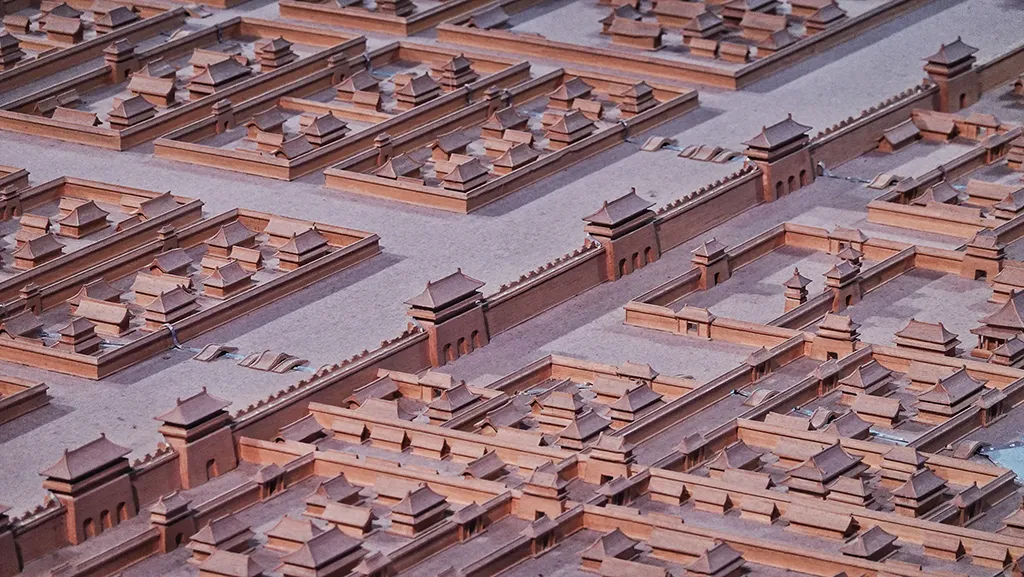
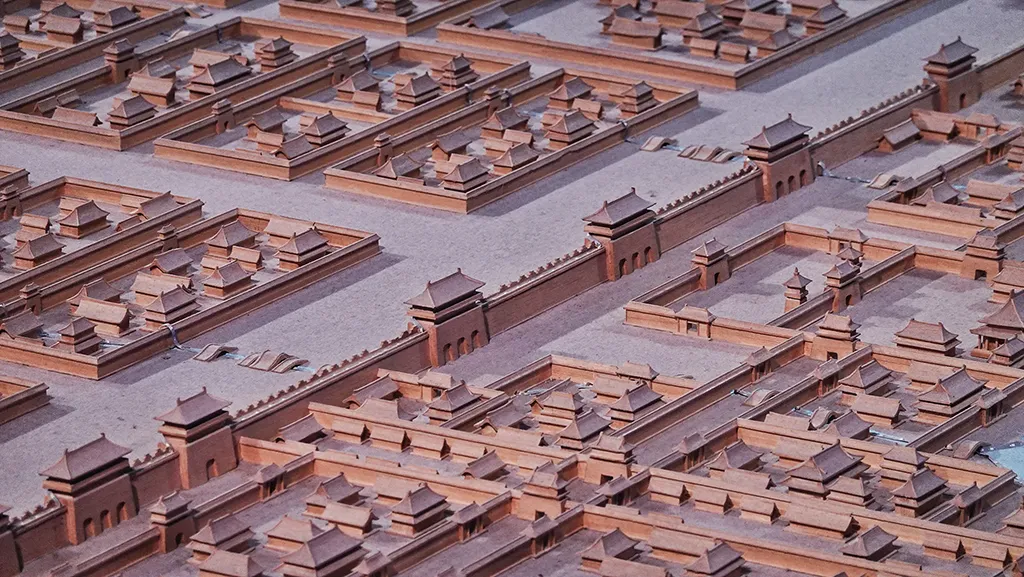
On the ground floor, you will find a massive scale model of Tang Dynasty Chang'an (Xi'an). It shows the city when it was the largest metropolis on Earth.
💡 Jim’s Insight: The "Grid"
Look at the model closely. You will see the city is a perfect grid. This layout influenced the design of Kyoto and Nara in Japan. Standing over this model, you finally grasp just how massive and organized the Tang Empire really was.
2. The "Ancient Emojis" (Pottery Figures)
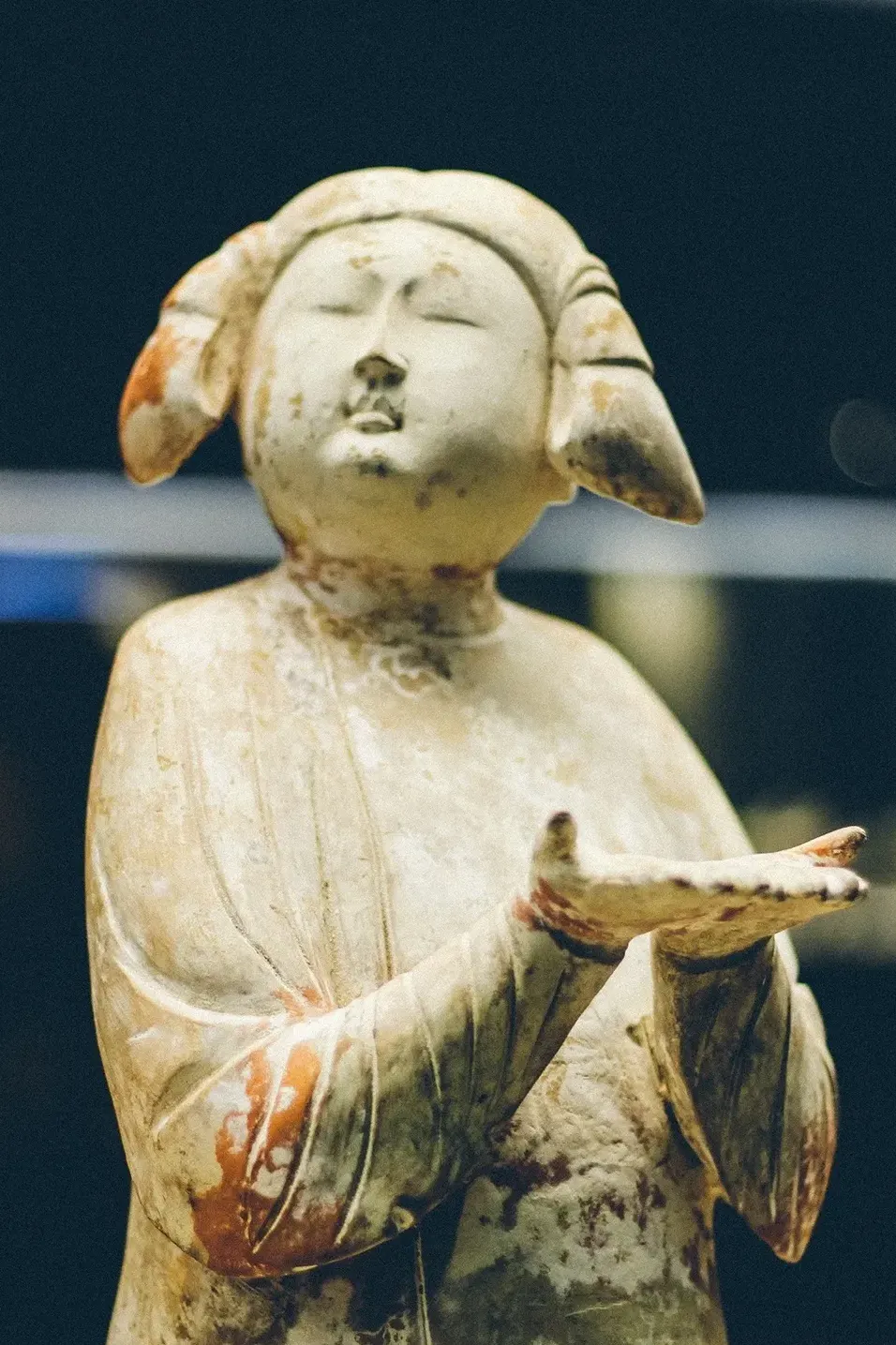
While the Terracotta Warriors are serious and stern, the pottery figures here are… hilarious.
You will find ladies with double chins, camels screaming, and tomb guardians making silly faces. These "Ugly-Cute" figures are basically ancient memes. They show the playful, human side of life 1,000 years ago.
3. The Key Artifacts
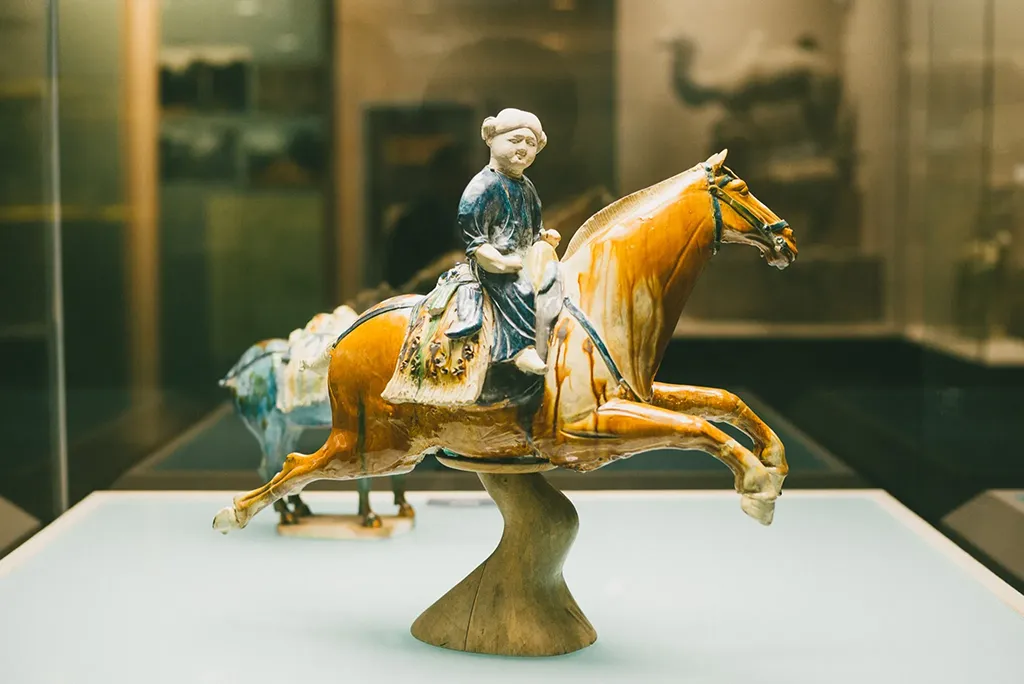
- The Flying Horse (Tricolor Glaze): A blue-robed rider on a yellow horse, captured mid-jump. It’s vibrant and full of motion.
- The Gilt Buddha: A rare gold-plated statue from the Sui Dynasty, incredibly preserved.
- The Jade Cup: Found at the Epang Palace site, likely used by the Emperor himself.
Part 2: The Small Wild Goose Pagoda
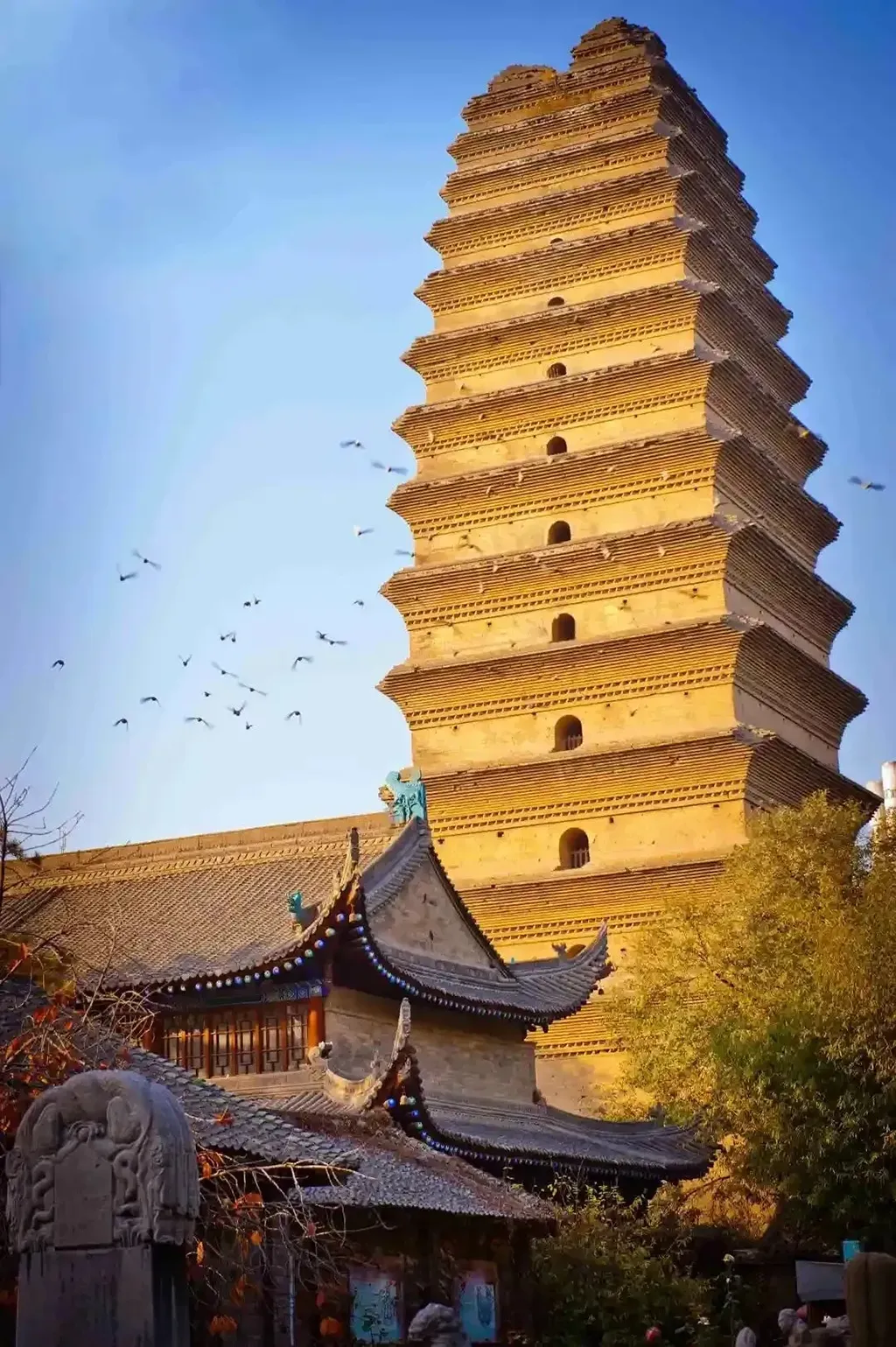
Walk out of the museum, and you are in a peaceful garden dominated by the Small Wild Goose Pagoda. Built in 707 AD, it is older than many countries.
Why is it "Small"?
It was built to store Buddhist sutras brought from India, just like its big brother, the Big Wild Goose Pagoda. To distinguish them, the locals simply named them by size.
📸 Photography Tip: The "Missing Top"
Look at the very top of the tower. It looks round and smooth, right? That’s because the original top fell off during an earthquake in 1556. The pagoda survived, but it lost two stories (from 15 down to 13). It’s a survivor.
Part 3: The Jianfu Temple Garden
The area around the pagoda used to be the Jianfu Temple. Today, it’s a beautiful park filled with ancient trees, stone steles, and a bell tower.
The Morning Bell (Chen Zhong):
You might see a large iron bell here. In the old days, the "Morning Bell of the Small Wild Goose Pagoda" was one of the "Eight Famous Views of Guanzhong." Today, visitors can ring it for good luck (for a small fee).