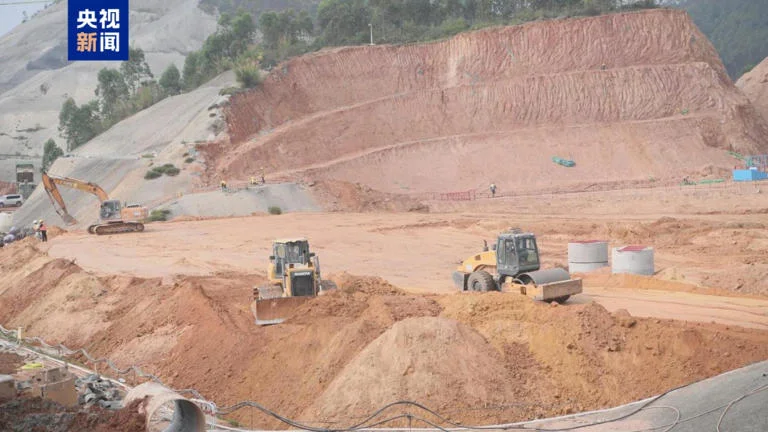
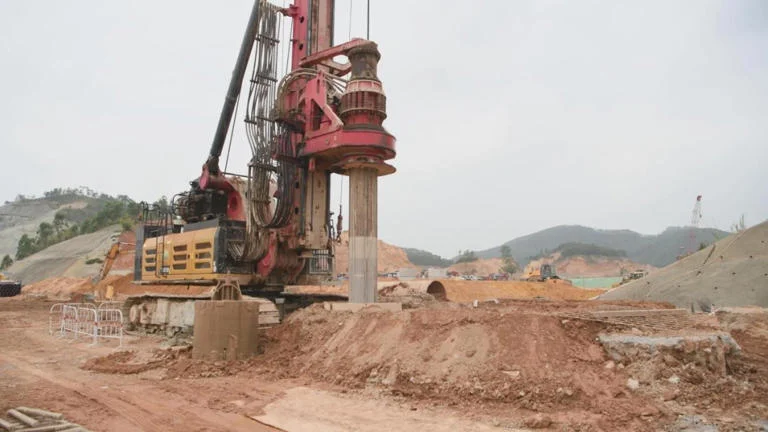
Ground broke on March 25, 2026 in Foshan's Gaoming District — about 90 kilometers west of central Guangzhou — on a new airport that will bring direct air access to the western Pearl River Delta for the first time. The western bank of the river has long been the Bay Area's blind spot: getting to Guangzhou Baiyun from Foshan or Zhaoqing can easily take 90 minutes by car, a trip that will effectively disappear once this facility opens.
Why the Bay Area Needed Another Airport
The Pearl River Delta covers nine cities and roughly 80 million people, but its airports have always clustered on the east side of the river. Shenzhen Bao'an and Hong Kong International handle the bulk of cross-border traffic, while the west — where tens of millions of residents live — has mostly been dependent on the chronically crowded Guangzhou Baiyun, which handled over 90 million passengers in recent years.
This new airport isn't meant to replace Baiyun. It's meant to fill the gap: giving Foshan, Zhaoqing, Jiangmen, and Zhongshan their first proper regional hub, and taking enough pressure off Baiyun that everyone benefits.
A Terminal Built Around Foshan's Identity
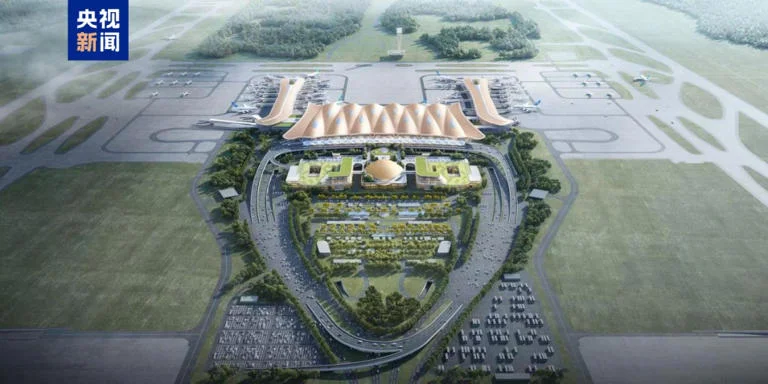
What makes this project unusual — at least by Chinese aviation standards — is that someone clearly cared about what it looks like. The terminal building takes direct inspiration from Foshan's best-known traditions: the ancestral temple, dragon boat racing, and lion dance performances.
The six-finger corridor layout is unusual in modern terminal design. It's functional — maximizing contact stands — but also symbolic, referencing the energy of dragon boats racing downstream. The design team calls it "千龙竞发," a thousand dragons launching at once. The arched roof plays into the same imagery.
Inside, the departure hall weaves in Lingnan garden landscapes alongside modern check-in zones. Chinese aviation planners call this a "四型机场" — a safe, green, smart, and culturally rooted airport. Whether that vision survives contact with real construction budgets and operational pressures is another question, but the ambition itself is refreshing.
Getting There: Rail, Road, and the Multimodal Promise
The most practically interesting part of this project is the transit integration. The terminal sits adjacent to a hub that will connect to:
- Guangzhou–Zhanjiang High-Speed Railway (广湛高铁) — north-south through the western delta
- Shenzhen–Nanning High-Speed Railway (深南高铁) — toward Shenzhen and Guangxi
- Zhuhai–Zhaoqing High-Speed Railway (珠肇高铁) — toward Zhuhai, Macau, and Zhaoqing
A five-east, four-north expressway network surrounds the facility, and the ground transportation center is designed so passengers can check in and drop bags on the same floor as rail connections. No separate downtown transfer required. If it works as designed, it beats the typical Chinese airport experience of schlepp-and-shuttle.
Numbers and Timeline
Phase one costs roughly 41.8 billion RMB (about $5.7 billion USD), with the airport itself taking about 36 billion. The build includes:
- 2 parallel runways
- 260,000 square meters of terminal space
- 94 aircraft stands
- Capacity: 30 million passengers a year, 500,000 tons of cargo, 260,000 aircraft movements
Comparable projects suggest the terminal could open in late 2029 or early 2030, with phase one fully complete around 2031. A second phase would push capacity to 60 million passengers.
Baiyun currently operates at roughly three times its original design capacity, so the new airport's 30-million figure for phase one looks deliberately conservative — leaving room to grow into actual demand rather than projections that have a history of running hot.
How This Changes Bay Area Travel
For international visitors, the immediate effect is better access to the western delta. Foshan, Zhaoqing, and the surrounding area have never had convenient international flight options. A visitor landing in Foshan could reach the Macau Peninsula in under 90 minutes by high-speed rail — a route that currently requires going through Guangzhou or Shenzhen.
For now, Baiyun remains the practical choice for most travelers, especially on international routes. But watch for opening announcements in late 2029. Once this facility is operational, it will be worth comparing routes and prices.
What Travelers Should Do Now
If you're planning a Bay Area trip in the next few years, this airport won't be an option yet. But the western delta is increasingly accessible by the high-speed rail network that's already in place. Foshan, Zhaoqing, and Jiangmen are all reachable by train from Guangzhou South or Guangzhou stations — giving you a head start on exploring the region this airport will eventually serve more directly.
I'll be tracking the construction progress and will publish a practical guide once it opens.
Have you visited the Greater Bay Area recently? Drop a comment below — or let us know what you'd most want to know about the new airport.