What Are the Must-Visit Museums in Shanghai? Discover the Stories Behind the City
If you want to understand the history of a city, a museum is the perfect place to start. Museums offer an immersive window into the past, allowing you to experience the passage of time through real artifacts and vivid exhibits. As one of China’s most developed metropolises, Shanghai was home to 148 museums as of 2022. In this guide, we’ll highlight four of the most iconic ones—each offering a unique perspective on the city’s fascinating evolution.
Read Next: Fascinated by Shanghai’s architectural heritage? Don’t miss our guide to Hudec’s Architectural Legacy for must-see buildings across the city.
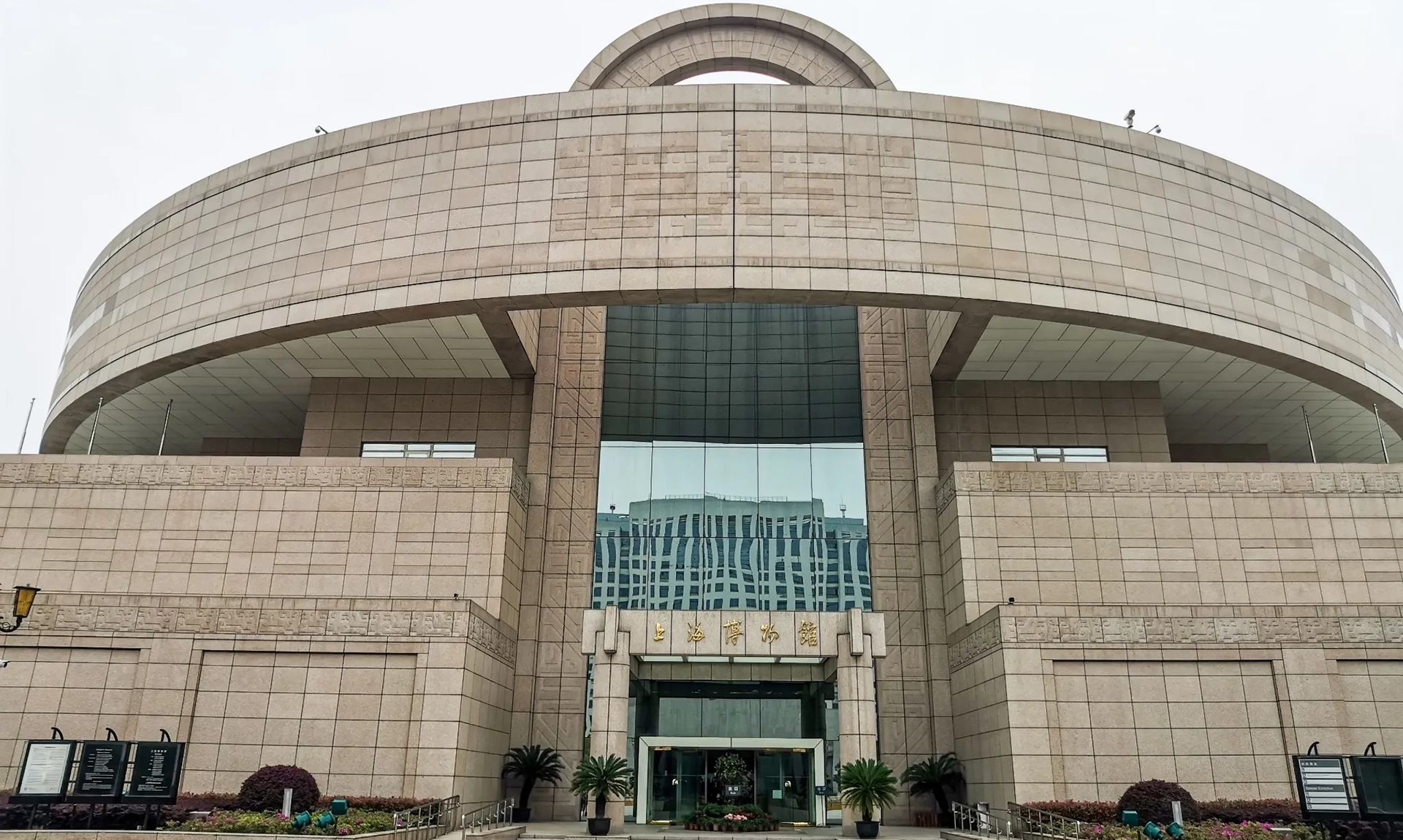
Shanghai Museum: One of the Four Great Museums of China
Shanghai Museum is a vast museum dedicated to ancient Chinese art and ranks among China’s renowned Four Great Museums. It houses over 200,000 artifacts, including five national treasures that cannot leave the country: the Western Zhou Dynasty Da Ke Ding (大克鼎, Dà Kè Dǐng), the Jin Hou Su Bell (晋侯稣钟, Jìn Hóu Sū Zhōng), Sun Wei’s Gaoyi Tu (高逸图, Gāo Yì Tú), Huai Su’s Kusun Tie (苦笋贴, Kǔ Sǔn Tiē), and Wang Anshi’s Lengyan Jing Yaoyi (楞严经要旨, Léngyán Jīng Yàozhǐ).
Visitor’s Guide
The Shanghai Museum spans four floors, showcasing a rich variety of exhibits including bronze ware, ceramics, calligraphy and paintings, jade and coins, as well as furniture. The Ancient Chinese Bronze Gallery on the first floor, and the galleries of Chinese Painting and Calligraphy on the third floor are especially worth spending ample time exploring.
The Da Ke Ding, crafted during the reign of King Xiao of the Western Zhou Dynasty, is the museum’s crown jewel. This bronze tripod bears a 290-character inscription recording the royal decree appointing the noble “Ke.” Its rounded script and exquisite casting are truly impressive. Also from the Western Zhou period, the Jin Hou Su Bell set was discovered in the tomb of the seventh-generation Jin Marquis Su. The sixteen bells feature 355 characters detailing the Marquis’s inspection tour with the Zhou king in eastern territories, making it a precious source of ancient history.
The Calligraphy and Painting Galleries display masterpieces by masters such as Su Shi and Huang Tingjian. The most famous piece is Gaoyi Tu by the renowned Tang Dynasty painter Sun Wei—the only surviving original work by him. This painting, inscribed by Emperor Huizong of the Song Dynasty, depicts four of the “Seven Sages of the Bamboo Grove” with vivid postures and expressions. Other treasures include Emperor Huizong’s rare authentic work Liuyalu Yantu (柳鸦芦雁图), Huai Su’s Kusun Tie in the Calligraphy Gallery, and Wang Anshi’s cursive script Lengyan Jing Yaoyi —all invaluable exhibits of the Shanghai Museum.
Weekends tend to be crowded at Shanghai Museum, so visiting on weekday mornings is recommended for a more peaceful experience. Audio guides are available for rent at the lobby on the first floor. On the third and fourth floors, museum shops offer specialized books and souvenirs—perfect for picking up a postcard or keepsake.
Practical Information
Address: 201 Renmin Avenue, Huangpu District
Opening Hours: 9:00 AM – 5:00 PM (last entry at 4:00 PM), closed on Mondays
Admission: Free
Opening Hours: 9:00 AM – 5:00 PM (last entry at 4:00 PM), closed on Mondays
Admission: Free
Shanghai History Museum: Witness to Shanghai’s Prosperity
If the Shanghai Museum covers a broad range of artifacts but doesn’t fully focus on local culture, then the Shanghai History Museum offers a deep dive into the city’s own story. With a collection of 110,000 items, it highlights Shanghai’s historical changes—from ancient times, through the glamorous era of the Shanghai Bund (上海滩, Shànghǎi Tān), to the modern “Magic City” (魔都, Mó Dū). Every step of the city’s transformation is recorded here.
The Race Club Building
The museum is housed in the historic Race Club Building located in the city center. Once a high-end club built with 2 million taels of silver, it features an impressive clock tower on all sides, showcasing classic British neoclassical architecture.
Visitor’s Guide
The Shanghai History Museum has five floors:
-
The first floor is the lobby and special exhibition hall, featuring a large multimedia interactive wall where visitors can quickly grasp Shanghai’s urban development.
-
The second floor hosts the Ancient Shanghai exhibition, displaying numerous precious local artifacts unearthed from the region.
-
The third and fourth floors focus on Modern Shanghai, exhibiting historical relics since the city’s opening to foreign trade.
-
The fifth floor has a restaurant and a rooftop garden—perfect for resting after a long visit. From the rooftop garden, you can enjoy panoramic views of People’s Square (人民广场, Rénmín Guǎngchǎng) and the nearby Nanjing West Road (南京西路, Nánjīng Xī Lù) area.
Practical Information
Address: 325 Nanjing West Road, Huangpu District
Opening Hours: 9:00 AM – 5:00 PM (last entry at 4:00 PM), closed on Mondays
Admission: Free
Opening Hours: 9:00 AM – 5:00 PM (last entry at 4:00 PM), closed on Mondays
Admission: Free
Shanghai Postal Museum: A Journey Through the Evolution of Communication
Standing on the Waibaidu Bridge (外白渡桥, Wàibáidù Qiáo) looking across the Suzhou River (苏州河, Sūzhōu Hé), you can’t miss the striking green-domed Baroque building—this is the Shanghai Postal Museum. Shanghai is one of the birthplaces of modern postal services in China, and this museum showcases the evolution of communication methods through ancient to modern times. It is also China’s first specialized postal museum.
One of Shanghai’s Top Ten Buildings
The Postal Museum, standing by the Suzhou River, has a history of over ninety years. The building reflects a European eclectic architectural style, featuring two exquisite bronze statues of Greek mythological figures on its tower: the Messenger and the God of Love. These statues were destroyed during the Cultural Revolution but were faithfully restored in 2005.
Visitor’s Guide
Upon entering, visitors are immediately greeted by a grand double-sided marble staircase embraced by curved railings and a magnificent chandelier hanging from the ceiling. Its unique perspective makes it a popular photo spot for many. Climbing to the second floor leads to the operational hall of the former Shanghai Postal Hongkou Branch. The third floor serves as the museum’s starting point, displaying intriguing artifacts such as oracle bones used for communication, China’s first postage stamp, and examination papers from Shanghai’s early postal worker tests.
Following the marked route, visitors enter a spacious indoor hall designed to facilitate mail transport—known as the “First Hall of the Far East.” Inside, there’s a green-colored postal carriage where visitors can experience, free of charge, the work of a postal sorter from the Republic of China era.
Practical Information
Address: 395 Tiantong Road, Hongkou District
Opening Hours: Wednesday–Thursday and Saturday–Sunday, 9:00 AM – 5:00 PM (last entry at 4:00 PM)
Admission: Free
Opening Hours: Wednesday–Thursday and Saturday–Sunday, 9:00 AM – 5:00 PM (last entry at 4:00 PM)
Admission: Free
Shanghai Bank of Shanghai Museum: Exploring the City’s Financial History
As China’s financial hub, Shanghai’s development through different eras is closely tied to the finance industry. Opened to the public in June 2020, the Bank of Shanghai Museum offers a fascinating glimpse into the city’s financial evolution.
A Century-Old Architectural Gem
Located in the East Asia Bank Building on Sichuan Middle Road (四川中路, Sìchuān Zhōng Lù), the museum building was designed by Hungarian architect Hongda. With its grand yet elegant French Art Deco style, it is Shanghai’s first building certified by LEED for its environmental excellence.
Visitor’s Guide
The East Asia Bank Building has seven floors, with the museum occupying the first floor and mezzanine. Upon entering the lobby, visitors encounter the former bank counter area, featuring iron ceiling fans and large marble desks exuding a distinctly Western atmosphere. Exhibits include vintage mechanical calculators, banknotes from different periods, military currency, and physical stock certificates, offering a comprehensive timeline of Shanghai’s modern financial milestones. The mezzanine displays Shanghai’s development and transformation as a financial center after the founding of the People’s Republic of China.
Practical Information
Address: 299 Sichuan Middle Road, Huangpu District
Opening Hours: Tuesday, Thursday, Saturday, 9:30 AM – 4:00 PM
Admission: Free
Note: The museum requires advance reservations via its official WeChat public account.
Opening Hours: Tuesday, Thursday, Saturday, 9:30 AM – 4:00 PM
Admission: Free
Note: The museum requires advance reservations via its official WeChat public account.
Besides these four representative museums, Shanghai also has many lesser-known museums worth visiting, such as the Shanghai Film Museum, Shanghai Automobile Museum, and Shanghai Police Museum. They offer diverse perspectives to help you appreciate the unique charm of this vibrant city.