Transparency Note: This post contains affiliate links. If you book a hotel or tour through these links, we may earn a small commission at no extra cost to you. This helps keep our content free and independent.
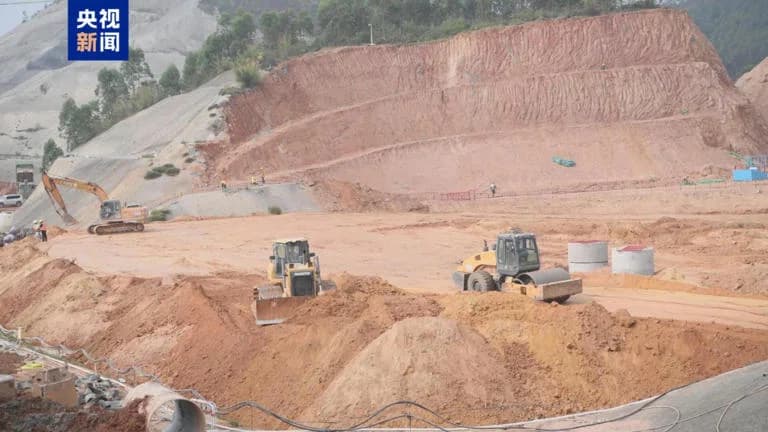
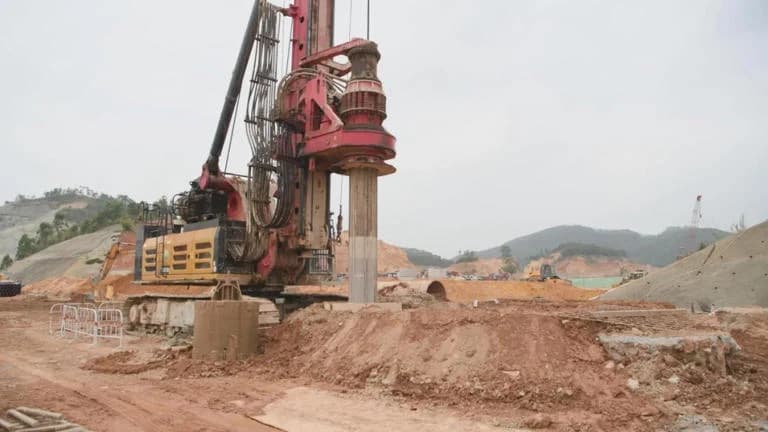
On March 25, 2026, ground broke on what may become one of the most consequential infrastructure projects in China's Pearl River Delta. Located in Foshan's Gaoming District—about 90 kilometers west of central Guangzhou—the new airport is designed to serve the western bank of the Pearl River for the first time, directly benefiting more than 20 million people in the Guangfoshao (Guangzhou-Foshan-Zhaoqing) metropolitan region.
Here's what travelers need to know about this project's significance, design philosophy, and what it means for future visits to the Greater Bay Area.
Why the Bay Area Needed Another Airport
The Pearl River Delta is home to roughly 80 million people across nine cities, yet airport coverage has historically favored the eastern side of the Pearl River. Shenzhen Bao'an International Airport and Hong Kong International Airport handle the bulk of traffic east of the river, while the western flank—home to tens of millions of residents—has relied heavily on the crowded Guangzhou Baiyun International Airport.
According to official figures, Guangzhou Baiyun handled over 90 million passengers in recent years, making it one of the busiest single-terminal airports in the world. The new airport is not positioned as a replacement, but as a complement: a facility designed to ease regional congestion while opening up entirely new parts of the delta to convenient air travel.
The project also brings meaningful benefits to the region around Foshan and Zhaoqing, where airport access has traditionally been limited. From my research, travelers in these areas currently face 90-minute-plus drives to reach Guangzhou Baiyun—drives that will effectively disappear once this facility opens.
A Terminal Designed with Lingnan Identity
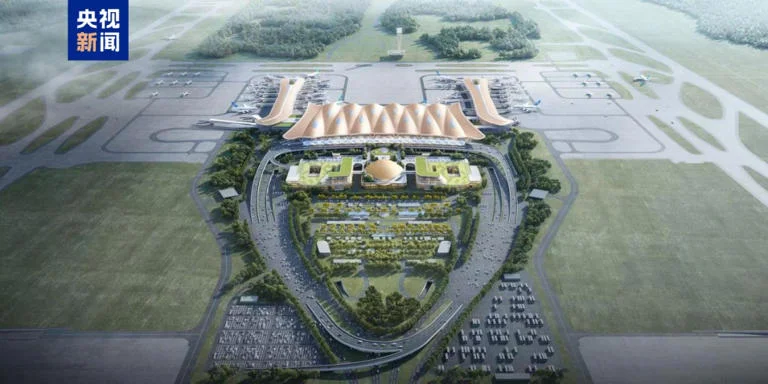
The airport's architecture stands out for its deliberate cultural grounding. The terminal building draws direct inspiration from Foshan's most iconic traditions: the ancestral temple (祖庙), dragon boat racing, and lion dance performances.
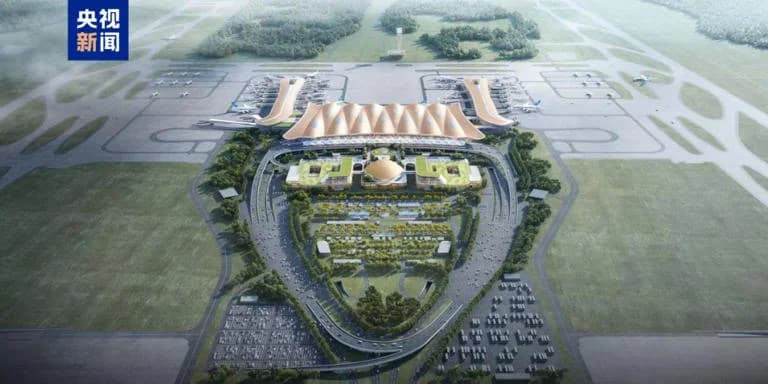
The six-finger廊 (corridor) layout—unusual among modern terminals—is both functional and symbolic. It maximizes the number of aircraft contact positions while creating a compact, efficient passenger flow. The undulating拱形屋顶 (arched roof) echoes the energy of dragon boats racing downstream, a motif the design team calls "千龙竞发" (a thousand dragons launching simultaneously).
Inside, the terminal breaks from the generic airport aesthetic entirely. Travelers will find integrated Lingnan garden landscapes woven into the departure hall, alongside modern tech-enabled check-in zones. The design philosophy behind the project explicitly aims for what Chinese aviation planners call a "四型机场" (four-type airport): safe, green, smart, and culturally rooted.
For visitors who have experienced the somewhat sterile feel of newer Chinese aviation infrastructure, this project signals a welcome shift toward airports that feel less like transit warehouses and more like regional landmarks worth arriving early to explore.
Getting to the Airport: Rail, Road, and the "Seamless Transfer" Promise
Perhaps the most traveler-friendly aspect of the new Guangzhou airport is its commitment to multimodal integration—the kind that existing Bay Area airports have struggled to deliver.
The terminal sits adjacent to a major transit hub that will connect directly to:
- Guangzhou–Zhanjiang High-Speed Railway (广湛高铁) — running north-south through the western Pearl River Delta
- Shenzhen–Nanning High-Speed Railway (深南高铁) — linking the airport to Shenzhen and Guangxi
- Zhuhai–Zhaoqing High-Speed Railway (珠肇高铁) — connecting the airport to Zhuhai, Macau, and Zhaoqing
A five横 (east-west) and four纵 (north-south) expressway network surrounds the facility, and the airport has explicitly designed its ground transportation center so that passengers can complete check-in and baggage drop on the same floor as rail and bus connections.
For travelers staying in Guangzhou or Foshan, this eliminates the current pattern of needing to reach a separate downtown transfer point before heading to the airport. The model mirrors what Tokyo's Haneda has done well—the airport meets you where you already are, rather than forcing you to go exclusively to it.
Numbers, Timeline, and What to Expect
The first phase carries a price tag of approximately 41.8 billion RMB (about $5.7 billion USD), with the airport portion accounting for roughly 36 billion RMB. Construction will deliver:
- 2 parallel runways (far-spaced for simultaneous operations)
- 260,000 square meters of terminal space
- 94 aircraft stands
- Capacity: 30 million passengers per year, 500,000 tons of cargo, 260,000 aircraft movements
Based on comparable Chinese airport projects, I estimate the terminal could open as early as late 2029 or early 2030, with full phase-one completion by 2031. Phase two expansion would push capacity toward 60 million passengers annually.
For comparison, Guangzhou Baiyun currently operates at roughly three times its original design capacity. The new airport's 30-million-person phase-one target is deliberately conservative, leaving room for growth that matches actual demand rather than projections that have historically run hot.
How This Changes Bay Area Travel
The most immediate practical effect for international visitors is straightforward: better access to the western Pearl River Delta. Foshan, Zhaoqing, Jiangmen, and Zhongshan have long been underserved by international flights. Even for travelers heading to Guangzhou proper, a new western hub could eventually mean shorter journeys to certain destinations and more competitive airfares driven by reduced congestion.
The airport also positions Macau and Zhuhai differently in the Bay Area's tourism ecosystem. A visitor landing in Foshan could reach the Macau Peninsula in under 90 minutes via high-speed rail—a corridor that currently requires a much longer detour through Guangzhou or Shenzhen.
For planning purposes, I recommend treating the new airport as a viable option once it opens, but continuing to use Guangzhou Baiyun for trips where your final destination is central Guangzhou or Shenzhen. Watch for opening announcements and airline schedule updates in late 2029.
What Travelers Should Do Now
If you're planning a Bay Area trip in the next two to three years, the new airport won't yet be an option—but the ground-breaking does signal longer-term improvements to regional connectivity that will make future visits smoother. Here's what I suggest in the interim:
Use Guangzhou Baiyun, but explore alternatives. For now, Guangzhou Baiyun remains your most practical entry point, particularly on international routes. However, Hong Kong International Airport and Shenzhen Bao'an both offer growing international networks and can work well depending on your itinerary.
Explore the western delta by rail. The high-speed rail network connecting to the future airport already reaches many cities west of Guangzhou. Places like Foshan, Zhaoqing, and Jiangmen are increasingly accessible by train from Guangzhou South or Guangzhou stations, giving adventurous travelers a head start on exploring the region this airport will eventually serve more directly.
Watch for opening details. Airlines, travel agencies, and tourism boards will publish updated guidance once the airport nears completion. I'll be tracking the development closely and will publish a practical guide to using the new facility once it opens.
Have you visited the Greater Bay Area recently? Share your experience in the comments below—or let us know what you'd most want to know about the new airport.