Hangzhou has long been a cradle of tea culture in southern China. As one of China’s top ten famous teas, West Lake Longjing (龙井茶, Lóngjǐng Chá) has been favored by emperors and nobles for over a thousand years. Today, it's still one of the most popular souvenirs for visitors to Hangzhou. Exploring the city's deep-rooted tea traditions is a fun and enriching experience for travelers.
Meijiawu Village: A Hidden Gem Among Longjing Tea Fields
While the well-known “Inquiring About Tea at Dragon Well” (龙井问茶) is one of the Ten Scenes of West Lake, it can get quite crowded. For a quieter and more immersive tea experience, head to Meijiawu Village (梅家坞, Méijiāwù) —a peaceful alternative nestled in the hills near West Lake.
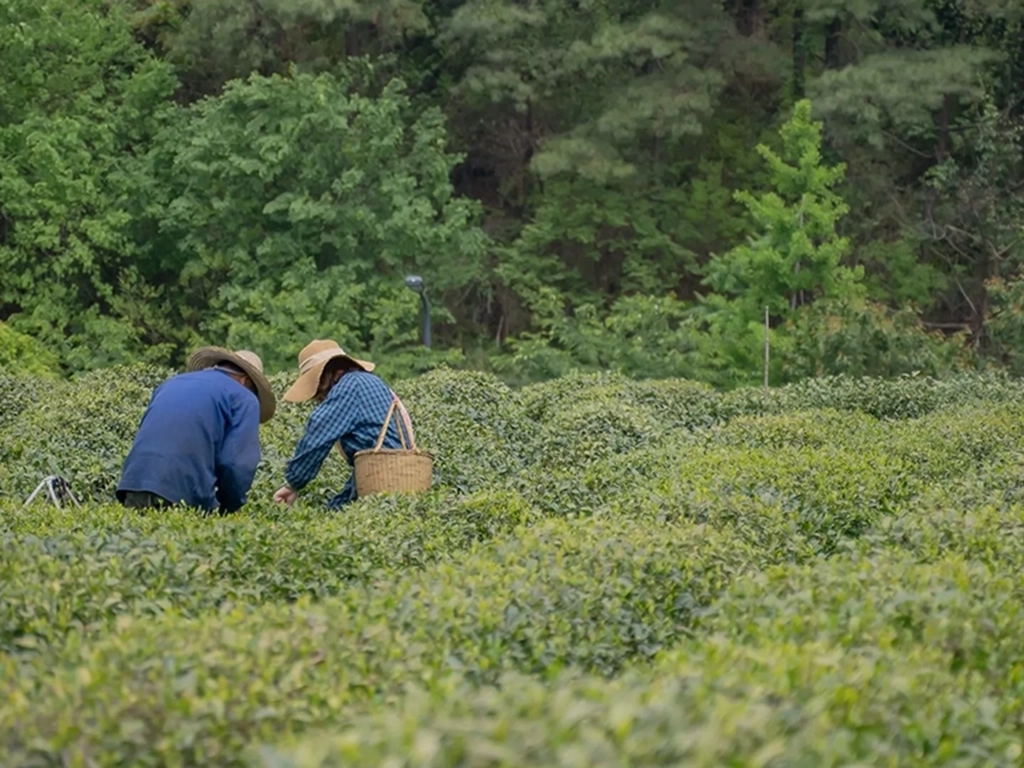
Meijiawu is part of one of West Lake’s classic hiking routes and sits right next to Yunqi Bamboo Trail (云栖竹径, Yúnqī Zhújìng). The rolling hills here are blanketed with neat rows of Longjing tea bushes, and nearly every angle offers picture-perfect views. The area is also dotted with elegant teahouses, where you can sip freshly brewed tea. If you visit between March and May, you might even get to taste the season’s first flush of Longjing (头芽, tóuyá) —the freshest and most prized leaves.
- Address : Meijiawu Village, Xihu District, Hangzhou
- How to get there : Take Bus No. 103 and get off at Meiwu South Entrance (梅坞南口站)
Read Next: Hungry for more Hangzhou flavors? Our What to Eat at West Lake guide covers the best restaurants, and West Lake Walking Tour has the top scenic walking routes.
Longwu Tea Village: A Scenic, Lesser-Known Tea Haven
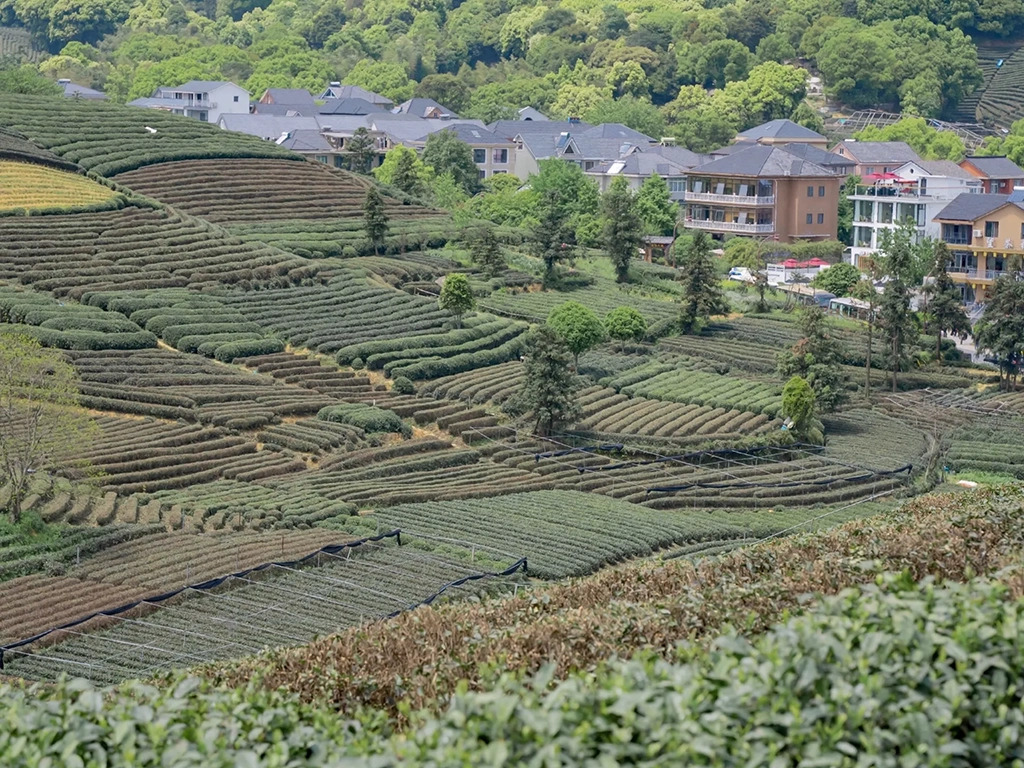
Tucked away in the southwest of Hangzhou, Longwu Village (龙坞村, Lóngwù Cūn) is a hidden gem that many travelers overlook. It actually hosts the largest Longjing tea-growing area in Hangzhou , with over 14,000 mu (approximately 930 hectares) of tea fields—producing around 80% of the city’s Longjing tea!
Often called the “Little Jiuzhaigou of Hangzhou” (杭州小九寨) , Longwu boasts lush greenery and tranquil landscapes. At the heart of the village lies the Guangming Temple Reservoir (光明寺水库, Guāngmíng Sì Shuǐkù) —a serene body of water surrounded by forest, making it one of Hangzhou’s most underrated natural “oxygen bars.”
Tea gardens are everywhere in Longwu, and nearly every one offers hands-on tea experiences like tea picking and tasting. Spending an afternoon exploring this thousand-year-old tea village is a fantastic way to connect with the authentic Longjing tea culture.
- Address : Longwu Tea Village, Xihu District, Hangzhou
- How to get there : From the China Academy of Art Xiangshan Campus (美院象山) , take Community Shuttle Bus No. 1407 and get off at Shangchengdai Village Entrance Square (上城埭村入村广场站)
China National Tea Museum: Explore Tea Culture in a Thatched Cottage
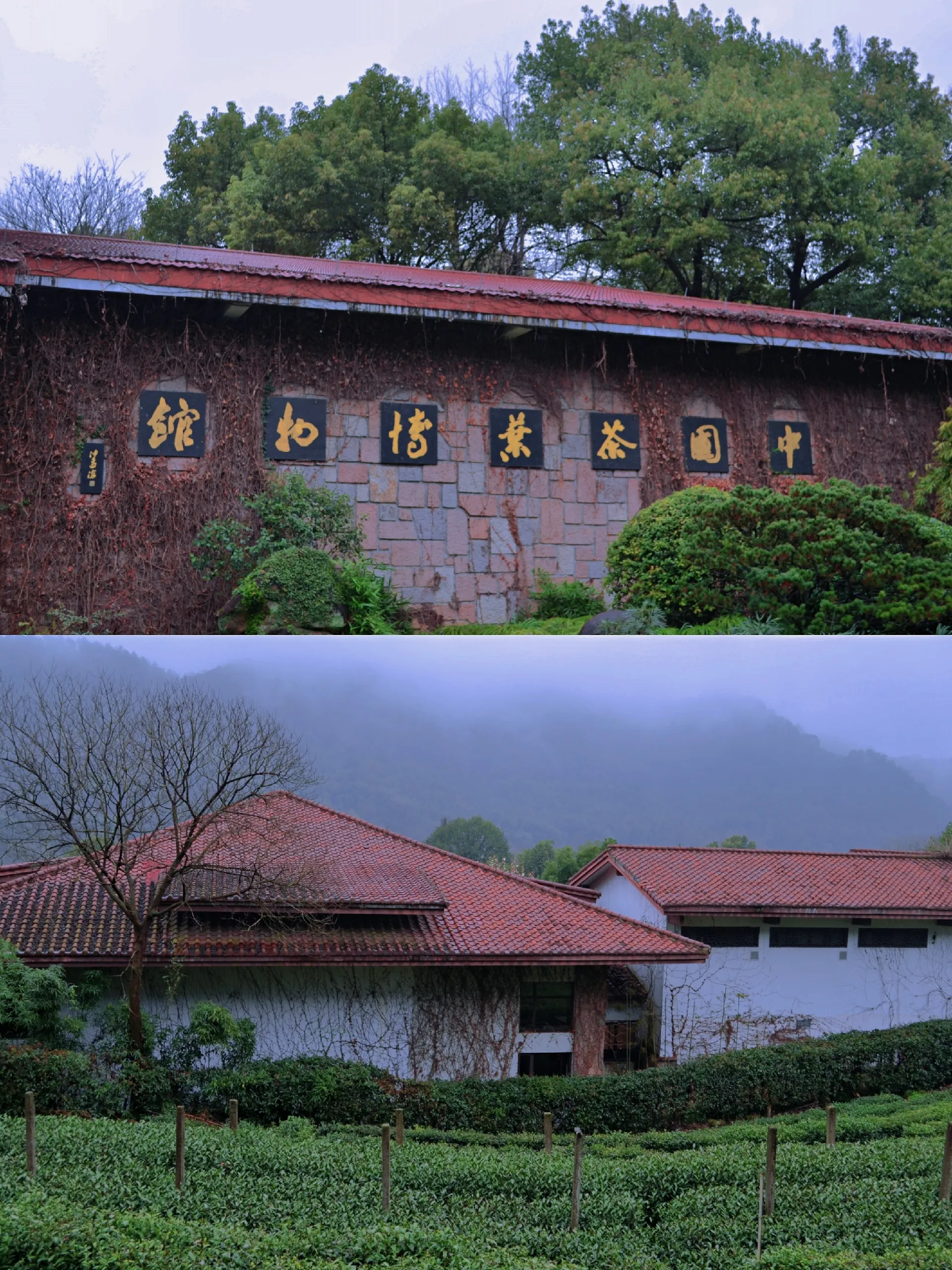
After wandering through Hangzhou’s tea fields, why not dive deeper into the rich world of Chinese tea? Tucked away in the hills, the China National Tea Museum (中国茶叶博物馆, Zhōngguó Cháyè Bówùguǎn) is the perfect place to learn everything about tea. The museum is divided into two main sections: the Shuangfeng Hall (双峰馆) and the Longjing Hall (龙井馆).
The Shuangfeng Hall is set in a charming thatched-roof house beside the mountains and water. Inside, you'll find exhibits tracing the development of tea—from the Wei and Jin dynasties all the way to modern tea processing. There are displays of antique teaware and fascinating insights into how tea customs have evolved through the ages.
And it’s not just about Longjing—over hundreds of teas from across China are showcased here. Press a button next to any display, and you’ll hear a detailed introduction (in Chinese, though some displays offer English translations). The museum also hosts paid tea art classes , including tea ceremony training sessions. You can check the official website for schedules and booking info.
The Longjing Hall focuses more on the global story of tea, offering insights into how tea is appreciated in over 60 countries , highlighting the fascinating differences in international tea culture.
- Addresses :
Shuangfeng Hall : No. 88 Longjing Road, Shuangfeng Village, Longjing Township, Xihu District, Hangzhou
Longjing Hall : No. 268 Wengjiashan Road, Xihu Street, Xihu District, Hangzhou
- Opening Hours : 9:00 AM – 4:30 PM (Closed on Mondays)
- Admission : Free
- Website : www.teamuseum.cn
Qingteng Teahouse: A Classic Tea Lounge with Great Value
In a city with a thousand-year tea legacy, Hangzhou is home to countless teahouses—but Qingteng Teahouse (青藤茶馆, Qīngténg Cháguǎn) stands out as one of the most beloved. With several branches around the city, this self-service teahouse chain has earned a loyal following, especially its original location near West Lake , which has been going strong for over a decade.
Popular tea choices include Osmanthus Longjing (桂花龙井, Guìhuā Lóngjǐng) —a fragrant blend that captures the essence of Hangzhou's autumn—and Mi Lan Xiang Dancong (蜜兰香单丛) , a sweet and floral oolong from Guangdong. Alongside your tea, enjoy an array of complimentary local snacks like mini wontons, scallion noodles, peanuts, chicken feet, and seasonal fruits —all included in the price. It's one of the best-value teahouses for an authentic local experience.
- Address (West Lake location) : No. 278 Nanshan Road, Shangcheng District, Hangzhou
- Opening Hours : 9:30 AM – 12:00 AM
- Average Price : ¥114 per person
Tea Tip: How to Brew Longjing Properly For the best flavor, use mountain spring water at around 80°C. Add 3–4 grams of Longjing leaves per cup, and fill the cup about 70–80% full. First, inhale the aroma deeply, then sip slowly to appreciate its delicate flavor.
He Tea House at Fayun Lane: Serenity in a Luxury Retreat
Tucked away inside a luxury resort, He Tea House (和茶馆, Hé Cháguǎn) at Fayun Lane (法云弄, Fǎyún Nòng) offers a serene and meditative tea experience. Unlike its original branch, this newer location is nestled within Amanfayun , a five-star hotel surrounded by bamboo forests and winding stone paths—it feels like a peaceful escape from the outside world.
The decor is simple yet elegant, with a quiet ambiance perfect for mindful tea sipping or even meditation. You can also book a private chef’s meal (私房菜) , priced at ¥198 per person, with the menu specially curated by the chef.
Conveniently, the teahouse is just a 3–5 minute walk from Lingyin Temple (灵隐寺, Língyǐn Sì). Whether you're visiting the temple or simply want a peaceful break, you can also enter directly from the hotel entrance.
- Address : Inside Amanfayun Hotel, No. 15 Fayun Lane, Xihu Street, Xihu District, Hangzhou
- Opening Hours : 10:00 AM – 9:00 PM
- Average Price : ¥241 per person
Where to Buy Tea in Hangzhou: Jiefang Road Wholesale Tea Market
If you're thinking of bringing home some West Lake Longjing (西湖龙井, Xīhú Lóngjǐng) as a gift—especially for parents or elders—great choice! But let’s be honest: for those unfamiliar with tea, it's easy to get overcharged or end up with low-quality leaves. So where do savvy locals buy their tea? Head to the Jiefang Road Wholesale Tea Market (解放路茶叶批发市场, Jiěfàng Lù Cháyè Pīfā Shìchǎng).
This indoor market may not look fancy—no chic packaging or Instagrammable displays—but it’s where Hangzhou locals really shop for tea. One highly recommended shop is Store No. 3-30 , which has been around for over a decade. The owners here tend to suggest teas based on your taste rather than just trying to upsell. The prices? Much better value than typical tourist spots.
- Address : No. 185 Youshengguan Road, Shangcheng District, Hangzhou
- Opening Hours : 8:30 AM – 5:00 PM
Tea Smart: How to Spot Authentic Longjing Tea
✔️ Appearance : Real Longjing has a flat, smooth shape , with a slightly yellow-green color—not bright green.
✔️ Aroma : A light, fresh fragrance , never overpowering.
✔️ Texture : Good quality leaves crumble easily into powder when dry. If they feel damp or soft, the tea may have gone stale.
✔️ Taste : Authentic Longjing is refreshing, slightly sweet , and leaves a pleasant aftertaste. Fake or low-quality versions taste bitter and rough , and often brew into a cloudy tea.