What to See in Huangshan Each Season: A Local’s Year-Round Travel Guide
Huangshan (Yellow Mountain) offers a different kind of beauty every season—each with its own charm and highlights. Whether you're chasing spring blooms or autumn foliage, there's always something spectacular to discover.
Read Next: Planning your Huangshan trip? Our Huangshan Travel Guide: Scenic Spots & Tickets covers practical info, and How to Get to Huangshan has all transport options.
Spring Flower Viewing in Huangshan
Canola Blossoms in Early Spring
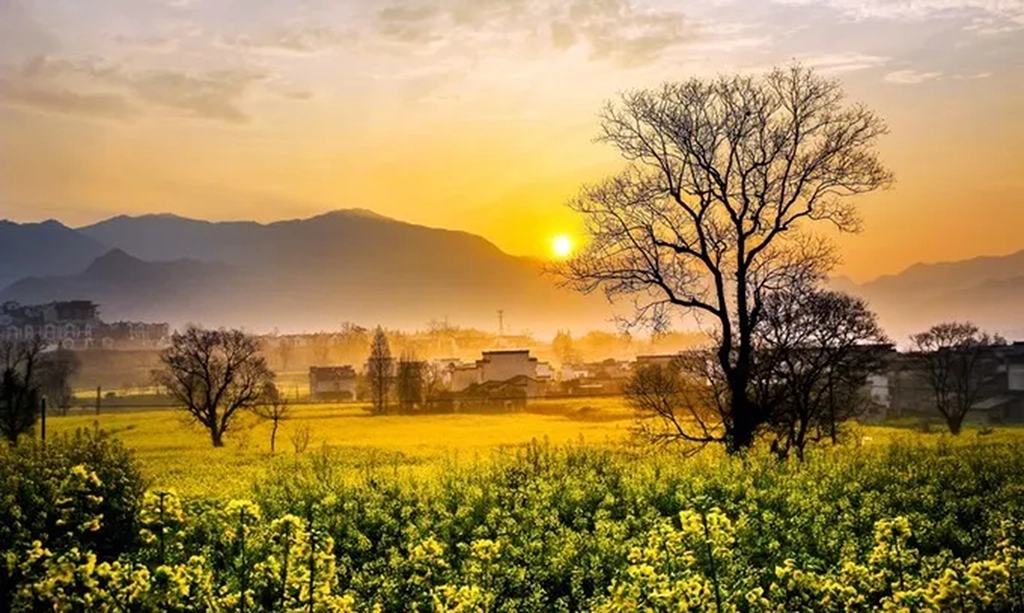
Starting in February, vibrant yellow canola flowers (rapeseed) begin to bloom across the countryside. Fields, mountain slopes, and village edges turn into a golden sea, dotted with white-walled, black-tiled houses and winding mountain streams—this is the essence of Huizhou (徽州), the cultural heart of the region. When the spring breeze arrives, so should you. Let me take you to see these breathtaking blossoms.
Lucun Village: A Hidden Gem Near Hongcun
Just beside the famous Hongcun, Lucun (卢村) is a lesser-known but stunning village that feels like a secret garden in spring. As canola flowers bloom, the village transforms into a floral paradise. There’s a viewing platform across from the village, one of Huangshan's top 100 photography spots, offering the best angle to capture Lucun’s springtime magic.
Xin’an River Landscape Gallery: A Flowing Scroll of Nature
Located in Shexian County (歙县), the Xin’an River Landscape Gallery (新安江山水画廊) stretches about 50 kilometers. Traditional Huizhou-style homes nestle between green hills and clear waters. A river cruise is the best way to enjoy this scenic route, featuring not only natural beauty but also performances highlighting the area’s ancient fishing culture. In spring, blooming peach blossoms, canola, pear, and azaleas dot the riverbanks like brushstrokes on a painting.
Shitan Village: A Paradise for Photographers
Nestled in Xiakou Town, Shexian County, Shitan (石潭) is renowned for its seas of mist and spring blossoms. It’s a dream destination for photography lovers. In spring, the landscape bursts with canola, peach, and pear blossoms—splashed across hillsides, valleys, and centuries-old homes. The yellow canola dominates the palette, with mist and Huizhou-style architecture blending into the mountains to form a fairy-tale setting. The best time to shoot the flower and cloud seas here is from mid-March to early April.
Best Summer Getaways in Huangshan
Huangshan is one of China’s top ten mountain destinations for escaping the summer heat. With its refreshing climate and stunning surrounding scenic spots, it's no surprise that Huangshan is a popular choice for summer travelers.
Huangshan Scenic Area: A Cool Mountain Retreat
Even in the peak of summer—July and August—the average temperature on the mountain stays around 16–20°C (60–68°F). Hotels on the mountain don’t even have air conditioning, and at night you’ll still need a quilt to stay warm. The poet Cao Wenzhi once wrote, “Spring doesn’t arrive until April, and summer never truly comes”—a perfect description of Huangshan’s climate. In summer, beyond the famous “four wonders” (odd-shaped pines, unique rock formations, seas of clouds, and hot springs), visitors are also treated to magnificent sunrises and colorful sunsets.
Emerald Valley: The “Mini Jiuzhaigou” of Southern Anhui
Nestled at the foot of Huangshan, the Emerald Valley (翡翠谷, Feicui Gu) is often dubbed the “Lesser Jiuzhaigou of Southern Anhui” thanks to its dramatic rock formations, flowing emerald waters, and over a hundred naturally formed colorful pools scattered throughout the gorge. In summer, the valley is filled with water and pleasantly cool—making it an ideal family-friendly escape from the heat.
Taiping Lake: The “Lake Geneva of the East”
Located between Huangshan and Mount Jiuhua, Taiping Lake (太平湖) is known for its tranquil waters and picturesque mountain backdrop. Locals live peacefully along the shores, fishing and picking tea in a lifestyle that feels straight out of a storybook. The lake is also rich in fresh fish. A summer vacation here offers a perfect blend of scenic relaxation and delicious lake-to-table meals—great for a peaceful family retreat.
Discover the Autumn Beauty of Huizhou
In Huizhou (徽州), the most enchanting autumn scenery hides among its elegant ancient villages. By mid-to-late October, the reds, oranges, yellows, and greens begin to blend with the white walls and dark tiled roofs of traditional Huizhou-style architecture—creating a landscape that's more poetic and vibrant than any other season.
Tachuan: One of China’s Top Three Autumn Destinations
Tachuan (塔川), also known as Tashang, is a small village in Yi County (黟县) near Huangshan. While it may not be as famous as its neighbors—Hongcun and Xidi—it truly shines in autumn. Recognized as one of the “Top Three Autumn Color Destinations in China,” Tachuan is known for its clusters of Chinese tallow trees (wūjiù shù , 乌桕树), whose leaves shift from green to yellow to deep crimson. The colorful foliage blankets the hills, framing the village’s classic Huizhou-style houses with curved eaves and intricate woodwork—making it a photographer’s dream.
Hongcun: An Oil Painting Come to Life
Often called “the village in a Chinese painting,” Hongcun (宏村) becomes even more magical in autumn. Unlike the more ink-wash style typically associated with Jiangnan water towns, Hongcun in fall bursts with vivid colors. The quiet village, shrouded in a gentle morning mist, takes on an almost surreal beauty—like stepping into a romantic oil painting full of warmth and nostalgia.
Huangling: The Art of Autumn Drying
Huangling (篁岭), located in Wuyuan (婺源), is best known for its iconic “shaiqiu” (晒秋) scenes—vivid autumn harvests laid out to dry on bamboo trays. This time-honored tradition transforms the village into a living canvas. Corn, chili peppers, chrysanthemums, and other colorful crops are displayed on rooftops and balconies, creating a vibrant contrast against the white walls and black tiles of Huizhou-style buildings. Layer upon layer of hillside homes form a picture-perfect view that looks like a scroll of living, breathing countryside art.
Winter in Huangshan: Snowy Landscapes and Spring Festival Traditions
Winter in Huangshan isn’t just about serene snowy peaks—it’s also a great time to explore traditional Huizhou folk culture and join in the colorful celebrations of Chinese New Year. From age-old customs to festive rituals, this is the season when ancient villages come alive with heritage and joy.
Huizhou Ancient City: A Living Museum of Folk Traditions
Located in Shexian County (歙县), Huizhou Ancient City (徽州古城) has been a regional political and cultural center since the Tang Dynasty. The city is uniquely built as a “city within a city,” where both the county and prefectural governments once coexisted. Within its walls, you’ll find historical landmarks like the Huizhou Government Office (徽州府衙), Xuguo Stone Archway (许国石坊), the Tao Xingzhi Memorial, Yuliang Ancient Wharf, and Huizhou Garden.
But beyond the architecture and historical relics, winter brings vibrant folk activities. Visitors can witness traditional ceremonies like the Prefect’s Street Patrol, the “Jumping Zhong Kui” ritual (跳钟馗 to ward off evil spirits), the Three Prohibitions Tablet (三戒碑), mock Huizhou-style weddings, bell-ringing blessings, and more. It’s an immersive way to experience authentic Huizhou customs during the Spring Festival.
Qiyun Mountain: New Year Blessings and Fortune-Welcoming Festivities
Qiyun Mountain (齐云山), known for its striking Danxia landforms, cliffside inscriptions, Daoist heritage, and idyllic countryside views, becomes especially lively during the Lunar New Year. As one of the spiritual centers of Huizhou culture, Qiyun Mountain hosts large-scale blessing events around Chinese New Year.
Visitors can take part in Daoist blessing ceremonies, light the “First Incense” (烧头香) on New Year’s Day, watch the Fortune God (财神) parades, join in lantern riddle games, and enjoy dragon and lion dances. You can also tie red blessing ribbons (系福带), make New Year wishes, and pray for good fortune in the coming year. It’s a joyful and culturally rich experience that combines spiritual rituals with festive fun.