On August 20th, 2024, after enduring six and a half years of challenges and hardships, “Black Myth: Wukong”, a domestic 3A-grade game that has been hailed as “a milestone and industrial miracle in China's game industry”, finally met with players!

Since its launch, Black Myth: Wukong has quickly climbed to the top of the sales charts on several gaming platforms, surpassing CS:GO in just one hour to become the most popular game on Steam. At the same time, the number of online players has surpassed 1 million, and related discussion topics have taken the top of major hot search charts, creating a huge upsurge in the gaming community at home and abroad. In terms of sales performance, the game's pre-sale sales have so far exceeded 1.2 million copies, and the total pre-sale sales have exceeded 400 million RMB!

This game is set against the backdrop of Chinese mythology, deeply explores the classic elements of Journey to the West, and combines them with modern game design concepts to create a world of Journey to the West that is both intimate and innovative.

It can be said that it is not just a game, but also an inheritance and innovation of Chinese traditional culture.
Success is never achieved overnight. In 2020, Black Myth released its first real-life animation, and many netizens noticed that it contained many Japanese architectural elements. The production team later explained that they used the Unreal Engine 4 library, and the Asian-style architectural materials in the library were mainly Japanese…
Therefore, the production team of Game Science carried professional equipment and went to ancient monuments across China to conduct on-site scans, which served as the blueprint for the building models in the game.
It is through this series of on-site scanning that ancient Chinese buildings, stone carvings, statues and other elements have been highly restored in the game. Every brick and tile in the game is full of profound cultural heritage, as if allowing players to travel through time and space and experience the charm of history.
Read Next: For a deeper dive into Black Myth: Wukong locations, see our Journey Through China's Beauty & History or Shanxi Scenic Spot Guide.

According to the incomplete location list currently available, the game "Black Myth: Wukong" has collected 36 ancient buildings across China. As a province with many ancient buildings, Shanxi Province has the largest number of ancient buildings, accounting for 27 of them. Black Myth: Wukong gives the players a guided tour of China travel, especially the ShanXi province.
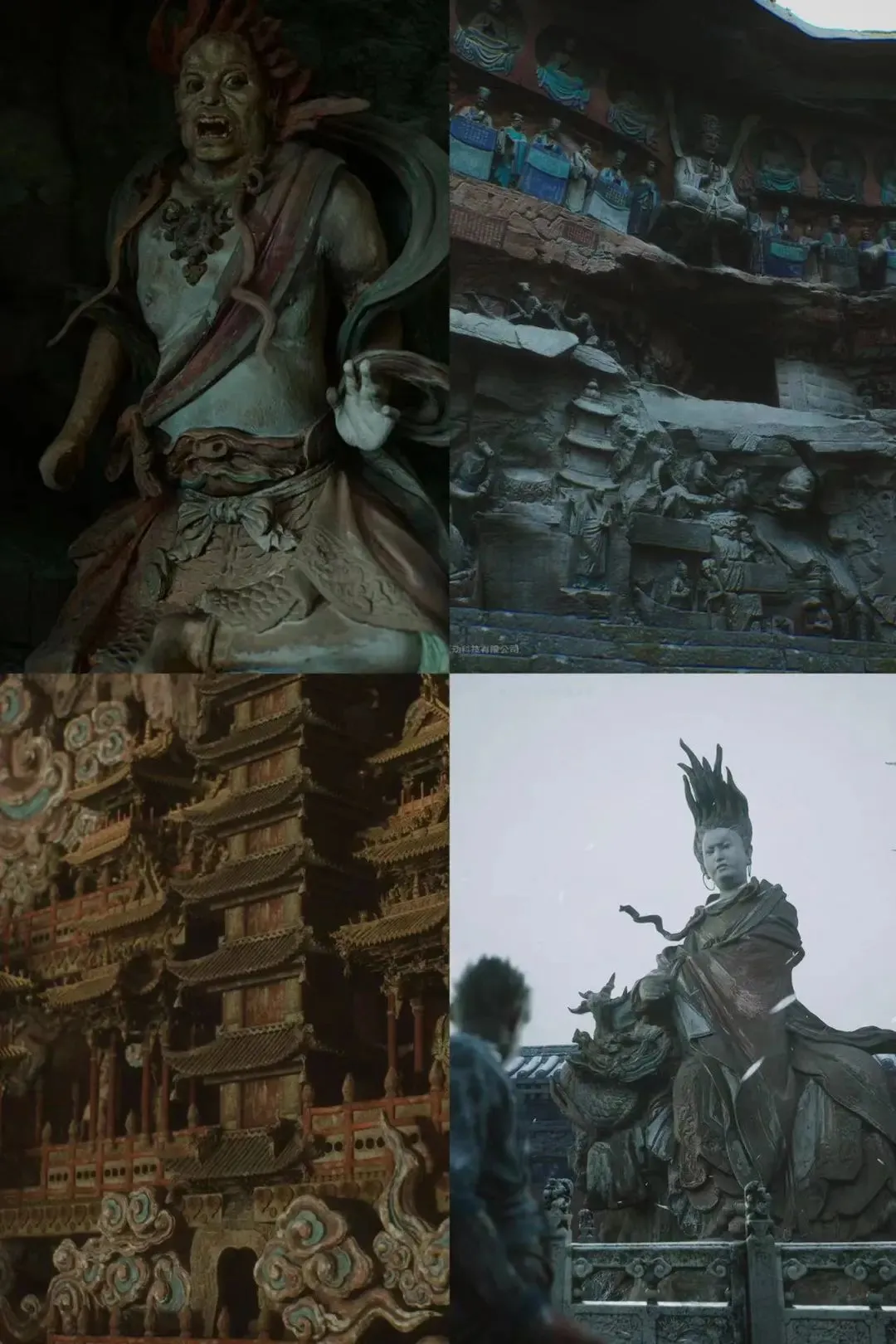
We've curated a special episode that takes a tour guide at the ancient buildings in Black Myth: Wukong, and takes you through scenes that are still breathtaking after thousands of years. The introduction in the article is not exhaustive. The pictures used are from the Internet. If there are any inaccuracies, we sincerely welcome your criticism and correction in the comment area.
- Huayan Temple (Datong Pingcheng District)
- Shanhua Temple (Datong Pingcheng District)
- Hanging Temple (Hunyuan County, Datong)
- Yungang Grottoes (Yungang District, Datong)
- Yingxian Wooden Pagoda (Yingxian, Shuozhou)
- Chongfu Temple (Old Town, Shuozhou)
- Foguang Temple (Wutai County, Xinzhou City)
- Nanchan Temple (Wutai County, Xinzhou)
- Zhenguo Temple (Pingyao County, Jinzhong City)
- Shuanglin Temple (Pingyao County, Jinzhong)
- Xiaoxitian Temple (Xi County, Linfen City)
- Guangsheng Temple (Hongdong County)
- Guanyintang (Luzhou District, Changzhi City)
- Chongqing Temple (Changzi County, Changzhi City)
- Qinglian Temple (Zezhou District, Jincheng)
- Jade Emperor Temple (Zezhou County, Jincheng)
- Mishan Iron Buddha Temple (Gaoping City, Jincheng)
- Jincheng Erxian Temple (Zezhou County, Jincheng)
- Yongle Palace (Ruicheng County, Yuncheng)
- Guandi Temple (Yancheng Yanhu District)
- Stork Tower (Yongji City, Yuncheng)
- Fusheng Temple (Xinjiang County, Yuncheng)
- Shisi Temple (Jingning County, Lishui City)
- Anyue Rock Carvings (Anyue County, Ziyang City)
- Dazu Rock Carvings (Dazu District, Chongqing)
- Yuansi Pagoda (Leicheng, Quanzhou City)
- Three Pagodas of Chongsheng Temple (Dali City)
- Water and Land Nunnery (Lantian County, Xi'an)
- Dule Temple (Jizhou District, Tianjin)
- Nan'an Temple Pagoda (Weixian County, Zhangjiakou)
- Jade Emperor Pavilion (Zhangjiakou Weixian)