Compared to grand Western-style buildings and trendy art districts, Shanghai’s old town area may not be as popular among travelers — but this is where the authentic spirit of Old Shanghai truly lives on.
Just a short walk south from People’s Square, you’ll enter the heart of Shanghai’s historical old town, locally known as Nanshi District (南市区, Nánshì Qū). Here you’ll find Yuyuan Garden (豫园, Yùyuán) lit up beautifully after dark, the lively yet commercial City God Temple (城隍庙, Chénghuáng Miào) , and steaming breakfast stalls tucked away in narrow alleyways near Old Ximen (老西门, Lǎo Xīmén). Although much of this area is slowly changing due to urban redevelopment, the everyday street scenes and local charm remain a nostalgic window into the soul of the city.
Yuyuan Garden: A Centuries-Old Oasis in the Heart of the City
With a history stretching back over 400 years, Yuyuan Garden (豫园, Yùyuán) is a classical Chinese garden that once served as a private retreat for a Ming Dynasty official named Pan Yunduan (潘允端). He built it as a place of peace and comfort for his aging father—reflected in the name "豫" (Yù), meaning contentment. Over the centuries, the garden changed hands many times, served as the headquarters for the Small Sword Society uprising during the Qing Dynasty, suffered damage during foreign occupation, and saw many of its pavilions destroyed by fire. It wasn’t until after the founding of the People’s Republic of China that the garden was fully restored and opened to the public.
Highlights Inside Yuyuan Garden
Great Rockery (大假山, Dà Jiǎshān)
Spanning over 30 acres, Yuyuan is filled with elegant pavilions, bridges, and rockeries, but the most famous is the Great Rockery , located opposite the Jingguan Hall (静观厅). Built from thousands of tons of yellow stones, each uniquely shaped, this masterpiece is the only surviving work of Zhang Nanyang (张南阳) —a renowned rockery artist of the Ming Dynasty. Climb to the Wangjiang Pavilion (望江亭) at the top for a stunning panoramic view of the garden.
Spanning over 30 acres, Yuyuan is filled with elegant pavilions, bridges, and rockeries, but the most famous is the Great Rockery , located opposite the Jingguan Hall (静观厅). Built from thousands of tons of yellow stones, each uniquely shaped, this masterpiece is the only surviving work of Zhang Nanyang (张南阳) —a renowned rockery artist of the Ming Dynasty. Climb to the Wangjiang Pavilion (望江亭) at the top for a stunning panoramic view of the garden.
Jade Exquisite (玉玲珑, Yù Línglóng)
Often called the “Treasure of Yuyuan,” this elegant stone stands near the Guantao Pavilion (观涛楼). With its honeycomb-like holes and graceful shape, it's considered one of the Three Famous Rocks of Jiangnan (江南三大名峰). Legend has it this very rock was once part of Genyue (艮岳) , an imperial garden built by Song Emperor Huizong.
Often called the “Treasure of Yuyuan,” this elegant stone stands near the Guantao Pavilion (观涛楼). With its honeycomb-like holes and graceful shape, it's considered one of the Three Famous Rocks of Jiangnan (江南三大名峰). Legend has it this very rock was once part of Genyue (艮岳) , an imperial garden built by Song Emperor Huizong.
Ancient Opera Stage (古戏台, Gǔ Xìtái)
Standing 7 meters tall and able to accommodate over 200 spectators, this intricately decorated stage was once hailed as the finest in the Jiangnan region. Look closely and you’ll spot golden carvings of dragons, phoenixes, and lions—and even a handwritten inscription by famed opera artist Yu Zhenfei (俞振飞) on the stone pillar behind it.
Standing 7 meters tall and able to accommodate over 200 spectators, this intricately decorated stage was once hailed as the finest in the Jiangnan region. Look closely and you’ll spot golden carvings of dragons, phoenixes, and lions—and even a handwritten inscription by famed opera artist Yu Zhenfei (俞振飞) on the stone pillar behind it.
Jiyu Water Corridor (积玉水廊, Jīyù Shuǐláng)
Connecting the Huijing Tower (会景楼) and Hanbi Tower (涵碧楼), this elegant corridor is one of the longest water corridors in classical Jiangnan gardens. Goldfish often swim under the bridge, and charming pavilions line both sides, creating a dreamy and photogenic waterside view.
Connecting the Huijing Tower (会景楼) and Hanbi Tower (涵碧楼), this elegant corridor is one of the longest water corridors in classical Jiangnan gardens. Goldfish often swim under the bridge, and charming pavilions line both sides, creating a dreamy and photogenic waterside view.
Travel Tips
For added convenience, a nearby antique-style shopping mall has been integrated into the tourist area. However, it tends to get crowded and noisy, especially during peak hours. If you’re just looking to pick up a few souvenirs, a quick browse should be enough.
Visitor Information
-
Address : No. 279 Yuyuan Old Street, Huangpu District, Shanghai (上海市黄浦区豫园老街279号)
-
Opening Hours : Tuesday to Sunday, 9:00 AM – 4:30 PM (closed on Mondays)
-
Admission : ¥40 in peak seasons (April–June, September–November); ¥30 in off-seasons (July–August, December–March)
Read Next: For more of Shanghai’s historic architecture, explore Shanghai’s Old Villas or Hudec’s Architectural Legacy.
City God Temple: A Taoist Sanctuary Guarding Shanghai for Centuries
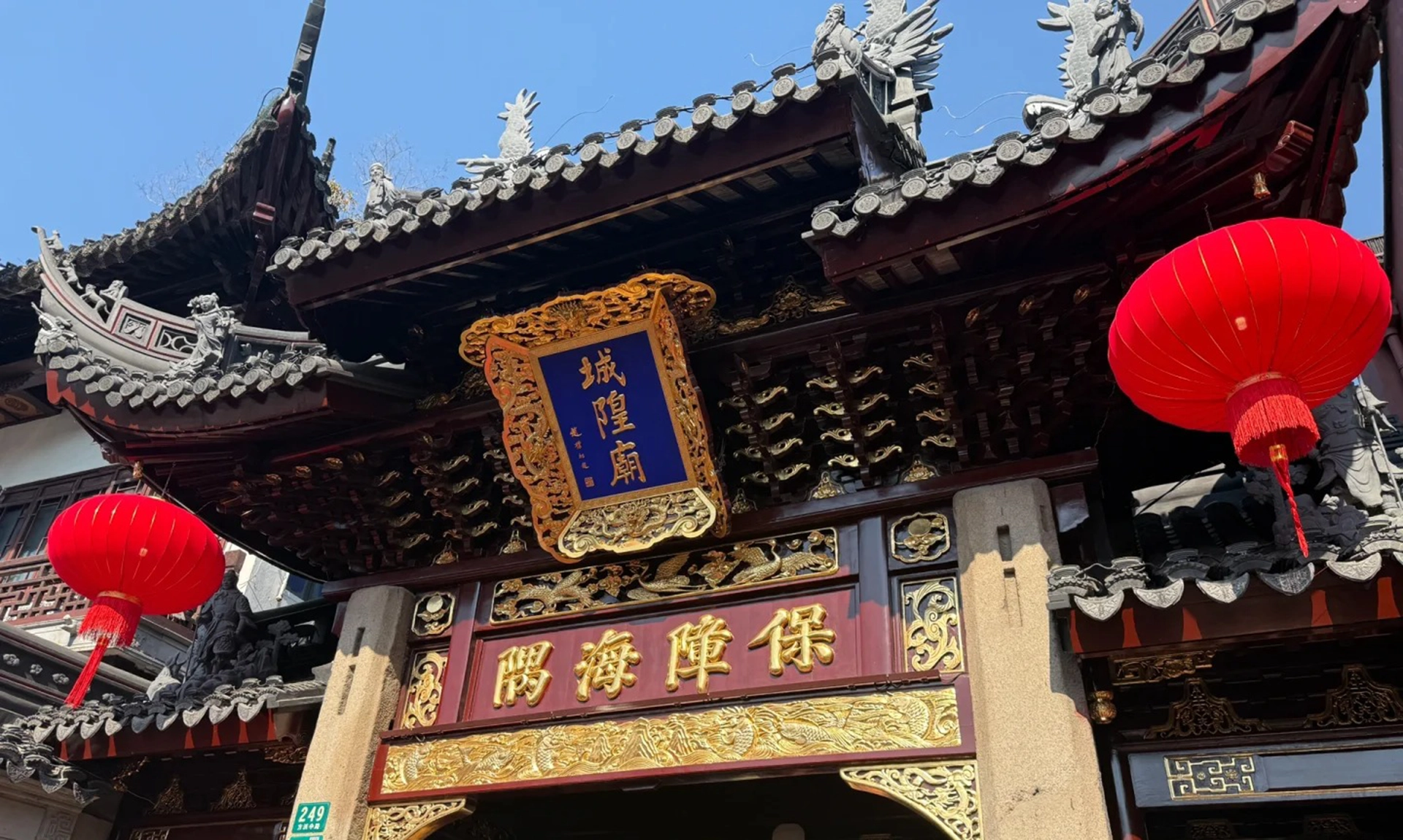
While many visitors associate the City God Temple (城隍庙, Chénghuáng Miào) with the bustling (and often debated) food street nearby, few realize that the temple itself is actually older than Yuyuan Garden—and far more spiritually significant. With a history of over 600 years, this Taoist temple is one of the oldest and most revered places of worship in Shanghai.
Originally built during the Yongle reign of the Ming Dynasty, the temple has been expanded and restored several times over the centuries. Today, it houses nine main halls , each with its own unique purpose. The front hall is marked by a large plaque reading “City God Temple,” and inside stands a statue of General Huo Guang (霍光) from the Western Han Dynasty.
At the very back of the complex lies the Main City God Hall , where the temple’s namesake deity is enshrined—Qin Yubo (秦裕伯) , a former scholar who was appointed as Shanghai’s guardian spirit by Emperor Zhu Yuanzhang, the founder of the Ming Dynasty. With his stern posture, red face, and long beard, his statue embodies authority and divine presence.
Other halls in the temple include:
-
Cihang Hall (慈航殿) – for blessings of peace and safety
-
Caishen Hall (财神殿) – dedicated to the God of Wealth
-
Wenchang Hall (文昌殿) – for academic success and scholarly luck
If you have time, it's worth exploring them all.
Travel Tip
Every visitor to the temple receives free incense sticks at the entrance—a small gesture to welcome you into this peaceful and spiritual place.
Visitor Information
-
Address : No. 249 Fangbang Middle Road, Huangpu District, Shanghai (上海市黄浦区方浜中路249号)
-
Opening Hours : 8:00 AM – 9:00 PM
-
Admission : ¥10
Laoximen: Fading Alleyways, Enduring Memories of Old Shanghai
When it comes to Shanghai’s Old Town (老城厢, Lǎo Chéngxiāng) , the city's lilong (里弄) culture—the narrow alleyway neighborhoods—is an essential part of the experience. Picture narrow lanes, exposed electrical wires, and white shirts flapping gently from clotheslines strung overhead. The heart of these nostalgic alleyways lies between Laoximen (老西门) and Xiaonanmen (小南门).
Step out of Laoximen Metro Station, and you'll find yourself surrounded by a vanishing world. Many of the traditional homes are now vacant and await redevelopment or demolition. Still, the warm memories of daily life—laughter, clatter, and community spirit—linger in these timeless lanes, forming an emotional connection for generations of Shanghainese.
Longmen Village: A Living Time Capsule
Among these alleyways, Longmen Village (龙门邨, Lóngmén Cūn) stands out as the longest surviving “new-style lilong” in Shanghai. Its entrance gate still proudly bears the bold characters “1935” and “龙门邨,” a reminder of its rich past.
This site originally housed a private garden during the Qing Dynasty and was later converted into a Confucian academy called Longmen Academy (龙门书院). Eventually, it became the location of Shanghai High School , until the school relocated in 1935 and the current lilong residences were established.
Compared with other older alleyways, Longmen Village feels more spacious , with wide lanes and neatly arranged brick houses. Despite some exterior renovations, many of the original architectural details remain intact—look closely and you’ll spot preserved carved door frames and charming remnants like an old barbershop tucked around the corner. No. 10 and No. 30 are especially beautiful and worth a closer look.
Unlike many Western-style shikumen buildings, Longmen Village retains more traditional Chinese design elements , offering a rare and authentic glimpse into everyday life in early 20th-century Shanghai.
Travel Tip
A few residents still live in Longmen Village today, so please be respectful and avoid disturbing them during your visit.
Visitor Information
- Address : Lane 133, Shangwen Road, Huangpu District, Shanghai (上海市黄浦区尚文路133弄)
If you're interested in exploring more of Shanghai's lilong culture, don’t miss Dahua Li (大华里) , Fuqing Li (福庆里) , or Yongye Li (永业里) —all within walking distance of Laoximen Station.
For a more curated experience, visit the Shikumen Open House Museum near Xintiandi , where a 1920s-style residence offers insight into the layout and lifestyle of old Shanghai families.