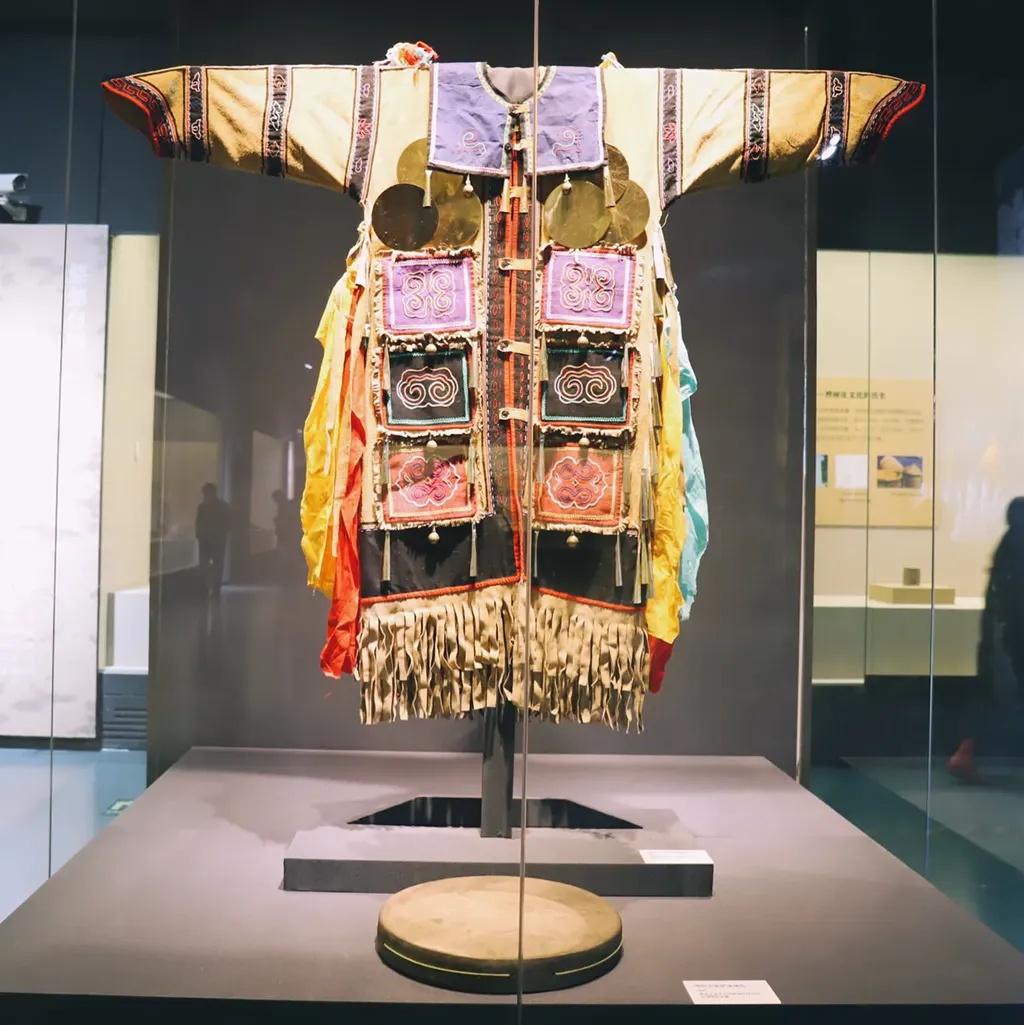
If Xi'an had a crown, the Shaanxi History Museum (SXHM) would be its brightest jewel. Known as the "Pearl of the Ancient Capital," it houses a staggering 1.7 million artifacts.
From simple stone tools to the most luxurious gold of the Tang Dynasty, this museum tells the entire story of Chinese civilization. But be warned: it is also the hardest ticket to get in all of Xi'an.
⚡ Essential Info: The Ticket Reality
⚠️ Jim’s Serious Warning:
Do NOT just show up. The museum is incredibly popular, and tickets sell out seconds after release on WeChat.
Do NOT just show up. The museum is incredibly popular, and tickets sell out seconds after release on WeChat.
🎫 How to Actually Get In (Jim 's Strategy):
- Option A (Free Ticket): Requires booking on WeChat exactly 3 days in advance. Success rate: Very Low (Tickets vanish in seconds).
- Option B (Treasure Gallery Ticket - 30 RMB): Easier to book. Includes the main halls + the stunning Hejiacun Treasure Hall. Recommended.
- Option C (Mural Hall Ticket - 270 RMB): Expensive, but easiest to get. Includes everything + the rare Tang Mural Hall.
📍 Opening Hours:
Closed on Mondays.
Closed on Mondays.
- Peak (Mar 15 - Nov 14): 08:30 – 18:00
- Off-Peak (Nov 15 - Mar 14): 09:00 – 17:30
Read Next: Don’t miss our guide to The Terracotta Army & The First Emperor’s Mausoleum or Exploring Northern Shaanxi.
The Smart Way to Visit: Jim's Reverse Route
Most tourists rush into the main hall first, creating a bottleneck. To avoid the crowds, I recommend doing the exact opposite:
Jim 's Route: Tang Murals Hall → Hejiacun Treasures → Main Exhibition Halls
Part 1: The Tang Mural Hall (The "Underground" Art Gallery)
This hall is special. It contains nearly 600 frescoes taken directly from the tomb walls of Tang Dynasty royalty. Because they were sealed underground, the colors remain vivid.
Must-See: The Polo Match (Maqiu Tu)
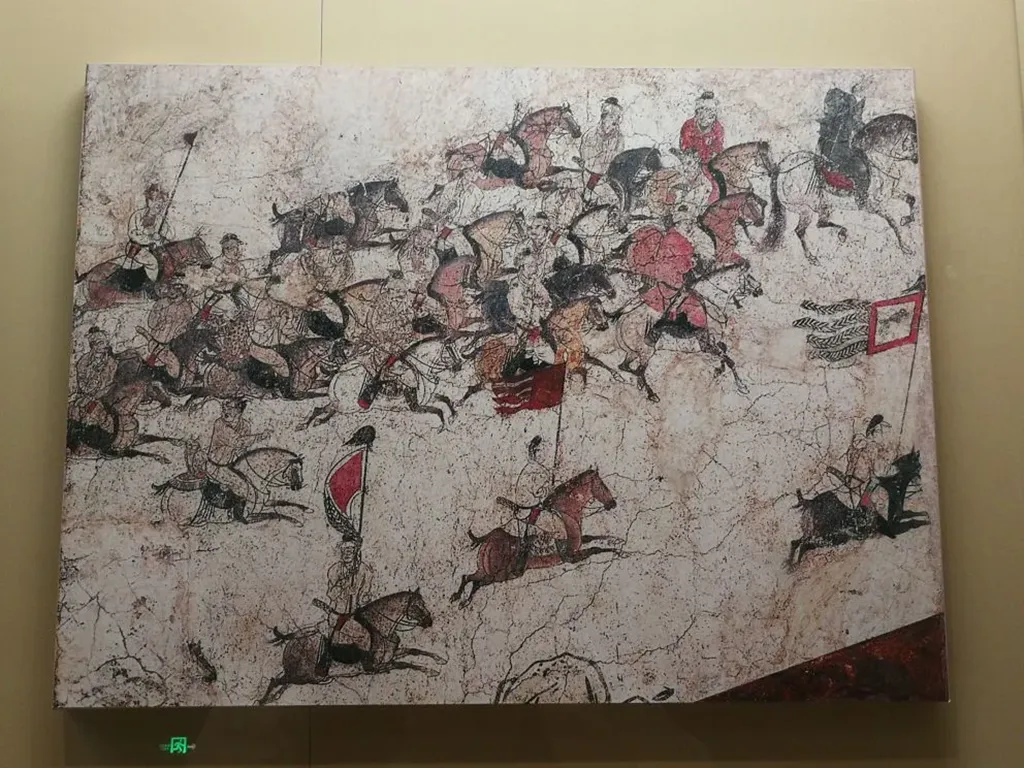
Depicting ancient nobles playing Polo on horseback. It captures the energy and movement of the sport, which was the "Golf" of the Tang elite.
Must-See: The Guest Envoys (Keshi Tu)
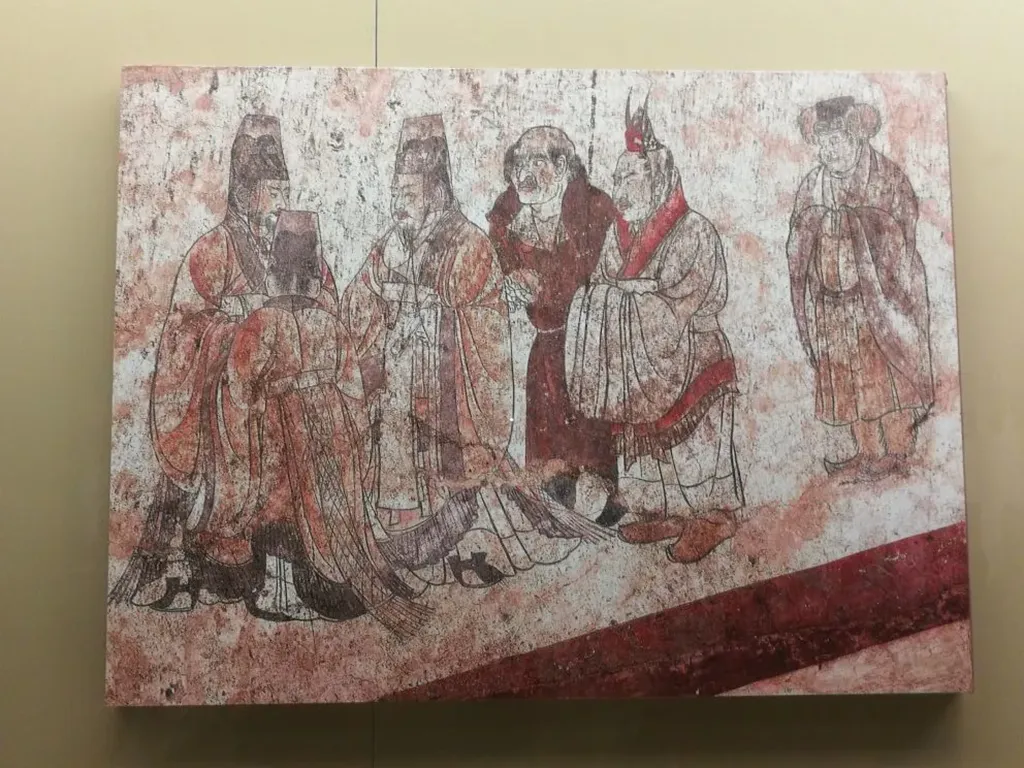
A group of foreign diplomats waiting to see the Emperor. Look at their faces—they have different ethnic features and clothing, proving that Xi'an (Chang'an) was the center of international diplomacy 1,300 years ago.
Part 2: The Hejiacun Treasures (The "Alibaba's Cave")
In 1970, construction workers in Hejiacun village found two clay pots buried in the ground. Inside were over 1,000 items of gold, silver, and jade—the hidden wealth of a Tang noble fleeing a rebellion.
The Beast-Head Agate Cup
(The Museum 's #1 Treasure)
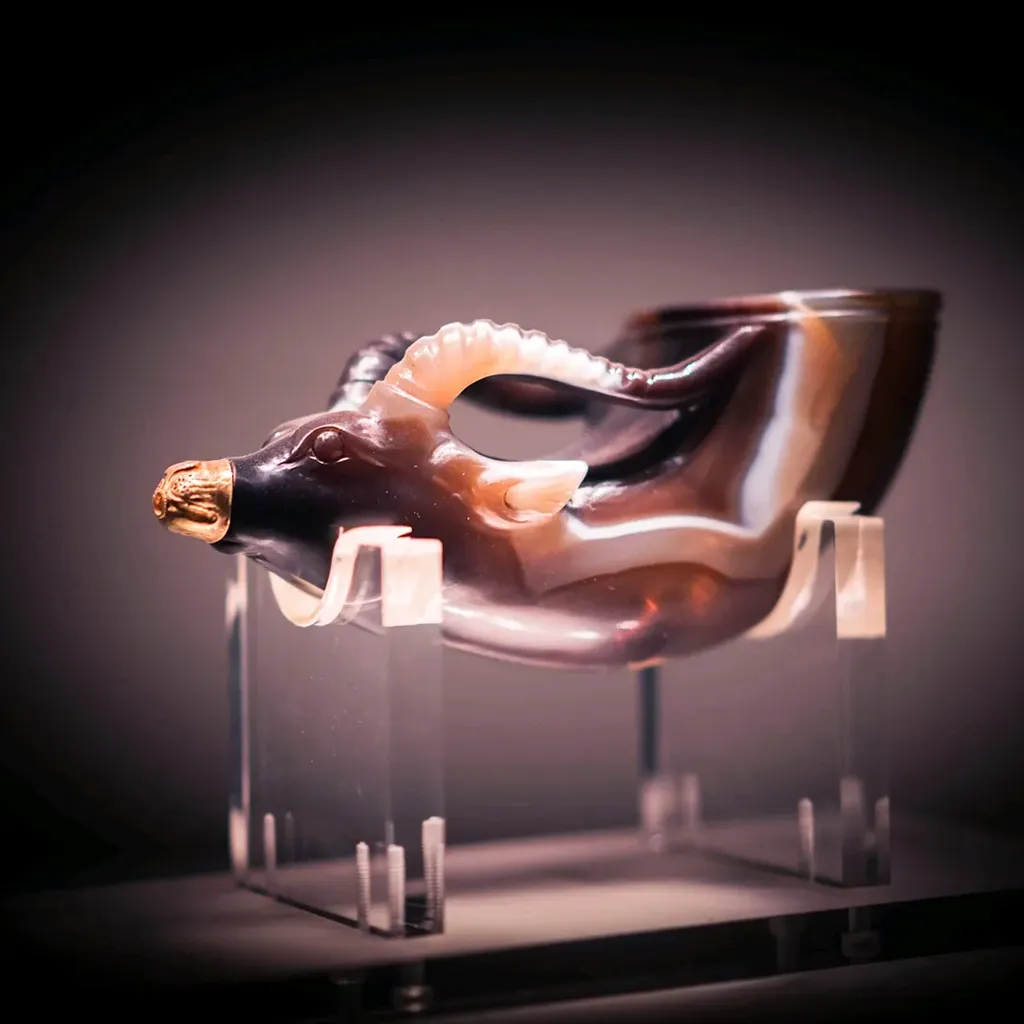
This cup is carved from a single piece of rare red agate. It is shaped like an ox head with a gold snout. It is the only one of its kind ever found and is likely a priceless gift from Central Asia.
💡 Jim’s Insight: The Silver Sachet
Look for the tiny Grape & Bird Silver Sachet. It’s a perfume ball. What's amazing is the gyroscope mechanism inside (like a ship's compass). No matter how much the lady moved or danced, the cup of burning incense inside always stayed level and never spilled ash. This is 8th-century engineering at its finest.
Part 3: The Main Halls (Shaanxi Ancient Civilization)
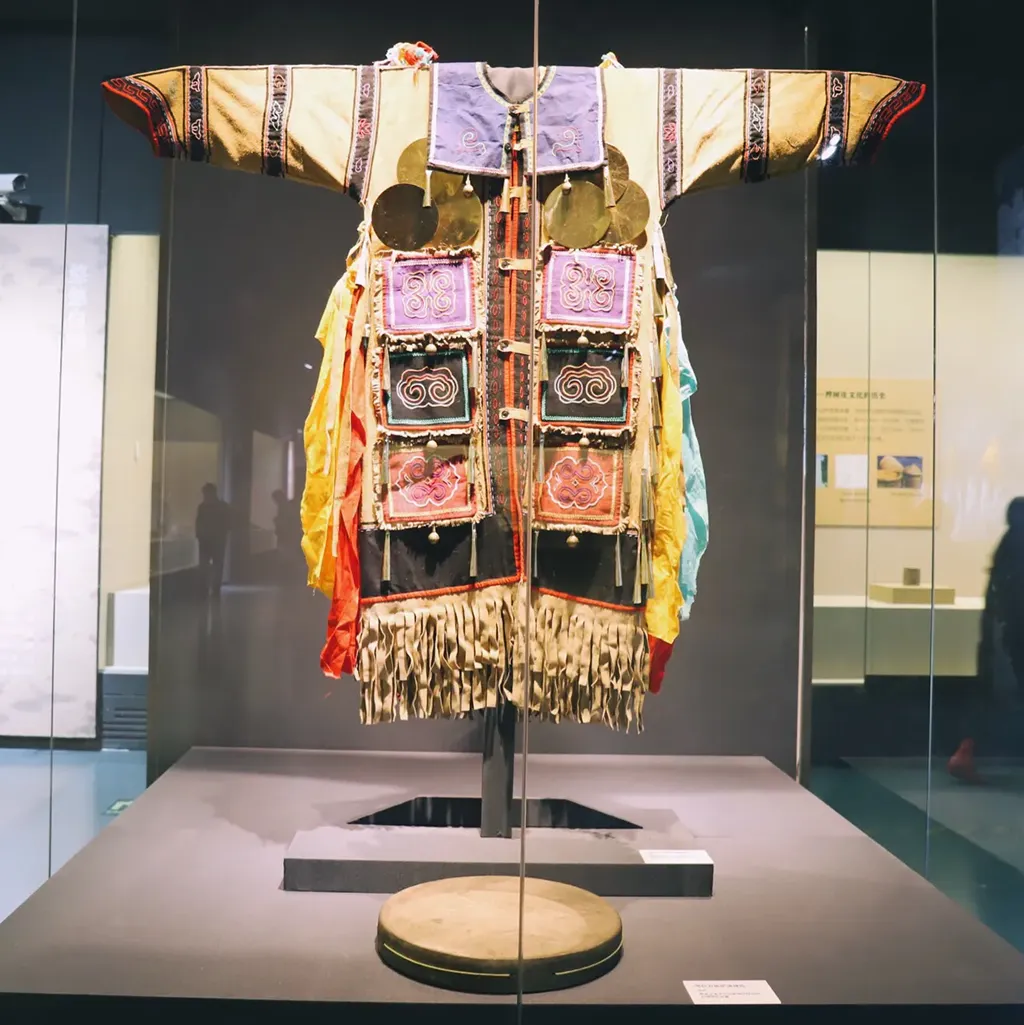
This is the standard exhibition covering everything from prehistoric times to the Qing Dynasty. If you are short on time, hunt for these two items:
The Tiger Tally (Du Hu Fu)
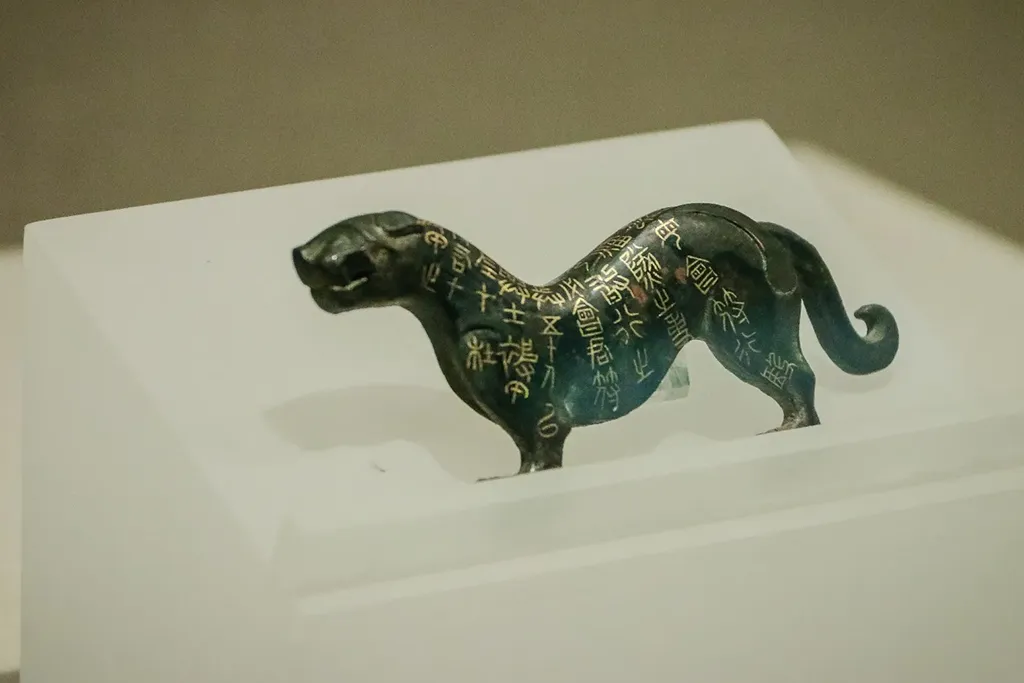
A bronze tiger with gold inscriptions. This was a military commander's ID. The Emperor held the right half, the General held the left. Only when the two halves fit together perfectly could the army move. It is the symbol of absolute power.
The Empress's Jade Seal
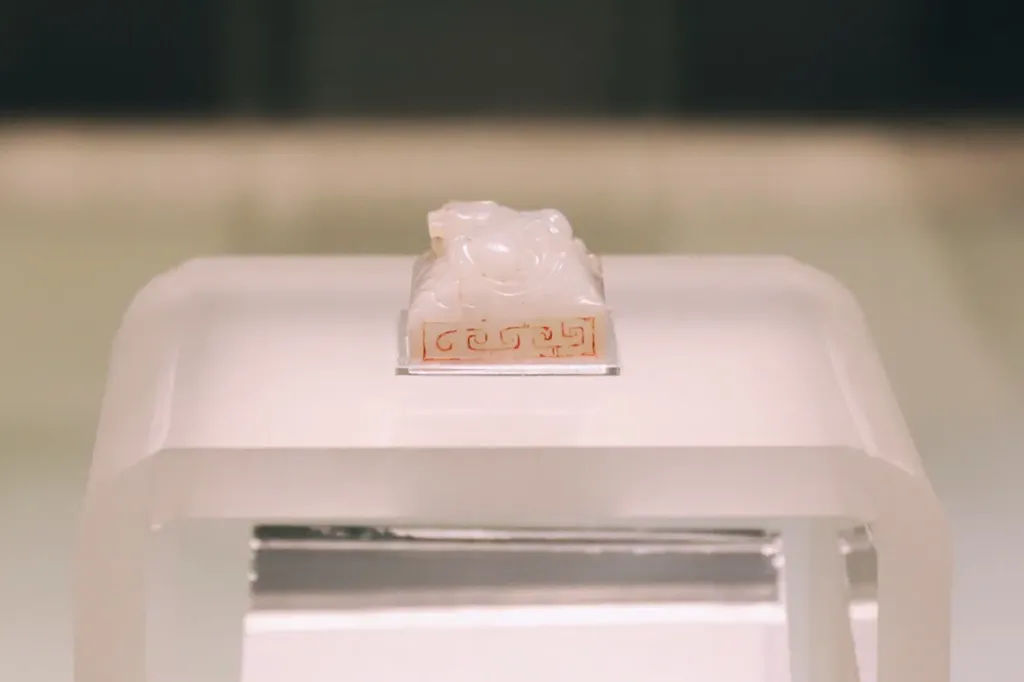
A tiny seal made of pure white "mutton fat" jade. It likely belonged to Empress Lu Zhi, the powerful wife of the first Han Emperor. It was found by a primary school student on his way home from school in 1968!