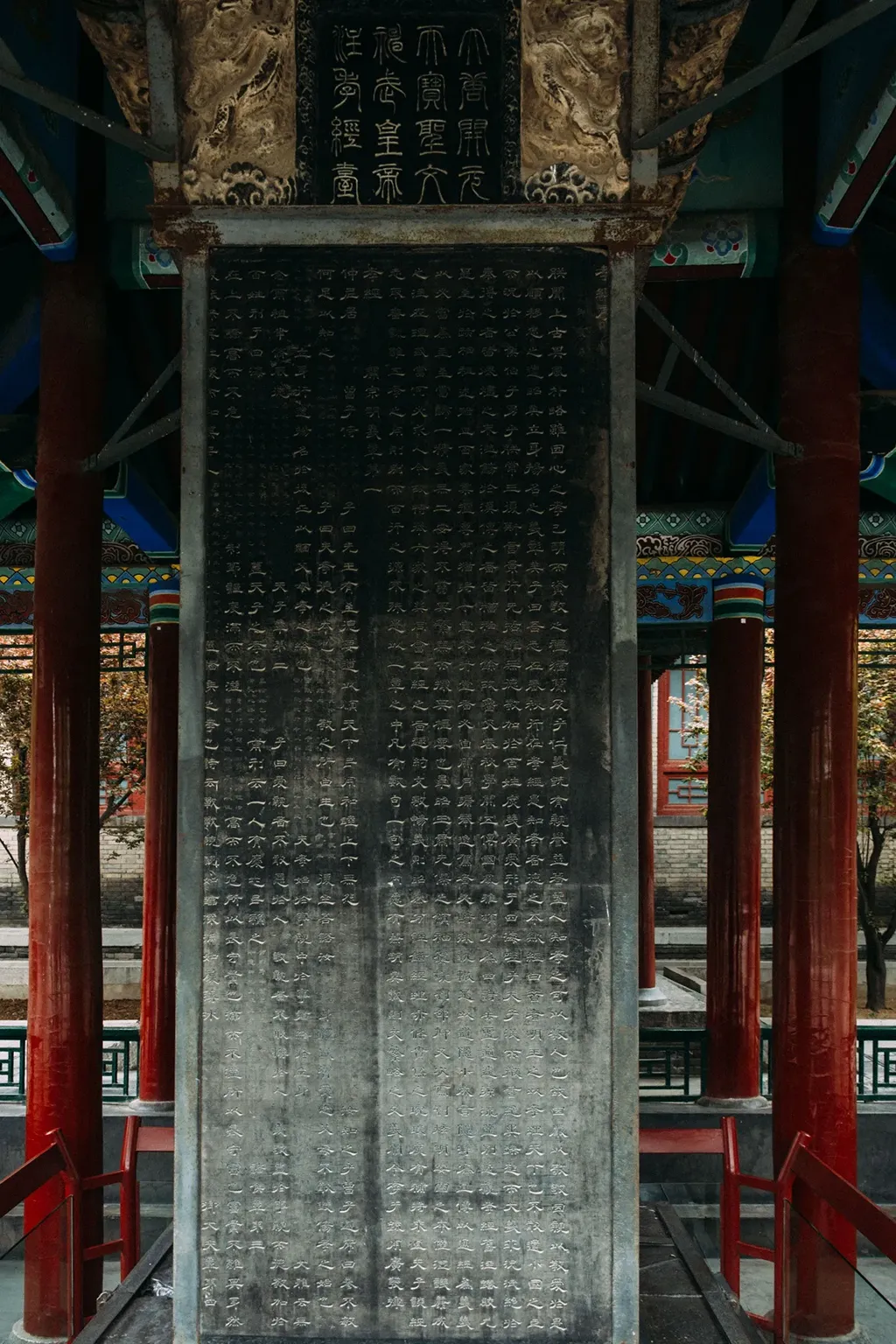
Most museums hold fragile artifacts behind glass. The Beilin Museum (Forest of Stone Steles) is different. It holds the heaviest books in the world.
Built on the site of the old Confucian Temple, this is not just a museum; it is the " Hard Drive" of Ancient China. For centuries, Chinese emperors carved their most important classics, laws, and calligraphy onto massive stone tablets to ensure they would survive wars, fires, and time itself.
Today, with over 4,000 stone monuments, it is a paradise for calligraphy lovers and history buffs.
⚠️ Jim’s Insider Update: Current Status
The "Renovation" Opportunity:
The museum is currently undergoing a massive expansion project.
The museum is currently undergoing a massive expansion project.
- The Bad News: Some areas might be noisy or screened off.
- The Good News: The ticket price has been temporarily dropped to just 10 RMB (approx. $1.50 USD)! This is practically free for a national-level museum.
📍 Opening Hours:
- Summer (Jul 1 - Aug 31): 08:00 – 19:00
- Winter (Dec 1 - Feb 28): 08:00 – 18:00
- Other Months: 08:00 – 18:30
Read Next: Don’t miss our guide to Famen Temple or Huaqing Palace Xi’an.
Part 1: The Forest of Stones (What to Read)
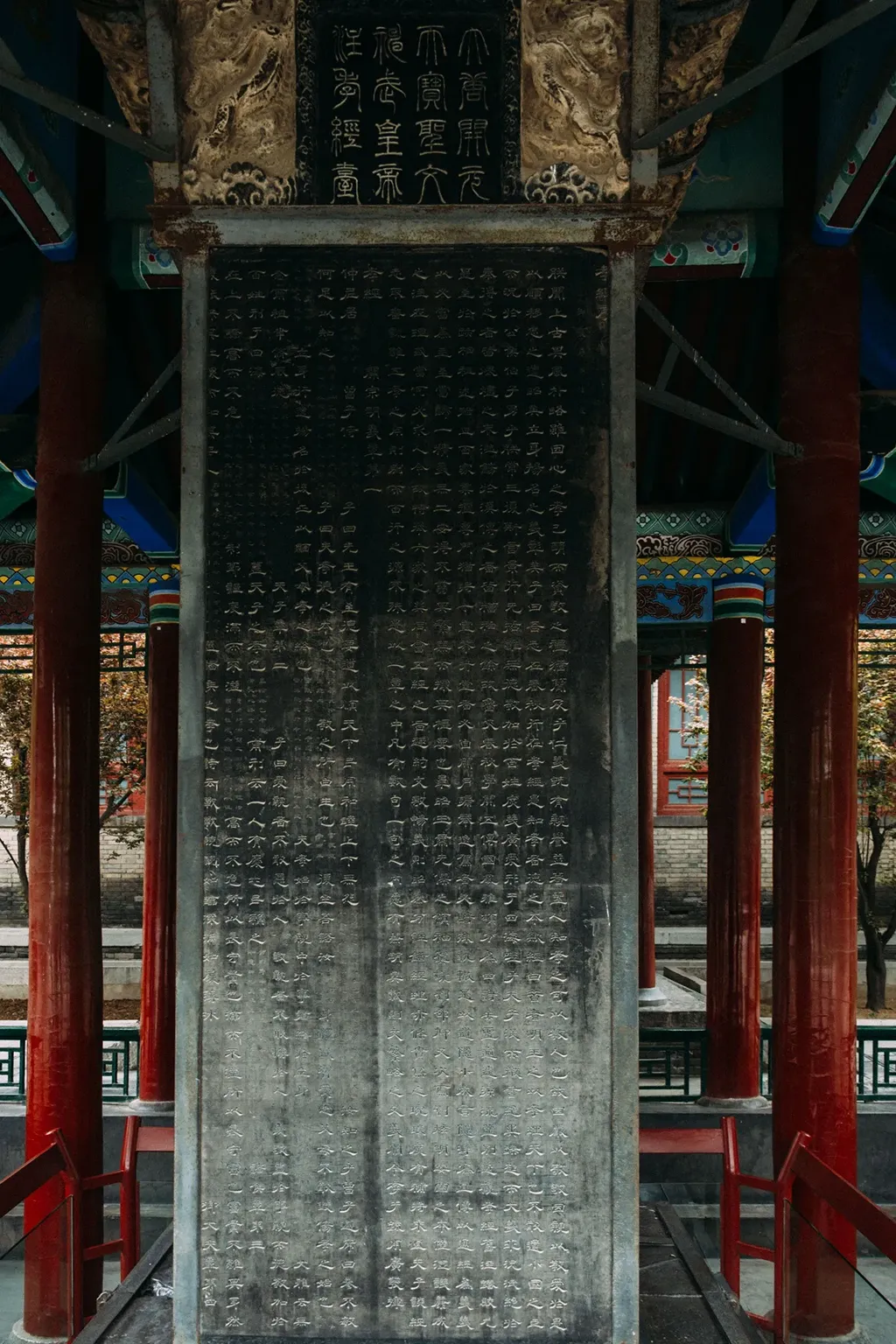
You don't need to read Chinese to appreciate the beauty here. Think of Chinese Calligraphy as Abstract Art —look at the flow, the power, and the structure of the lines.
Here are the " Big Four" steles you must find:
1. The Nestorian Stele (Da Qin Jing Jiao)
(The Christian Stone)
This is a shock to many Western visitors. Carved in 781 AD, this huge tablet records the arrival of Christianity in China during the Tang Dynasty. It features text in both Chinese and Syriac. It is proof that the Silk Road brought not just goods, but God, to Chang'an.
2. The Kaicheng Stone Classics
(The "Stone Wikipedia")
Imagine if the internet crashed forever. How would we save our knowledge? In 837 AD, the Emperor ordered 12 classic Confucian books (over 650,000 characters) to be carved onto 114 massive stones. This was the "Standard Version." If a student wanted to check a quote, they came here to read the rocks.
3. The Preface to the Sacred Scriptures
(The "Mona Lisa" of Calligraphy)
This stele combines two legends: the text celebrates the journey of Xuanzang (the monk who went to India, inspiring Journey to the West), and the calligraphy is collected from characters written by Wang Xizhi (the Sage of Calligraphy). It is considered the gold standard of writing.
💡 Jim’s Observation: The Rubbings
If you are lucky, you might see staff making "Rubbings." They place wet paper over the stone and tap it with ink pads. This is how books were "printed" before the printing press. Watching this ancient xerox machine in action is mesmerizing.
Part 2: Beyond the Stones (The Treasures)
The museum isn't just about text. Some of China's finest sculptures are hiding here.
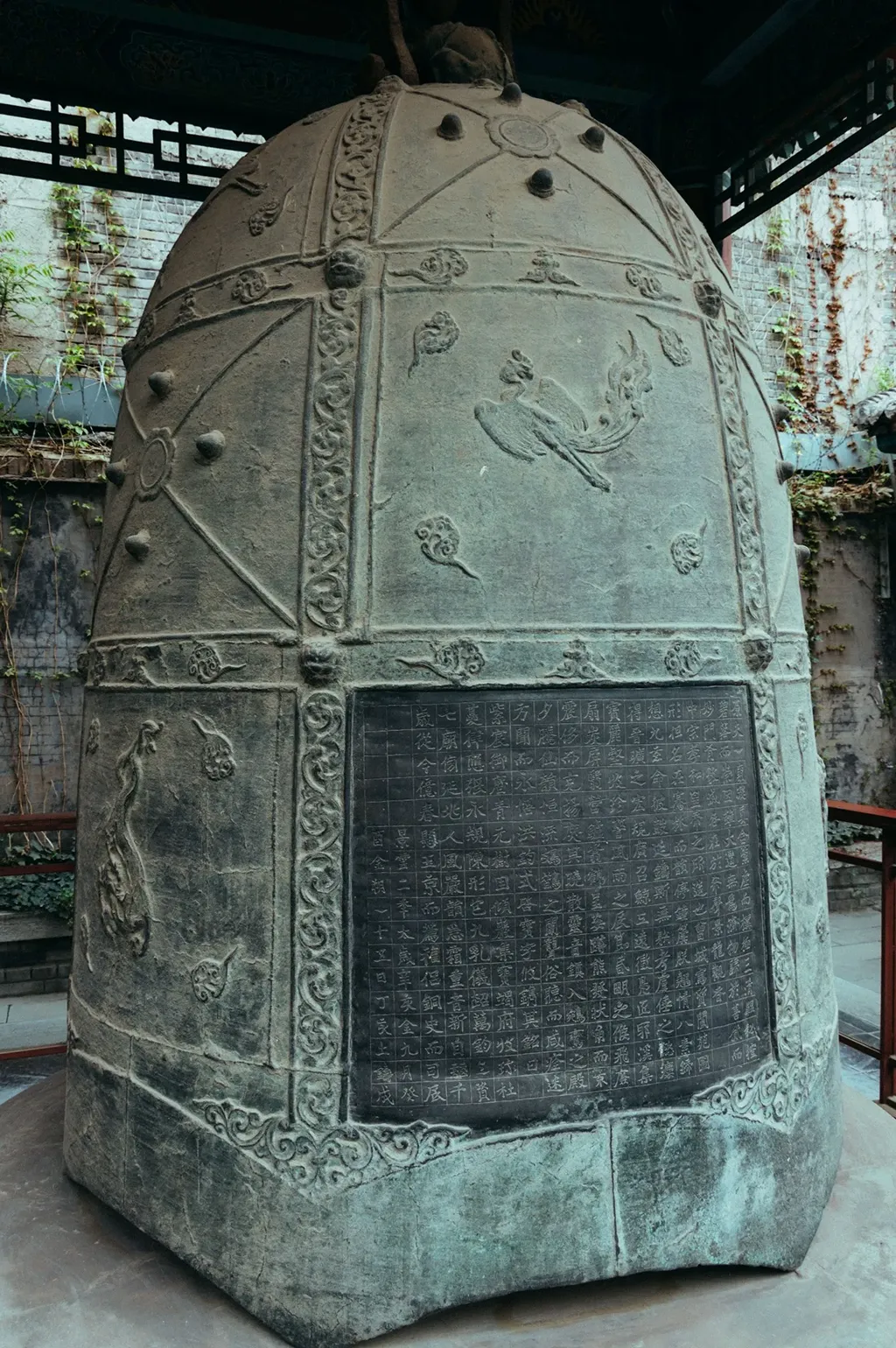
The Jingyun Bell (The Voice of China)
Standing in the courtyard is this massive bronze bell from the Tang Dynasty.
Fun Fact: Even if you've never been to China, you might have heard it. The recording of this bell is used by CCTV (China's National TV) to ring in the New Year every Spring Festival. It is literally the "sound of the nation."
The Six Steeds of Zhaoling
(The War Horses)
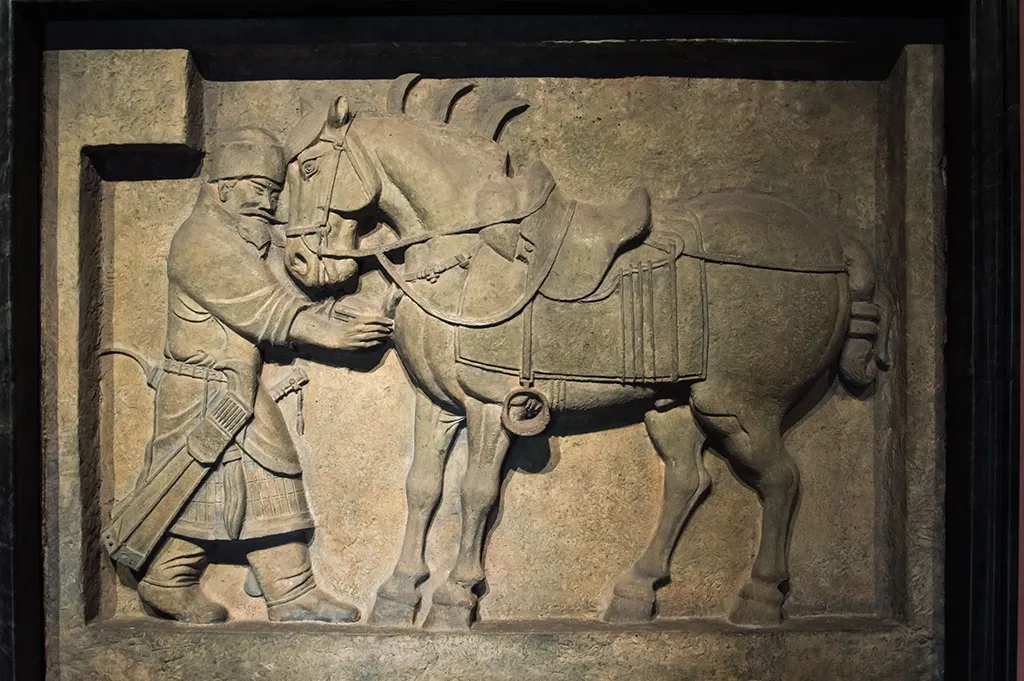
These are six large stone relief carvings of the favorite war horses of Emperor Taizong (the founder of the Tang Golden Age). Each horse has a name and a war story. They are praised for their realism and energy.
🐢 Weird Art Alert: The Turtle Tomb
Don't miss the Li Shou Tomb in the Stone Art Gallery. The tomb cover is shaped like a giant turtle shell. It is incredibly rare and looks like something out of a fantasy movie.
The Vibe: The Confucian Temple
Finally, take a moment to appreciate the buildings. Before it was a museum, this was a Confucian Temple and the Imperial College. The yellow glazed tiles, the red walls, and the ancient cypress trees create a scholarly, peaceful atmosphere that is very different from the crowded Terracotta Warriors.