If you can only visit one museum in Xi'an, this is it. The Emperor Qinshihuang 's Mausoleum Site Museum is not just a museum; it is a miracle.
Even in a province like Shaanxi, where you can practically dig up a Tang Dynasty brick in your backyard, the Terracotta Warriors stand alone. But here is a secret most tourists miss: the museum is actually TWO parts:
- Part 1: The Museum Area (Where the famous Warriors are: Pits 1, 2, 3).
- Part 2: The Mausoleum Site (Lishan Garden) (The actual tomb of the Emperor, often skipped by rushed tour groups).
⚡ Essential Info: Plan Your Visit
📍 Getting There:
The museum is 35km (approx. 1 hour) from downtown Xi'an.
The museum is 35km (approx. 1 hour) from downtown Xi'an.
- Public Bus: Bus 306 (Tourist Line 5), 914, or 915 from Xi'an Railway Station. It’s cheap but can be crowded.
- Private Driver Or Taxi: The most comfortable option.
🎫 The Logistics:
- Ticket Price: 120 RMB (Includes both the Museum and the Mausoleum Site).
- Opening Hours:
- Peak Season (Mar 16 – Nov 15): 08:30 – 17:00
- Off-Peak Season (Nov 16 – Mar 15): 08:30 – 16:30
- Booking: Must be booked online in advance via WeChat【秦始皇陵博物馆院】.
Read Next: To learn more about Shaanxi history, visit Shaanxi History Museum or The Beilin Museum.
The Story Behind the Clay Army
In 247 BC, a 13-year-old boy named Ying Zheng became King. The moment he ascended the throne, he started building his own tomb. This massive project took 39 years and 720,000 laborers.
For over 2,000 years, this army of 8,000 soldiers slept underground until 1974, when a local farmer in Xiyang Village was digging a well and struck a pottery head. That shovel strike changed archaeology forever.
Part 1: The Warrior Pits
Pit 1: The Main Army
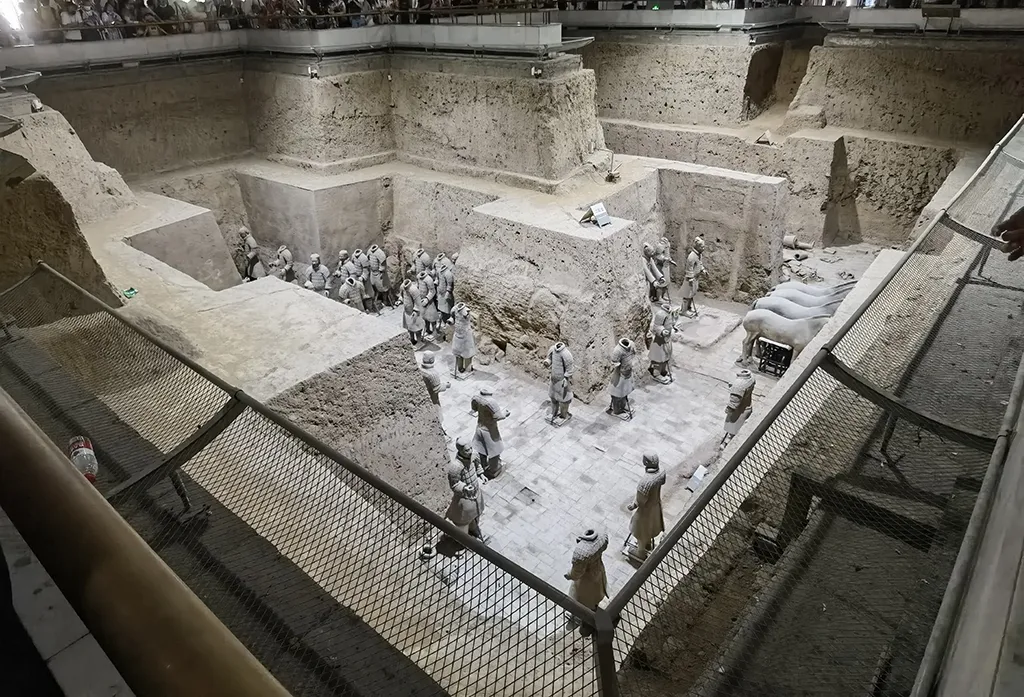
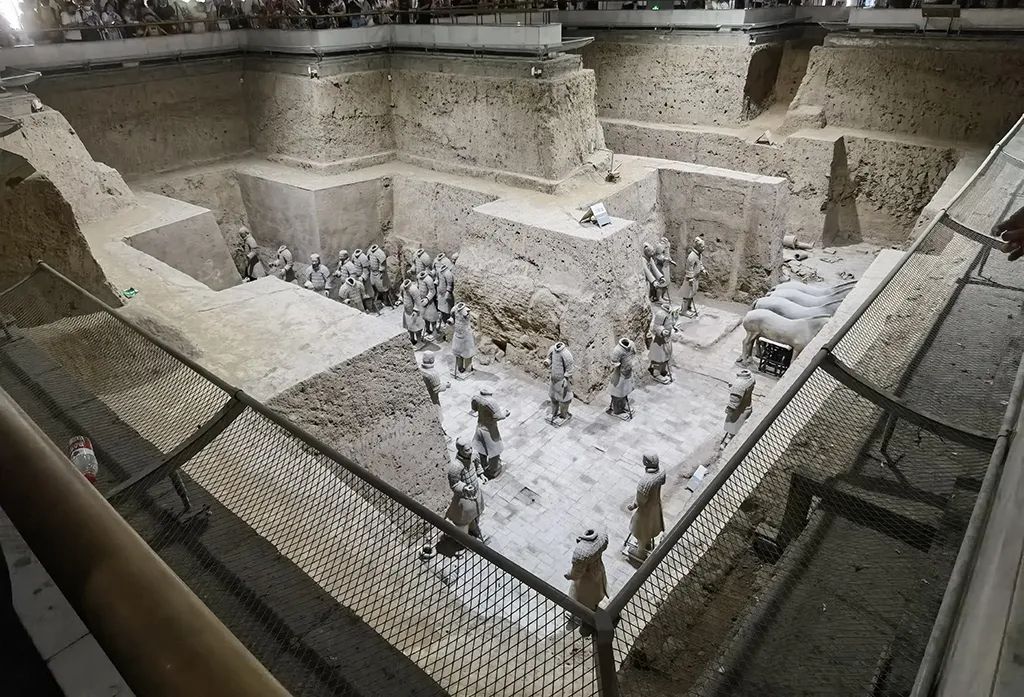
This is the one you see on postcards. Covering 14,000 square meters, Pit 1 houses the main infantry. 6,000 soldiers stand in battle formation.
💡 Jim’s Insight: 1,000 Faces, 0 Duplicates
Look closely (bring binoculars if you have them!). No two soldiers look the same. Some have mustaches, some have topknots; some look stern, others look calm. They are true portraits of real men from 2,200 years ago. Also, imagine this: they were originally painted in bright colors! Exposure to air caused the paint to fade instantly after excavation, leaving the grey terra-cotta we see today.
Pit 2: The Special Forces
While Pit 1 is about scale, Pit 2 is about variety. It contains a complex mix of archers, chariots, cavalry, and infantry. This is considered the "essence" of the army.
Don't miss the Exhibition Hall here, where you can see the stars up close:
- The Kneeling Archer: The only soldier found completely intact. You can even see the anti-slip tread pattern on the sole of his shoe!
- The General: Standing tall and wearing intricate fish-scale armor.
- The Cavalryman: The first physical evidence of ancient Chinese cavalry. Notice his horse is saddled but has no stirrups (they weren't invented yet).
Pit 3: The Command Center
The smallest pit (U-shaped) with only 72 warriors. Archaeologists believe this was the "Headquarters" commanding the armies in Pit 1 and Pit 2.
⚔️ History Note: The Missing Pit 4
Between Pit 2 and 3, there is an empty space meant for "Pit 4." It was never finished because the peasant uprisings (which ended the Qin Dynasty) happened before the tomb was complete. It’s a physical reminder of how abruptly the dynasty fell.
Part 2: The Mausoleum Site (Lishan Garden)
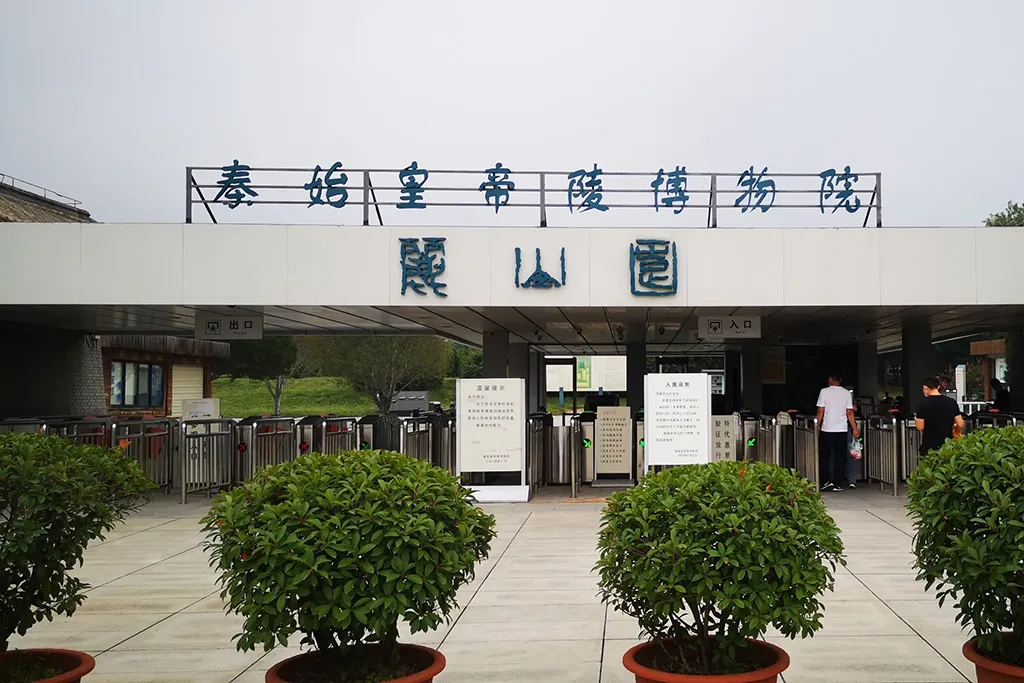
⚠️ Don't Leave Yet! Located 2km from the museum, this area is often skipped by tourists who don't realize it is included in your ticket.
🚌 Jim’s Survival Tip: Take the Free Shuttle
Do not walk from the Warriors Museum to the Lishan Garden. It is dusty and far. Show your ticket to board the Free Shuttle Bus that runs between the two sites.
The Unopened Underground Palace
This is the actual resting place of Emperor Qinshihuang. According to the historian Sima Qian, the underground tomb is a map of the universe, with a ceiling of pearls representing stars and rivers made of flowing mercury. It remains unexcavated to protect it, but standing before the massive mound is awe-inspiring.
The "Entertainers" Pits
Unlike the stern soldiers, the Acrobat Figures (found in Pit 9901) are shirtless, pot-bellied, and humorous. They show a completely different, lively side of Qin court life.
Don't Miss: The Bronze Chariots
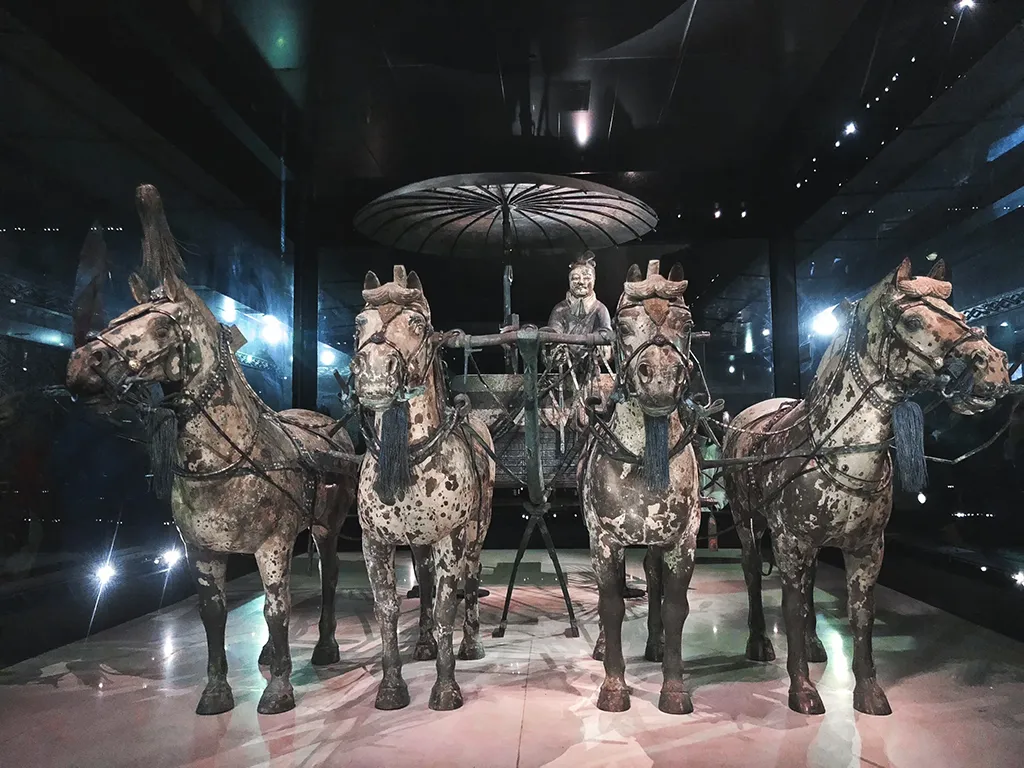
Located in the Lishan Garden area, these are the "Crown Jewels" of ancient bronze work. These two half-size chariots are the earliest, largest, and most intricate bronze chariots ever found.
Why they matter: Before this discovery, we only knew about ancient chariots from rotting wood impressions. These bronze replicas show us exactly how the Emperor traveled. Look for the massive umbrella—it wasn't just for shade; its complex tilting mechanism was engineering genius.